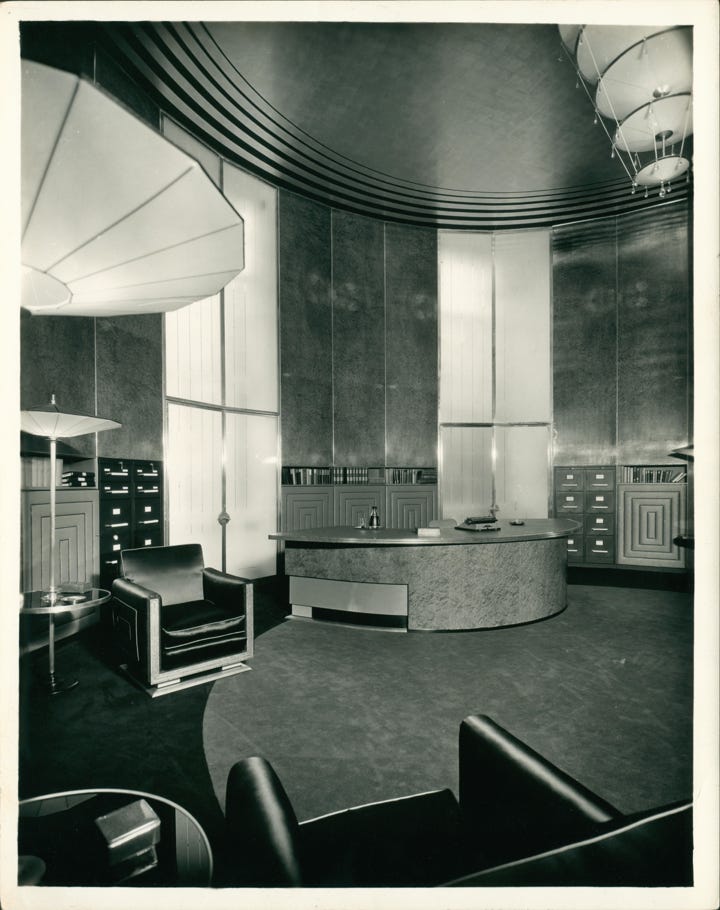
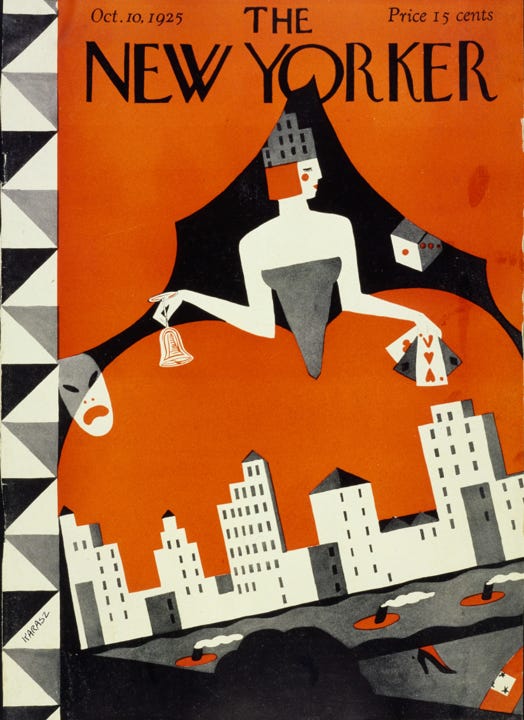
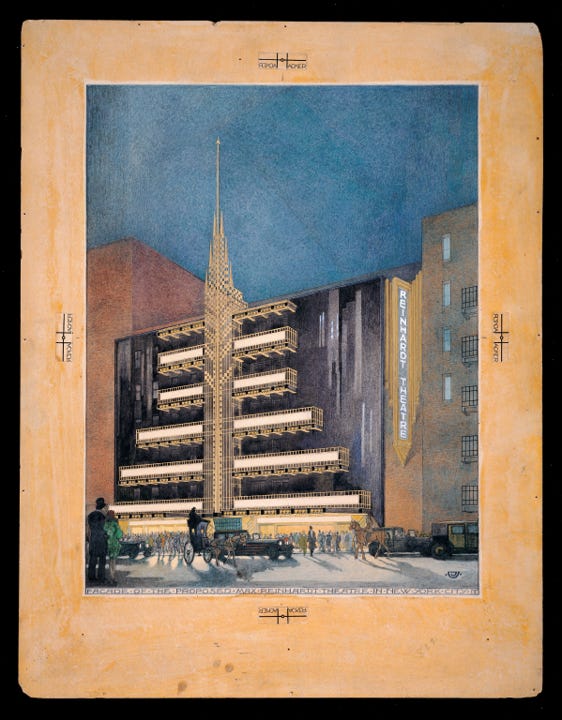
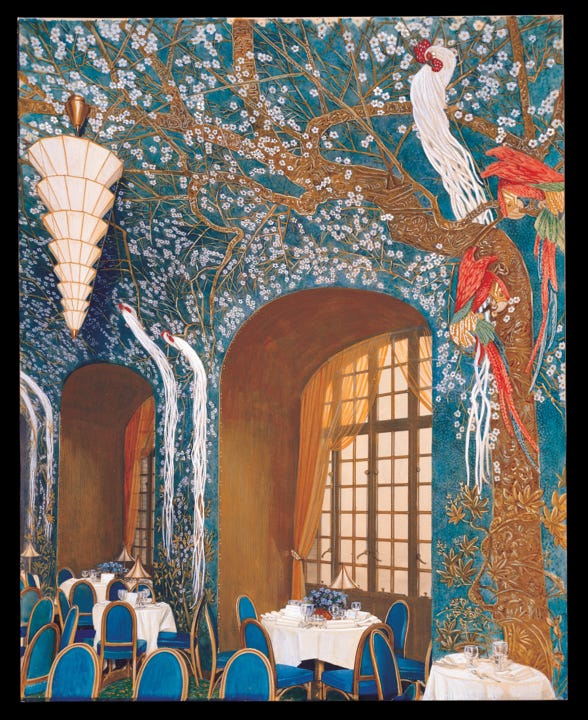
One of the most compelling areas of design collecting today is American modern of the interwar period, known in its own time as Art Moderne. The movement produced exquisite objects of remarkable design quality and bold, radical aesthetics inspired by life in the modern metropolis. They were created by a group of designers, architects, artists, and photographers who emigrated from Central Europe during the first four decades of teh 20th century, and came to introduce and shape the early phase of modern design in America. Some arrived because of religious persecution, others for political reasons, and still others were drawn by curiosity about life in the bustling, rapidly modernizing metropolis of Manhattan.
To illuminate and learn more about this glamorous chapter in the story of modern design, I invited the field’s leading authority, Professor Christopher Long, who together with design historian Jewel Stern has recently published the most comprehensive and carefully researched volume on the subject, entitled The Vanguard: Central European Emigres and American Modern Design, 1910-1940. Despite being primarily trained in Europe, these pioneers sought to charge the new American design with local national identity, an extraordinary achievement. Yet, despite their lasting impact and innovative aesthetics, which revolutionized everyday life, they were rarely acknowledged by early historians of modern design.
This ambitious book, the fruit of four decades of research, published by Yale University Press, presents the story of daring, bold adventurers who challenged conventions and took risks to achieve something radical for life in the new century. Both Stern and Long have published extensively on the topic and are considered authorities, but this is the definitive publication; an indispensable addition to any library of design, architecture, and American culture. They distinguish the project by revealing the lives and careers of the émigré pioneers of American modernism. In their own voice, the two weave the improbable tales of approximately 50 figures, some known and others now largely forgotten. Many of their designs are still undervalued today, both in monetary and art historical terms, and it is time for these designers to receive their due, becuase they came to define American Modernism during the Jazz Age of the 20s and the Great Depression of the 30s, paving the way for America to become the cradle of modern design in the postwar years.
The book is dedicated to John C. Waddell, the pioneer collector and connoisseur of American modern design, whose comprehensive approach and scholarly rigor have helped to promote this important chapter in the story of modern design. His extensive collection, assembled over four decades, has been exhibited at the Metropolitan Museum and at the Yale University Art Gallery, to which Waddell has gifted the majority of the collection, and which has revealed the impact of international modernism on American design. When others were collecting Art Nouveau and French Art Deco during the 80s, Waddel was already delving into American material culture of the Depression years and discovering its industrial design, a territory nowhere to be found in the literature of art history. Chromium-plated furniture, cigarette caskets, Bakelite accessories, bookends, metal housewares, and cocktail shakers all found their way into his collection, which became the world’s most comprehensive collection of its kind, the result of discovering long-forgotten objects.
True to that objective, the book is arranged chronologically and thematically, tracing the evolution of modern design over the three decades leading up to the Second World War. Each of the 32 chapters is dedicated to a particular designer or to a theme in weaving the story. It illuminates each personal life journey, explaining how they forged their own daring voices within the framework of modern design. They all shared a passion for modernity and for moving design production beyond handicraft, demonstrating the commitment to fuse design and industry.
The book opens with the association established by those pioneers, called The American Union of Decorative Artists and Craftsmen, modeled after similar European organizations—the Deutscher Werkbund, Vienna Secession, and Munich Secession. The association’s monthly meetings became iconic, held at the elegant and renowned restaurant and nightclub, Central Park Casino, New York’s hottest spot during the Jazz Age. They were attended by some of New York’s most influential citizens, including America’s leading architects: Frank Lloyd Wright, George Howe, Raymond Hood. As the hub of American modernism, it was the foremost professional organization committed to elevating contemporary standards, protecting copyright, and advancing modern design.
Austrian designers typically sold their work in elegant specialty shops that catered to Vienna’s wealthy industrial and intellectual elite. German modernists championed modern industrial design, but their efforts remained largely tied to Germany’s public housing programs and were abruptly cut short with the rise of the Third Reich. In contrast, designers working in the United States brought modern design into department stores, making it accessible, popular, and part of the everyday lives of millions. They established themselves with prolific careers, primarily in New York and in Southern California, and created some of the most memorable objects in modern design: Ashtrays, dressing tables, office accessories, kitchen gadgets, modern cars and bicycles, designed as glamorous as The Great Gatsby, as streamlined as life in the metropolis, as exciting as the new skyscrapers of Rosario Candella, all defined by their new American identity, which they forged tabula rasa. It was designed for the zeitgeist, for a new way of living the American modern life.
The book illustrates the personal biographies of each designer, demonstrating the rich background of American modernism. Paul Frankl, who emigrated from Vienna, began creating bookcases in the form of skyscrapers at his weekend cabin in Woodstock, emulating the setback silhouette of Manhattan, and calling them Skyscraper Furniture, symbolizing American modernity. Kem Weber, who came to San Fransico on a work mission of the German pavilion at the Panama-Pacific Internationals Exposition of 1915, got caught up in the outset of the First World War and remained in California, establishing a successful design studio in Hollywood and famously working for Walt Disney Studios. Rudolph Schindler, whom Christopher Long calls ‘the best architect in Southern California at this time,’ had emigrated from Vienna and worked for Frank Lloyd Wright on the Tokyo Imperial Hotel, launching a lifelong love affair with Japanese aesthetics; and dozens more Central European émigrés who pioneered modern design in America, weaving a chapter in modern design.
The recent sustained interest in modern design in academic circles, collecting, and culture makes this book a most satisfying read. It should be enjoyed as a story, as it recalibrates our understanding of the origin of American modern design. And, yes, it is still the most affordable segment in the world of global collectible design.