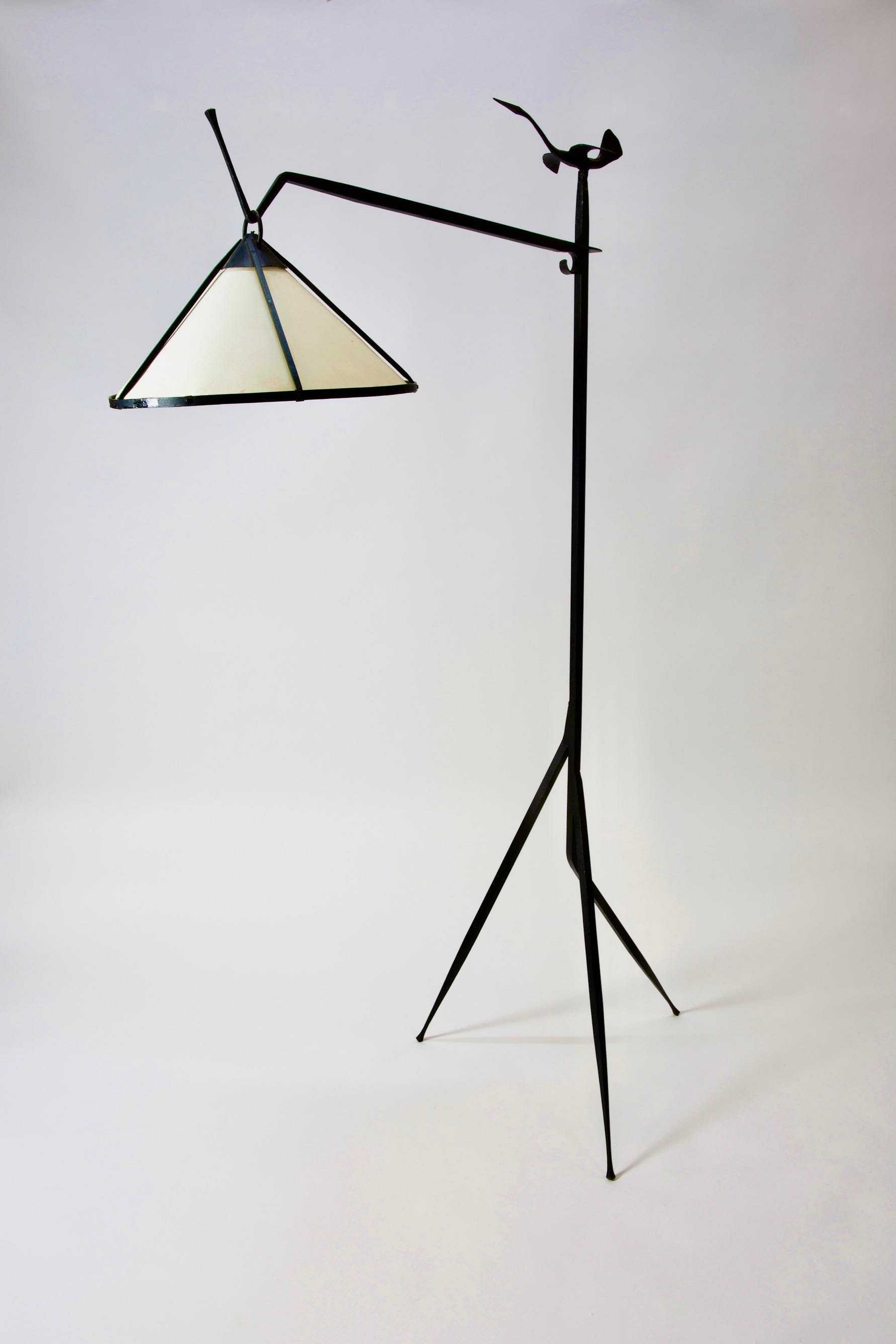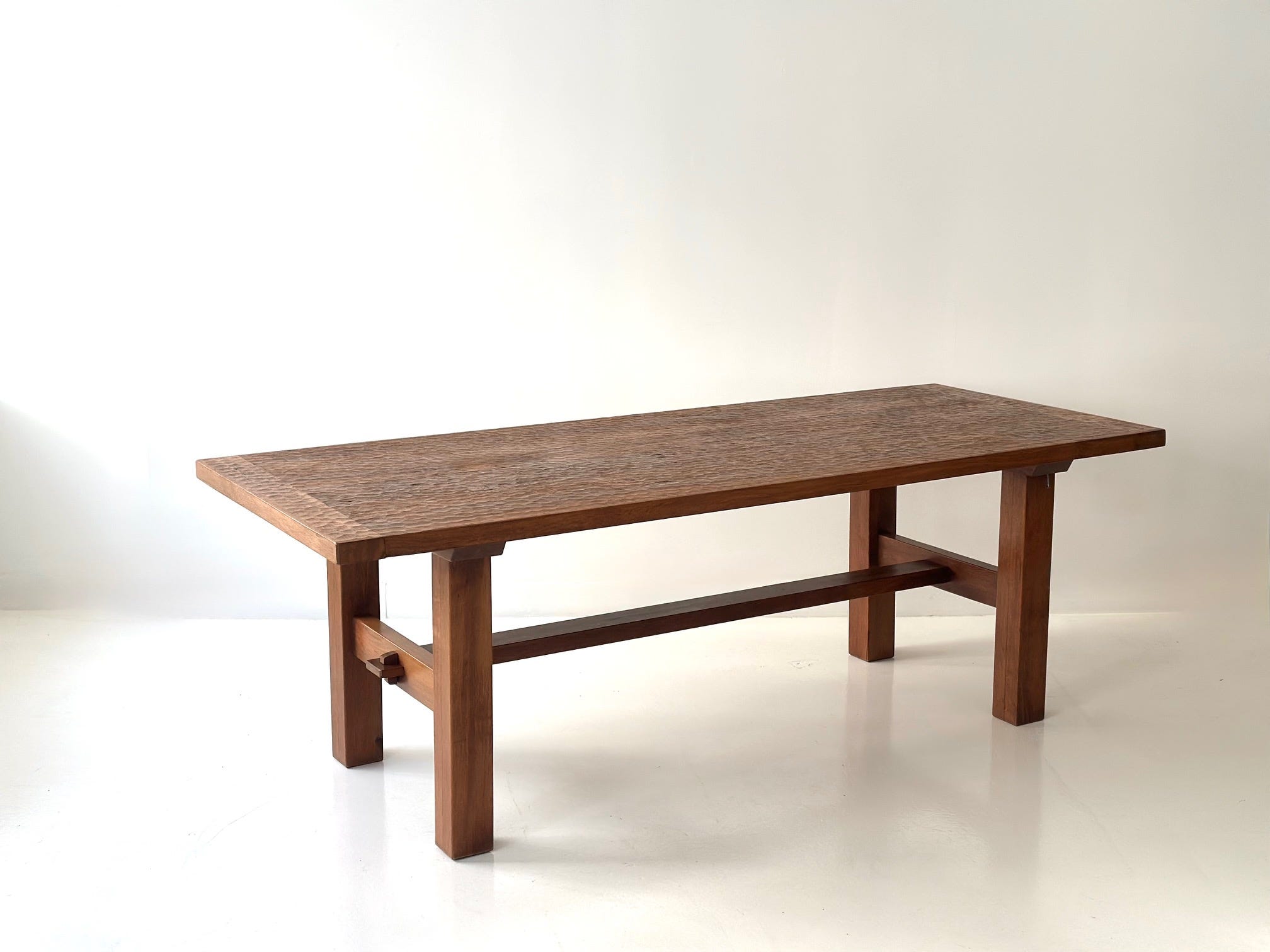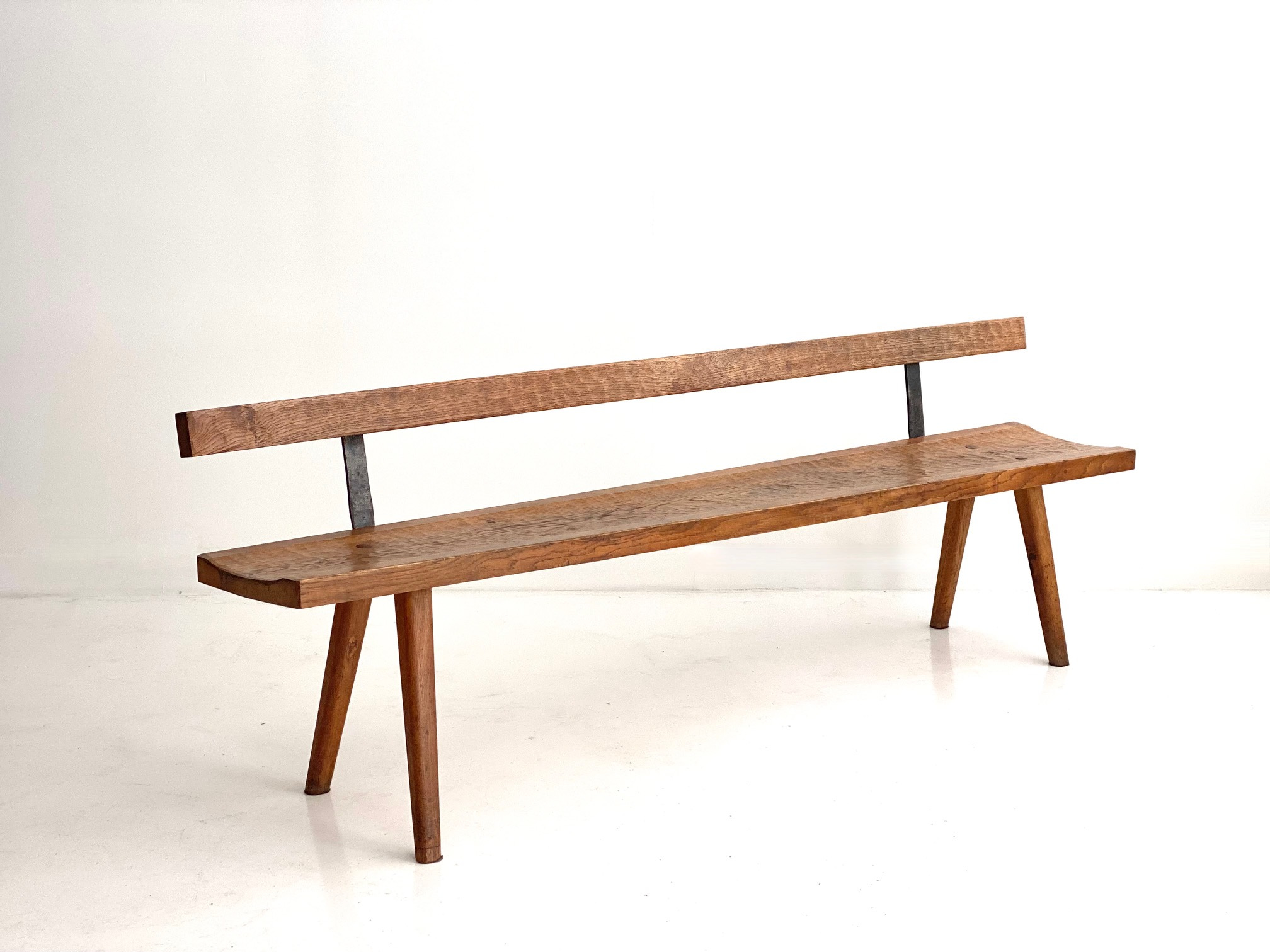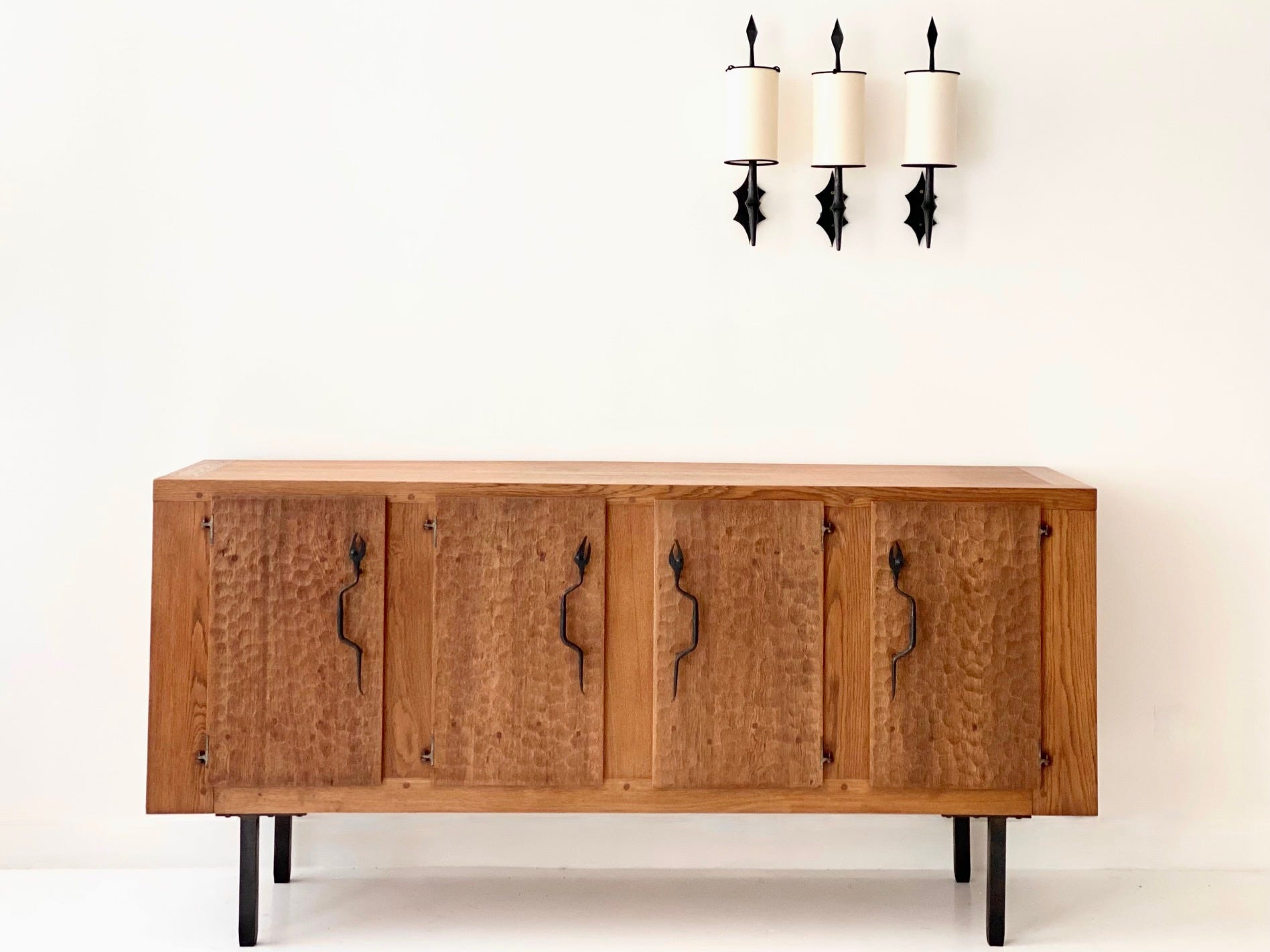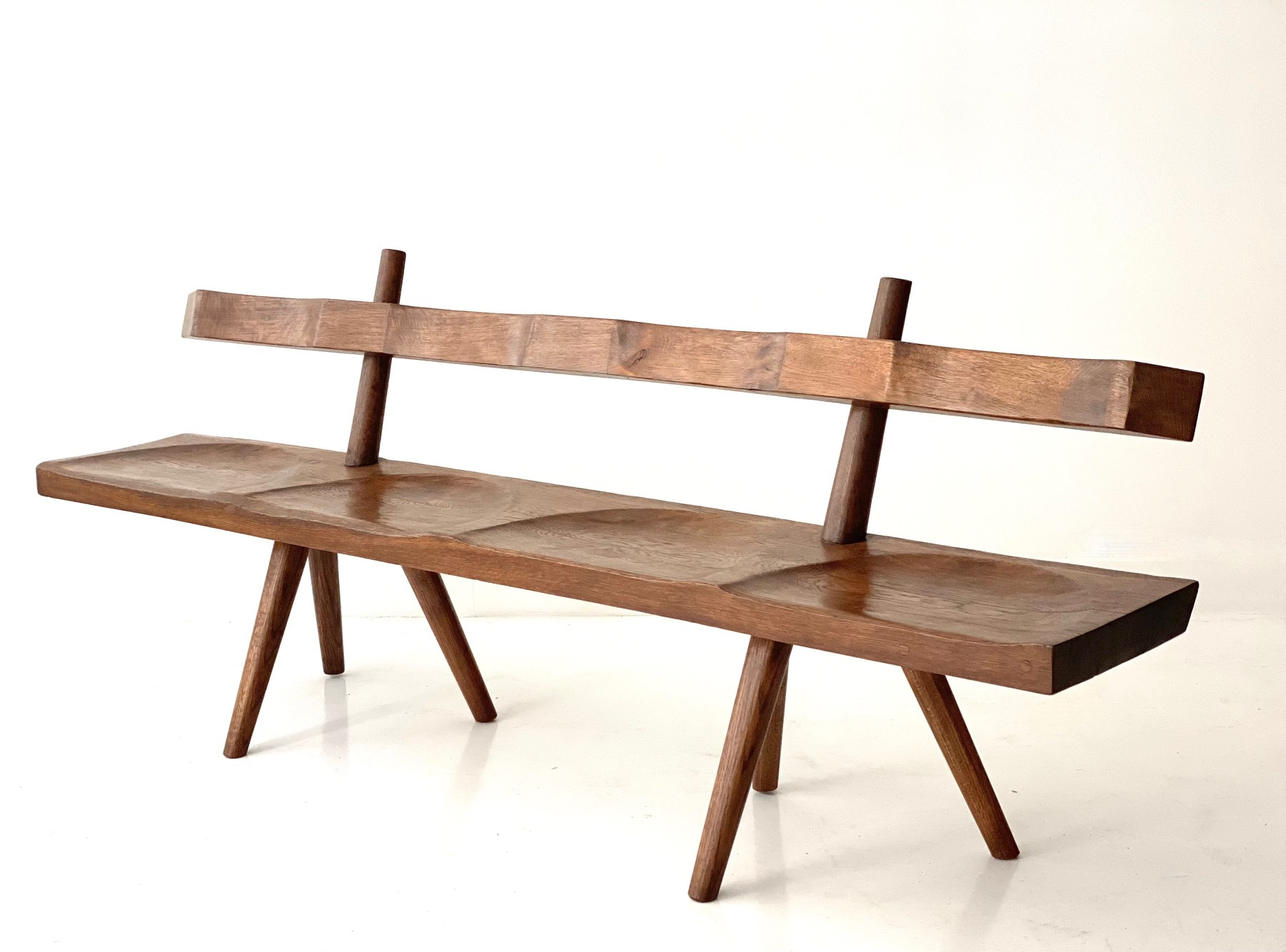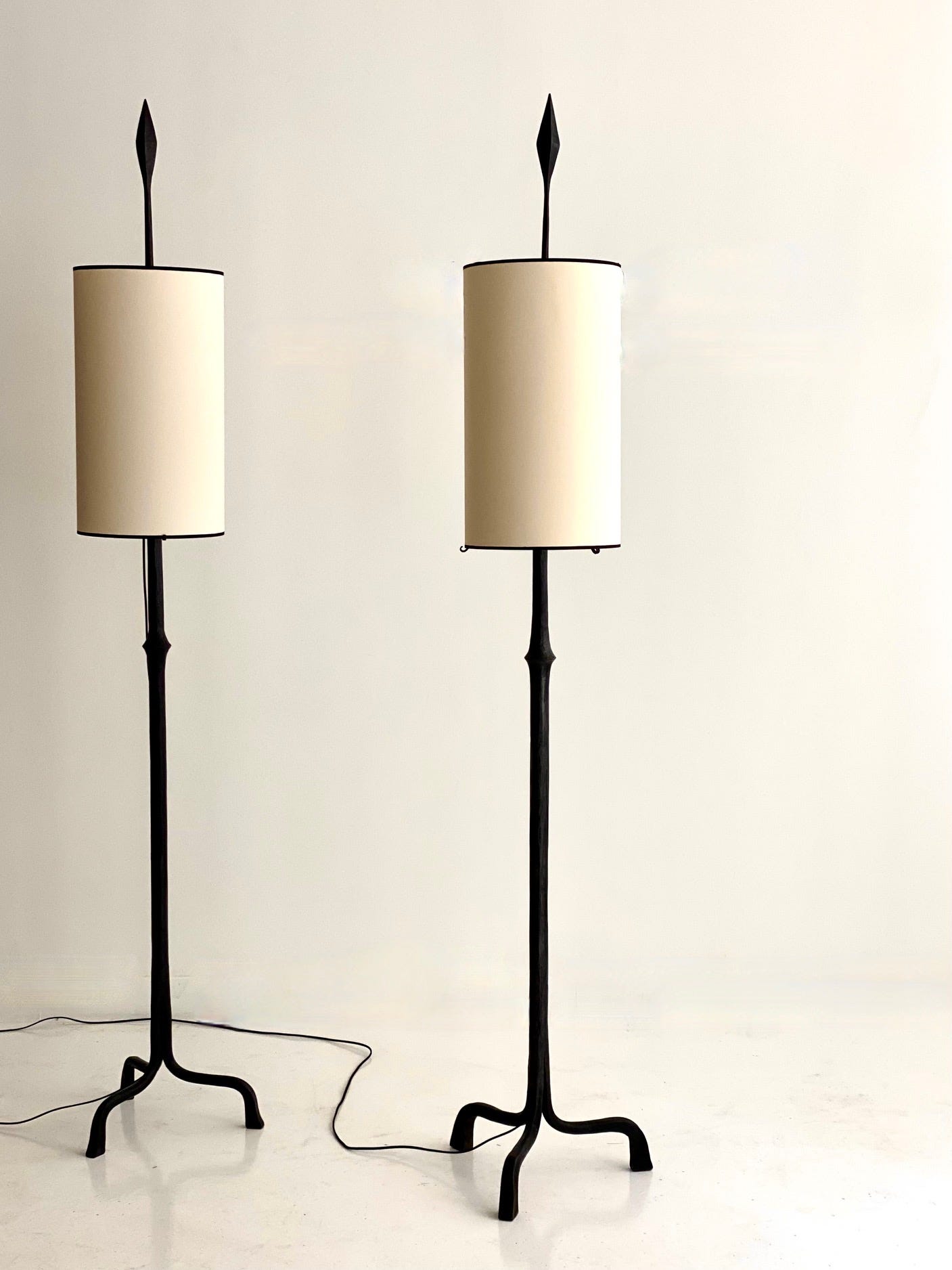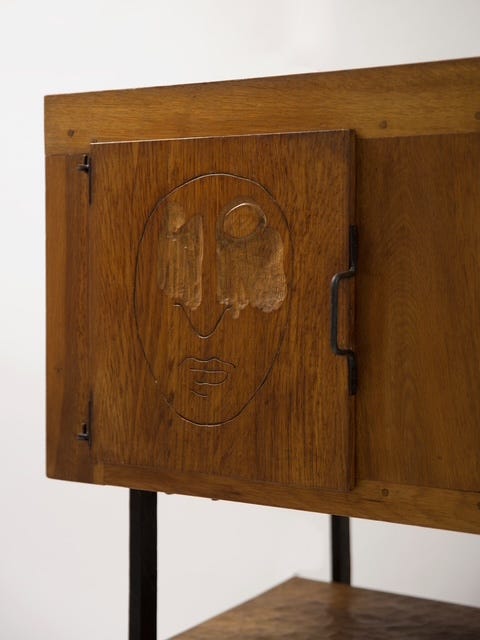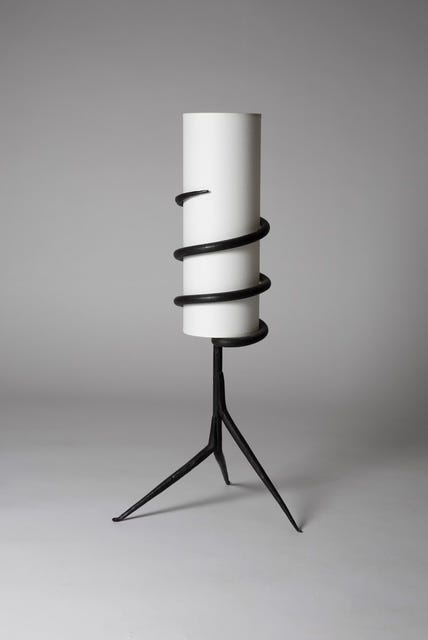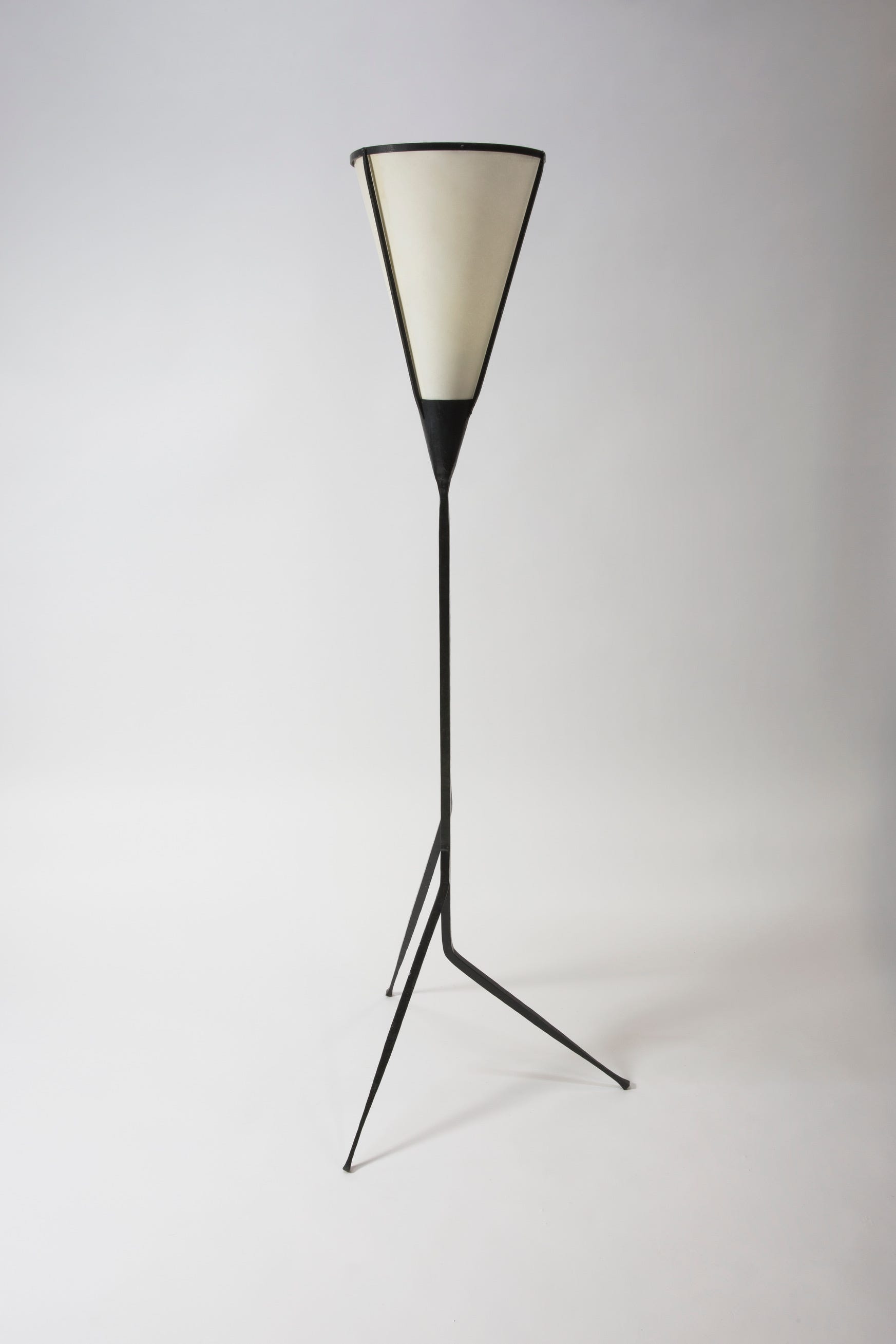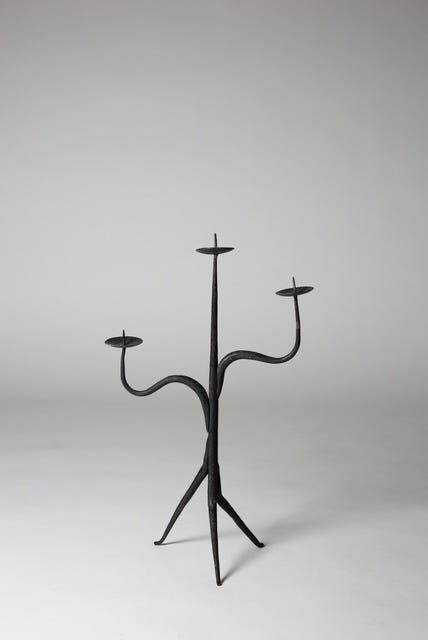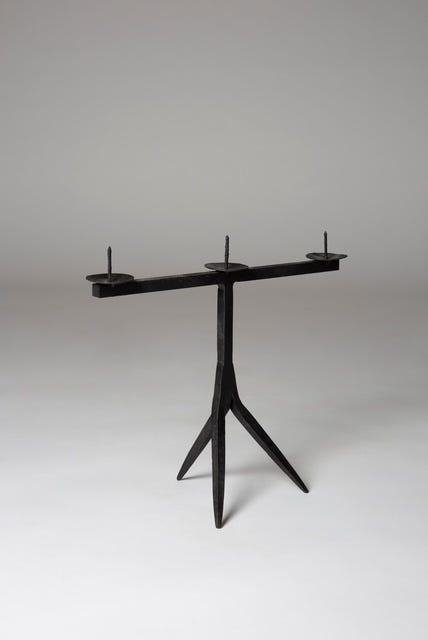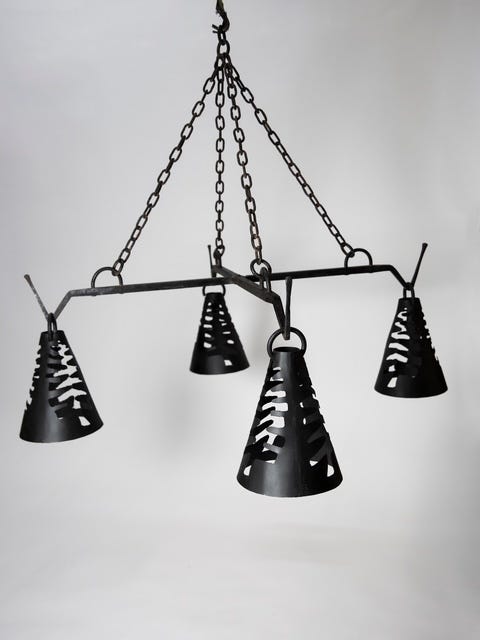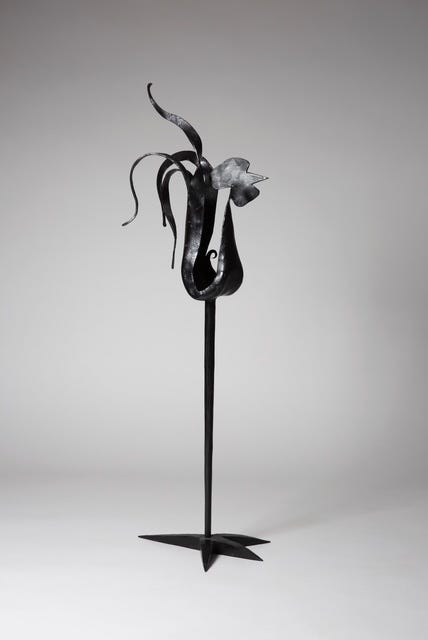
A newcomer to the strong, enduring collecting design market, Jean Touret (1916-2004) has joined the hot list of the French stars of the mid-20th century, whose furniture has achieve the status of blue-chip design. Touret was a sculptor who for 18 years designed handcrafted furniture in wood and iron, and they were exactly what was missing in the dynamic current design market. His name surfaced when the desirable, highly collectible pieces of furniture by Jean Prouve, Charlotte Perriand, and Pierre Jeanneret dried up, with the diminishing supply of rare, authentic, historically significant vintage pieces available for sale in galleries and auction houses. With fresh and exceptionally creative furniture, lighting, and objects, Touret quickly became a celebrated name among collectors, architects, and interior designers. To explore and deepen our knowledge, I have devoted to Jean Touret an entire session in the series ‘Collecting Design: History, Collections, Highlights,’ and to the atelier he established in the rural town of Marolles after the Second World War.
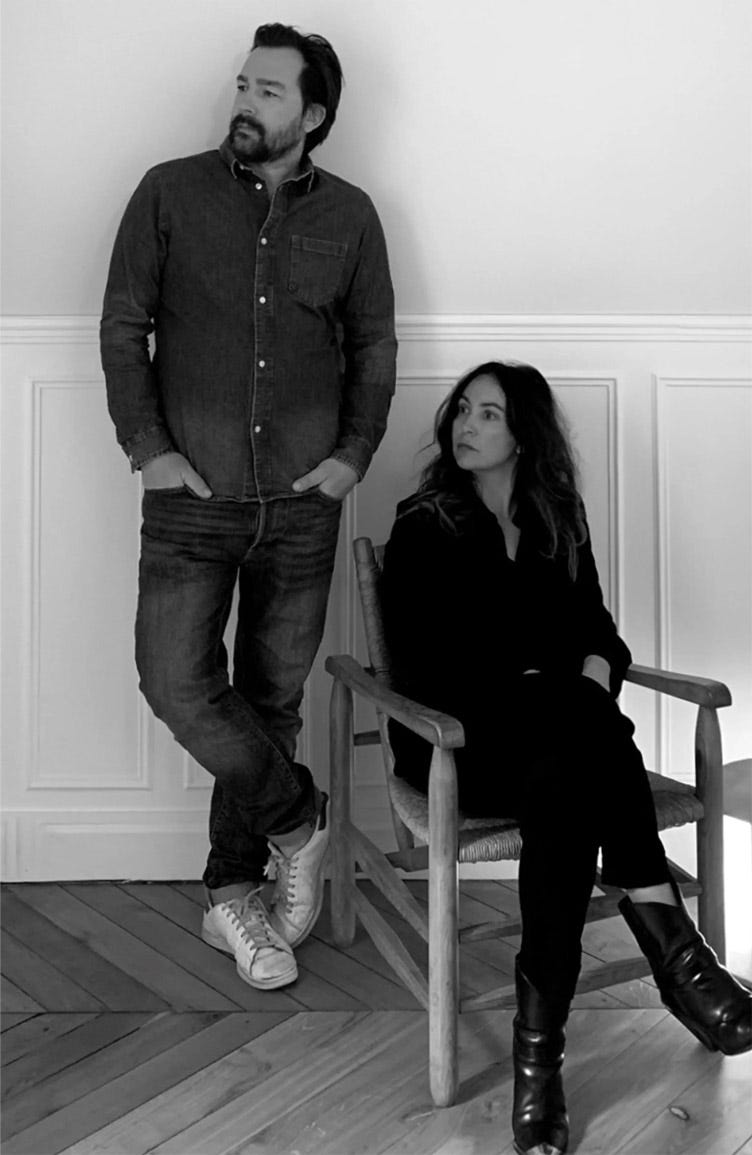
My guest, Banjamin Desprez, is the co-founder, with his wife Helene Breheret, of the Parisian Galerie Desprez Breheret. The duo have championed Touret and helped promote his furniture by curating exhibitions at their gallery and at monographic booths at the Design Miami and PAD fairs. They have become known as the leading experts in Touret’s furnishings, holding extensive archival materials, and assembling the largest collection of his functional work, which they began collecting 15 years before offering it for sale. Touret’s pieces have been recently seen in published interiors by some of the leading interior designers, such as Pierre Yovanovitch and Laplace (the firm of Luis Laplace and Christophe Comoy), which famously used them at the Chesa Marchetta boutique hotel in Sils Maria, founded by Iwan and Manuela Wirth, co-founders of the art gallery Hauser & Wirth. These furniture pieces are rising in value as his reputation grows and demand for his work increases, though they are rarely available in American auction houses, even though Americans make up a significant number of the collectors acquireing them. They are primarily sold in galleries, and occasionally offered by the French auction houses Piasa and Gazette Drouot.
Touret is known to the general public less as a furniture designer and more for the monumental altar he created in the 1980s for the Notre Dame Cathedral in Paris, visited by millions and now under restoration following the 2019 fire. But in one of several chapters of his artistic life, between 1946 and 1963, while living in the remote town of Marolles, Touret devoted his creative efforts to designing furniture in which his visual language was embedded, and which expressed his life-long passion for wood.
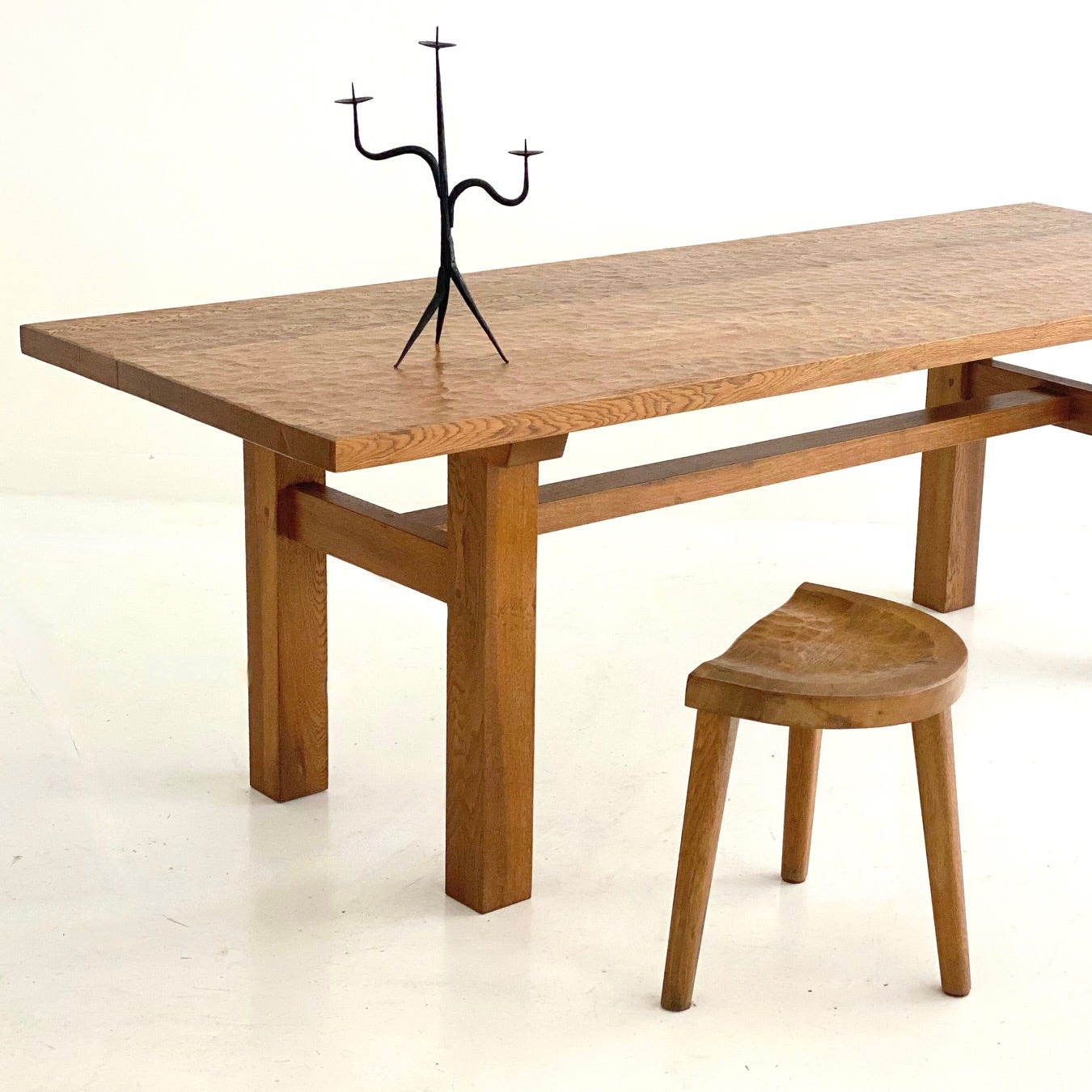
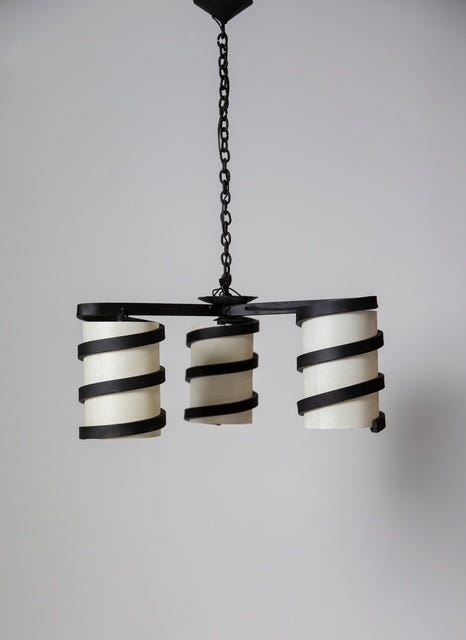
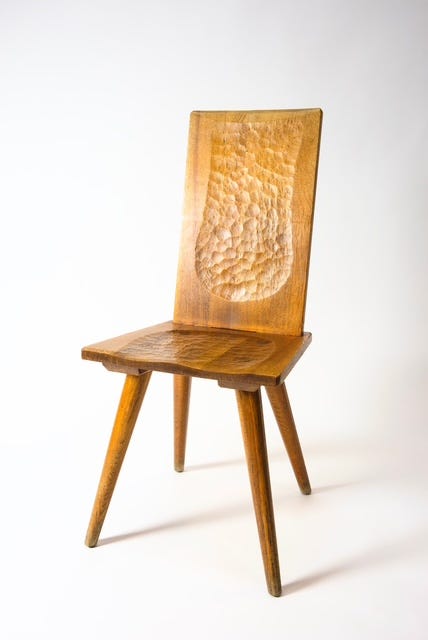
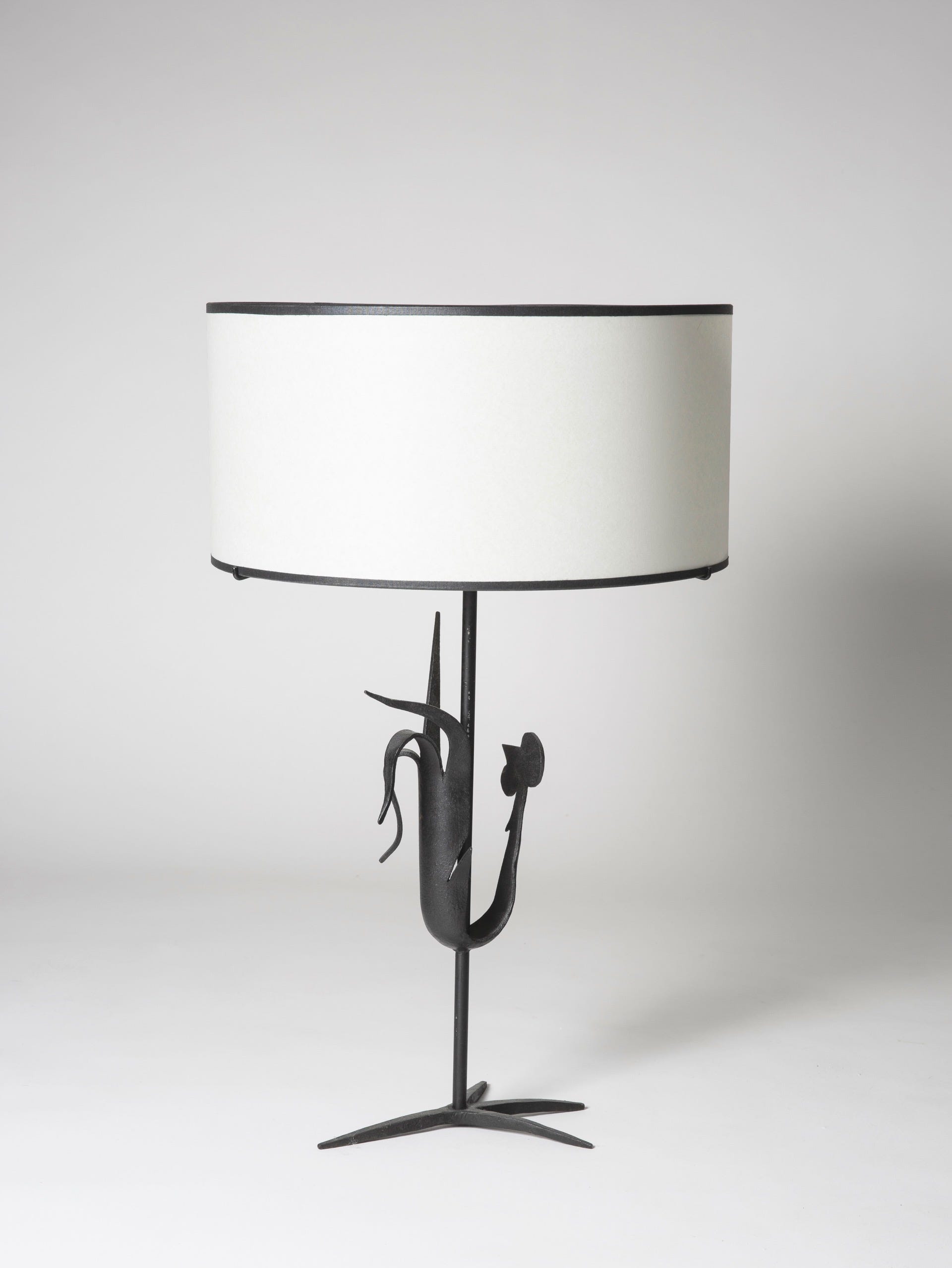
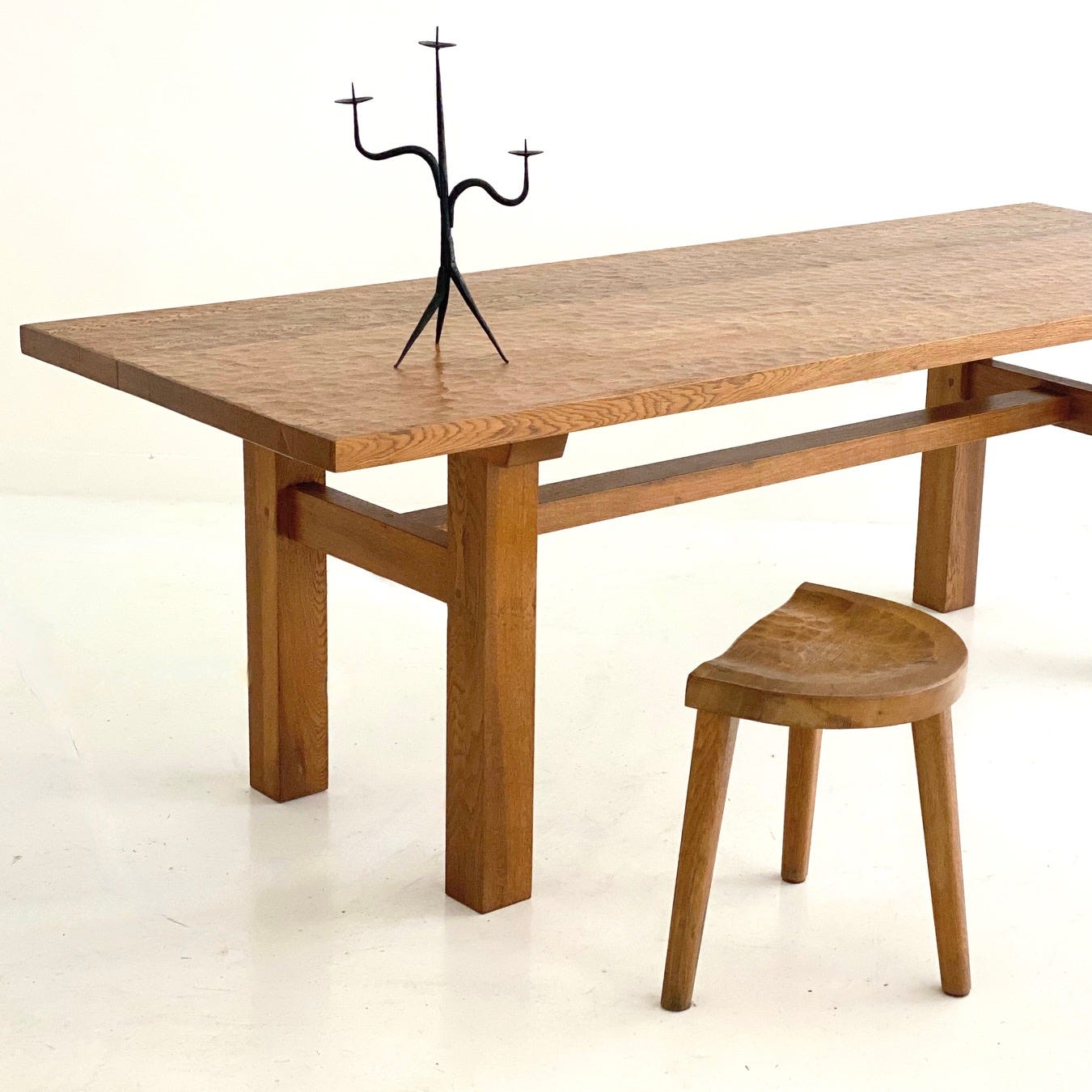
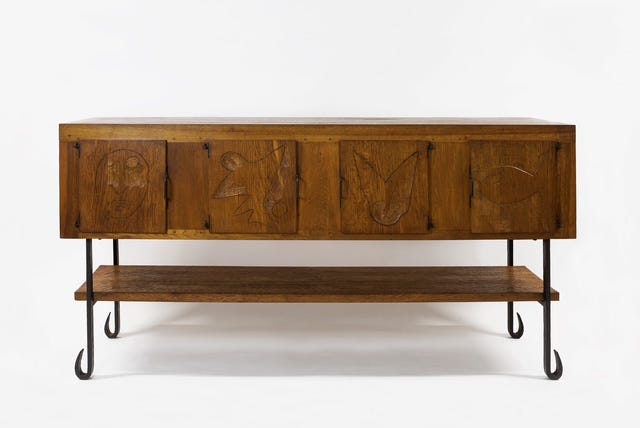
While his pieces have a distinctive French look, they grew from a very different vision and philosophy than the furniture designed by his French contemporaries, Perriand, Prouvé, and Jeanneret. Whereas the more famed figures in French postwar design were socialists who sought to utilize modernist design to elevate the lives of the millions through the use of new materials and machine production, developing industrial design for duplication, Touret focused on the most traditional, almost primitive crafts – wood carving, blacksmithing, basketry – creating artisanal furniture, lighting, and objects. He sought to have the artist’s hands visible, to use local materials, and to provide a source of income for local craftspeople. He was passionate about preserving the crafts, creating furniture in his own voice, free of influence of the modern movement which was developing in Paris. He formed Les Atelier de Marolles, a cooperative of craftspeople who brought his designs to life. The furniture is functional, in modernist, minimal forms, with strong marks of the craftsman’s hand that lend the pieces an expressive quality. Paradoxically, his pieces are simple yet complex. They use sustainable materials—primarily wood and iron—and are humanistic, original, and artistic.
The recent monograph ‘Jean Touret,’ published by Les Editions, is the only source of information on the artist and his work in sculpture and design. It is based on family and magazine archival materials, initiated by his eldest son, Francois, who grew up in Marolles. He contributed an essay entitled ‘The Miracle of Marolles,’ a beautiful and nostalgicand personal tribute, that describes Marolles as an island surrounded by an ocean of wheat, at the heart of which stood the town hall, grocer’s, bakery, and tobacconist’s. The book contains a catalogue raisonné, a comprehensive list of all the known furniture typologies produced during the 18-year atelier, and is accompanied by a website devoted to the legacy of his father. It tells the life story of the kid who was born poor and who started as a bookkeeper at an insurance company in his teens, helping his mother after the death of his father, while enrolling in local night art classes. At 23, during the Second World War, Touret was taken prisoner by the Germans during the German invasion of France. While interned in the Ore Mountains, he fell in love with wood. Seeing the old lumberjacks at work, felling trees with their sons, Touret said that ‘the logger instilled in me the sense of integrity.’ It was during his five years as a prisoner that he learned to love the trees, and when he was back home, he was determined to devote his life to art. He then moved to Marolles in the rural Loire region of central France and began to paint, and his art was represented by a Parisian gallery.
In a local tobacco shop in Marolles, Touret met local craftspeople – carpenters, blacksmiths, basket makers, ceramicists – who crafted furnishings but had no sense of design, inspiring him to establish the Ateliers of Marolles. Isolated in the shop, he developed his own modern vocabulary, designing furniture, lamps, and other accessories in wood and iron, crafted by the local artisans, in addition to creating abstract sculptures in tree trunks, and reclaiming wooden beams and sheet metal. The furniture pieces were modern and artistic, sold directly from the shop to clients, but more substantially at an annual showcase in the nearby town of Blois, and on a regular basis at the Parisian department store Primavera Le Printemps, curated by its artistic director Colette Guéden. This was where Parisian clients discovered Touret’s furniture. Only 8-10 craftspeople were employed at the atelier, and according to Desprez, who met with descendants of the makers, the production was limited to 10-15 dining sets a year. Each piece was carved individually, each one unique, crafted of local red oak.
Ever since reading ‘Parson’s Pleasure,’ the famed 1958 short story by Roald Dahl about a fascinating story that happened to an antique dealer in the Enlish countryside, when I was 16, I fell in love with stories of antique dealers. Benjamin concluded our talk with a fascinating story about a man who showed up at the gallery, asked whether they bought Touret’s pieces, and invited them to his home to see the table. Benjamin had never seen that form of table before, but was reminded of a short film created in 1961 at an exhibition of Touret taken place at a Parisian library, which featured a similar table. When the owner confirmed that his table was purchased as an exhibition at a library in the 1960s, he knew that it was the right one. One more form will be added to the next edition of the book.
All images are curtesy Galerie Desprez Breheret.