The legendary Hanging Gardens of Babylon (in present-day Iraq), one of the Seven Wonders of the Ancient World, have captivated the human imagination for millennia. This series of tiered gardens, resembling a verdant mountain rising from the Mesopotamian plain, is believed to have been constructed circa 600 BCE by King Nebuchadnezzar II to assuage the homesickness of his beloved wife, Amytis. The absence of definitive archaeological corroboration for their existence has only deepened their mystique, elevating them to near-mythical status as perhaps the most sublime gardens ever conceived by human hands.
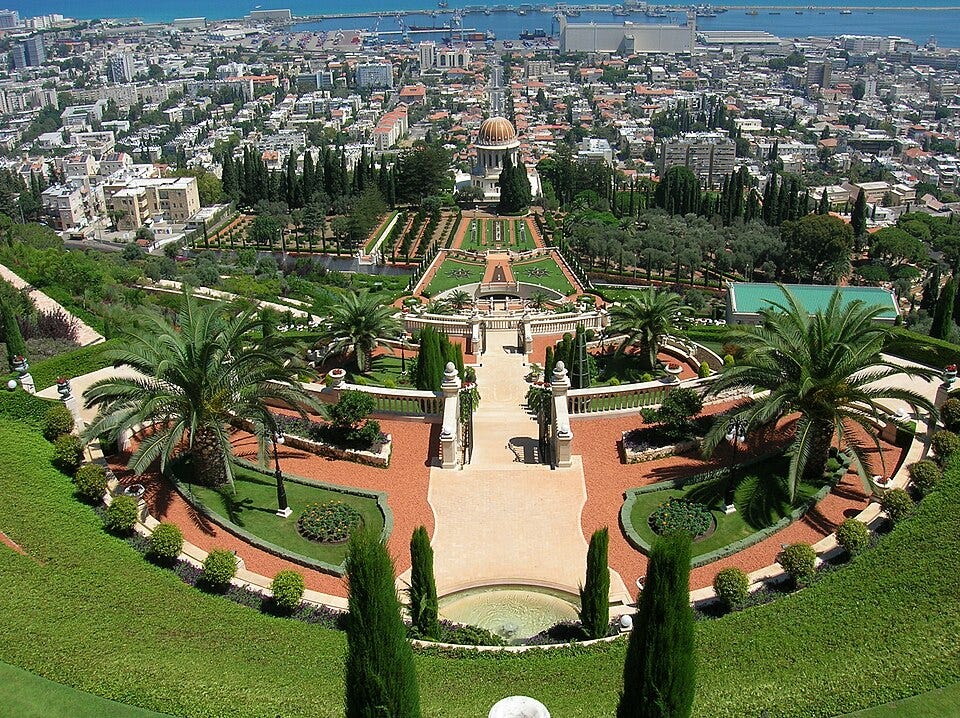
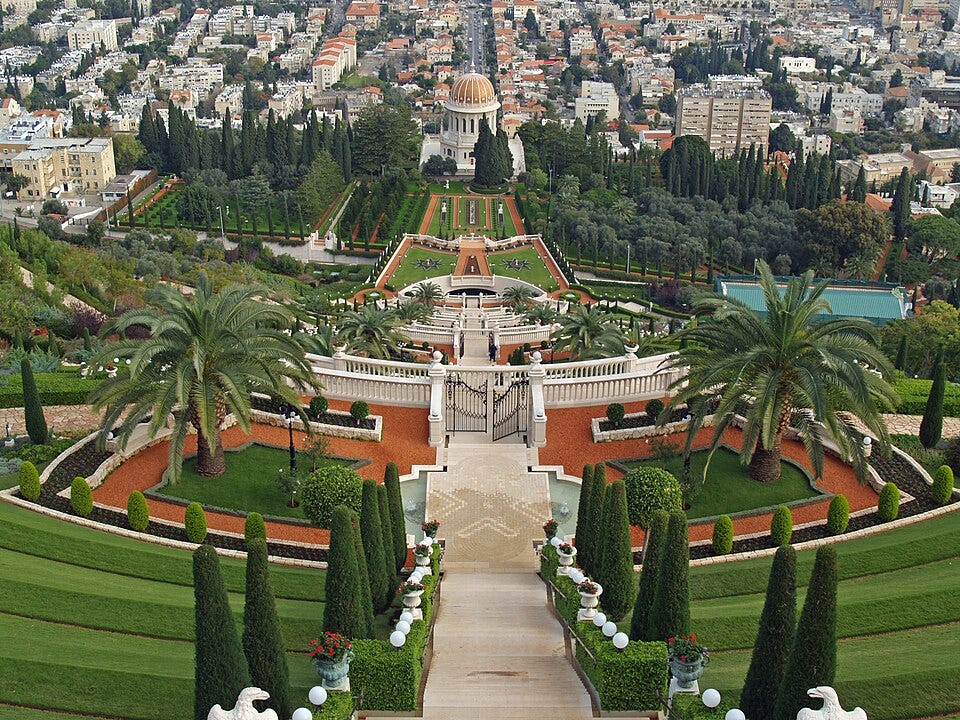
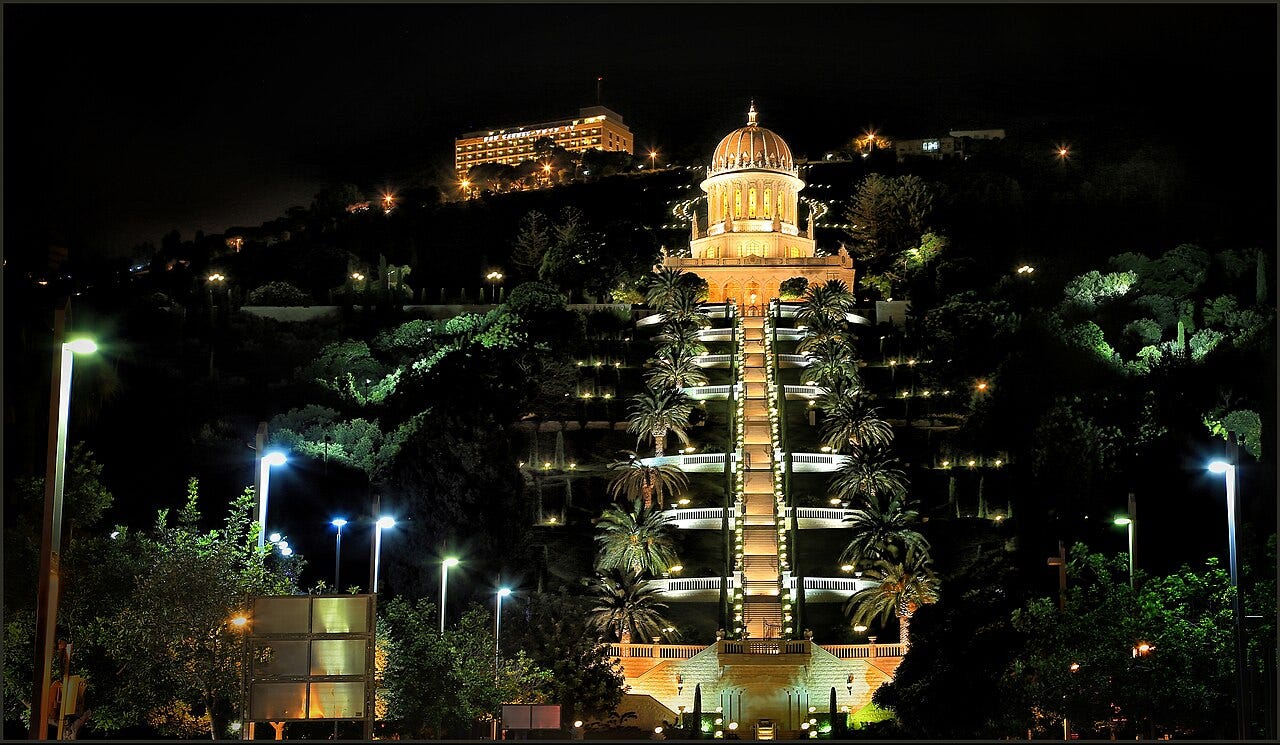
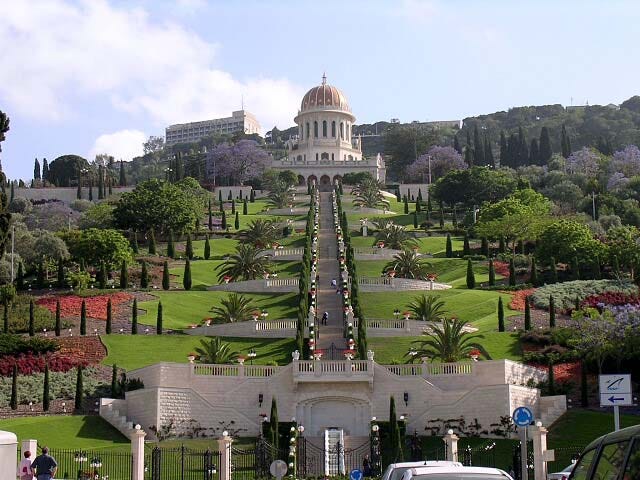
The Bahá’í Gardens in Haifa, a UNESCO-recognized terraced garden complex adorning Mount Carmel, draw direct inspiration from this ancient wonder. The site holds profound sanctity within the Bahá’í faith, a global monotheistic religion founded in nineteenth-century Persia by Bahá’u’lláh, whose teachings espouse the oneness of humanity, the equality of the sexes, and the eradication of all forms of prejudice. Comprising nineteen cascading terraces that encircle the resplendent golden-domed Shrine of the Báb—itself a site of deep religious veneration—the gardens reached completion in 2001. Spanning no fewer than nineteen terraces and 1,500 steps, the complex ascends the entirety of the mountainside, its very architecture suffused with layered symbolism.
Construction commenced in 1987 under the direction of Fariborz Sahba, the celebrated Iranian-American architect renowned for his design of the Bahá’í Lotus Temple in New Delhi, India. Sahba conceived a sequence of interconnected gardens linked by staircases flanked by twin rivulets of flowing water, which cascade gracefully down the mountainside through terraced steps and ornamental bridges. At the composition’s heart stands the Shrine of the Báb, its golden dome commanding Haifa’s skyline with quiet majesty. The design—characterized by precise geometric patterns, murmuring fountains, gravel-lined pathways, and symmetrical flowerbeds—adheres faithfully to the classical tenets of Persian garden design, themselves rooted in ancient horticultural tradition. To behold this marvel of design in person was nothing short of a transcendent experience.