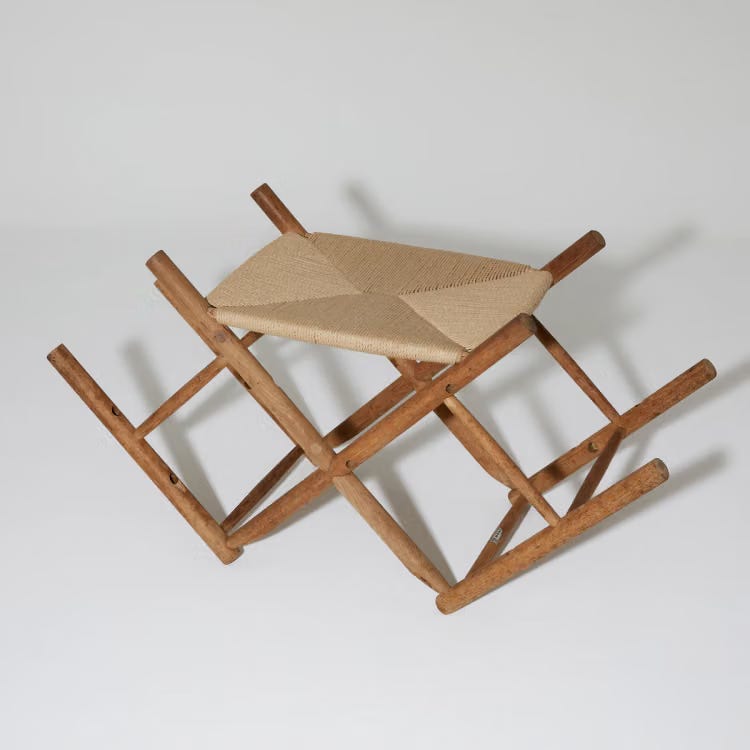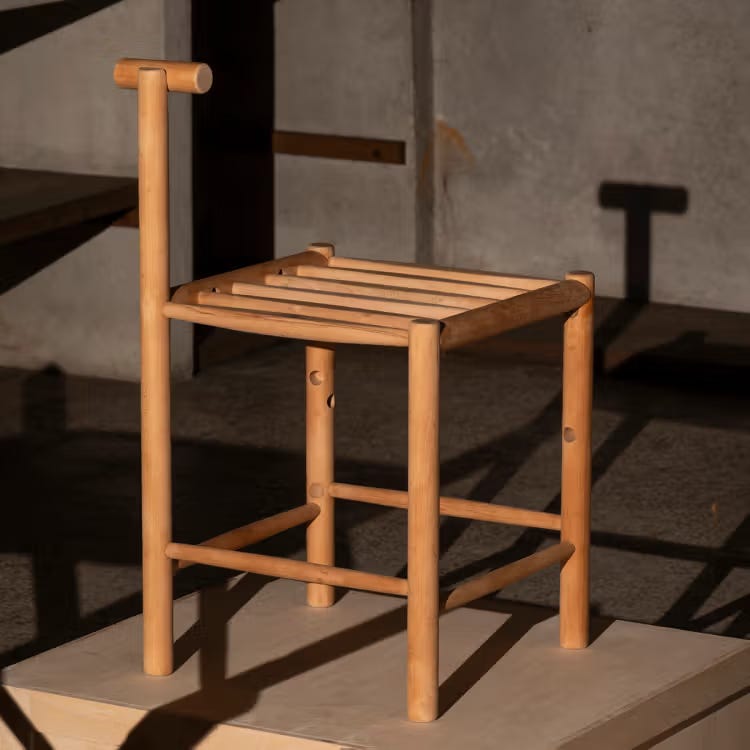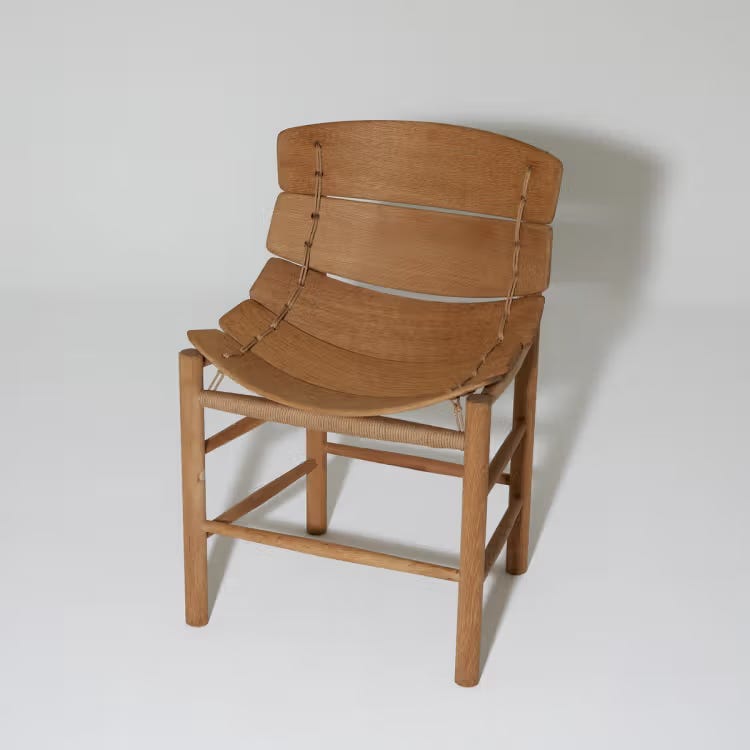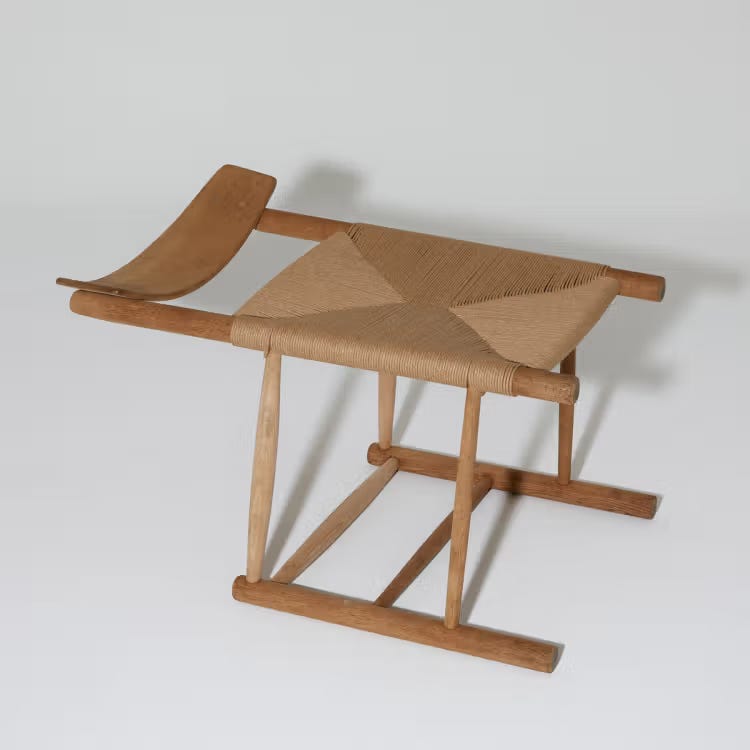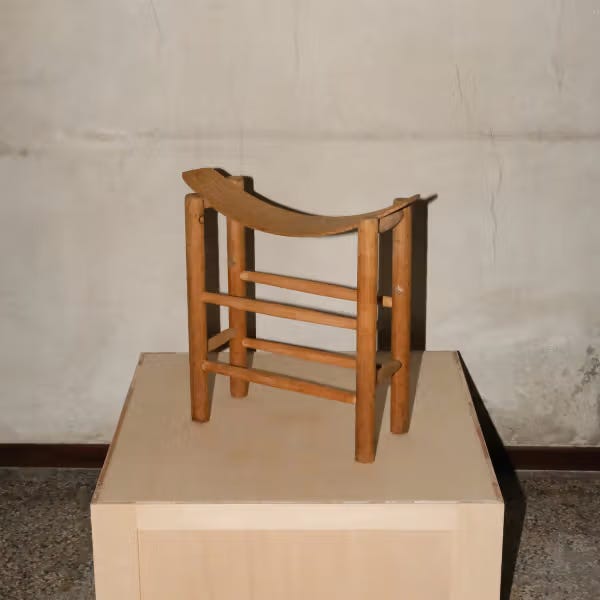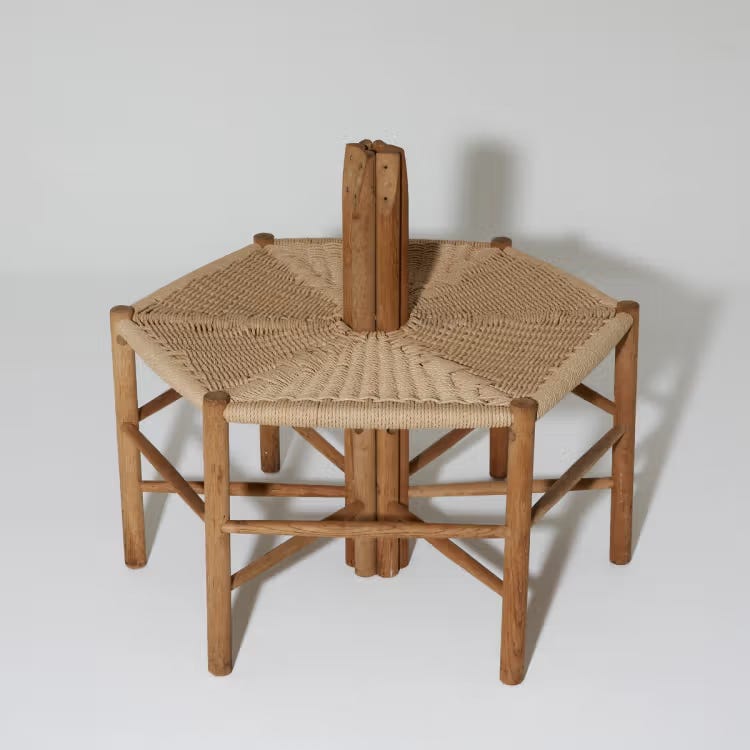
For the influential Danish furniture designer Børge Mogensen (1914–1972), a modernist who studied under Kaare Klint, the creation of honest, functional, and enduring furniture for everyday life formed the foundation of his design philosophy. Central to his socially minded vision was the belief that good design should serve ordinary people—not merely the wealthy—and that furniture should be useful, comfortable, beautifully constructed, and capable of growing richer through years of use.
Now, the Japanese multidisciplinary design studio AtMa presents J39.5, a series of chairs inspired by Mogensen’s humanistic and holistic ideals, which lie at the heart of Danish Modernism, and merging them with the Japanese ethos, and crafted of his pieces from his famed 39.5 People’s Chair. “Why Danish design?” I asked founders Makoto Suzuki and Ayumi Koyama when I met them at the opening of this small, jewel-like exhibition at Les Ateliers Courbet’s SoHo gallery. There is, they explained, a close affinity between Japanese and Danish design, rooted in a shared respect for natural materials, craftsmanship, simplicity, and functionality. This connection helps explain why Danish furniture has been so deeply admired in Japan since the emergence of Danish Modern—and why it remains enormously popular there today.
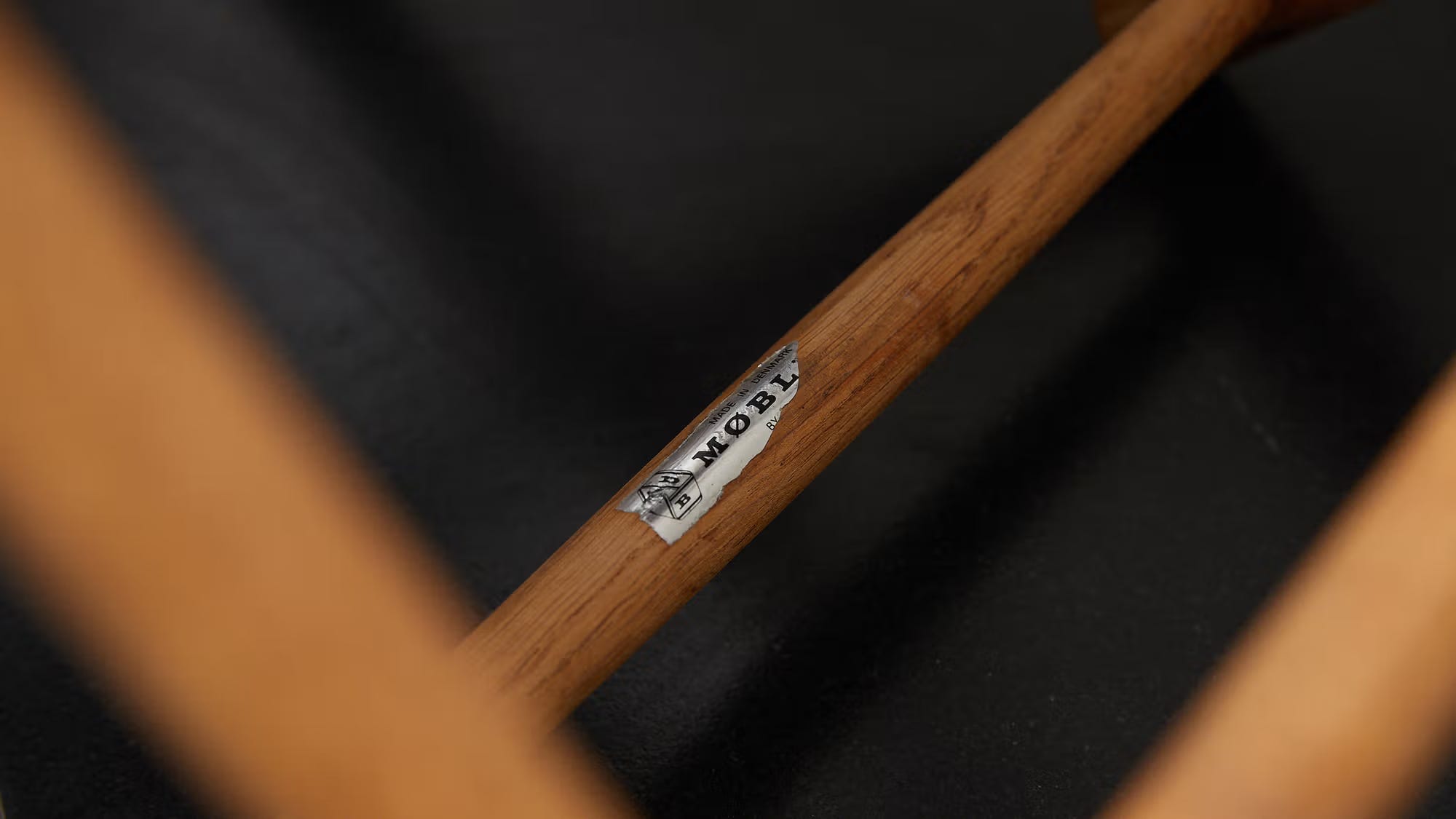
The designers, whose practice focuses on interiors, used broken and irreparable components from Børge Mogensen’s iconic 1947 People’s Chair, along with parts from other damaged Danish chairs, giving them a second—and perhaps more interesting and contemporary—life. Even the seats are woven with paper cord, crafted in Mino City, Japan’s cradle of handmade paper, made from discarded legs and backrests that have been crushed into powder.
Such furniture could perhaps only have emerged from Japan, shaped by a culture of disciplined endurance, quiet perseverance, and profound respect for the time required to achieve mastery. The chairs embody an extraordinary commitment to sustainability expressed through the Japanese spirit. There is nothing fast-paced about their creation. Every chair is constructed by hand from the reclaimed wood of old furniture, combining upcycling—the transformation of discarded chairs into objects of renewed beauty, quality, and design value—with recycling, in which existing materials are broken down and used to produce something new.
No new wood is used, and 95 percent of each chair consists of reclaimed materials. The project encourages us to reconsider the circular life cycle of the objects around us. It is a compelling expression of Cradle to Cradle: the design philosophy in which products are conceived so that, at the end of their useful lives, their materials can be reused rather than discarded. I found the result exquisite—and something that could only happen in Japan.
The exhibition features the complete series of chairs, which received both Design Project of the Year and Collectible Design of the Year at Miami Design Week in 2025. It will remain on view, by appointment, at Les Ateliers Courbet through November 2.