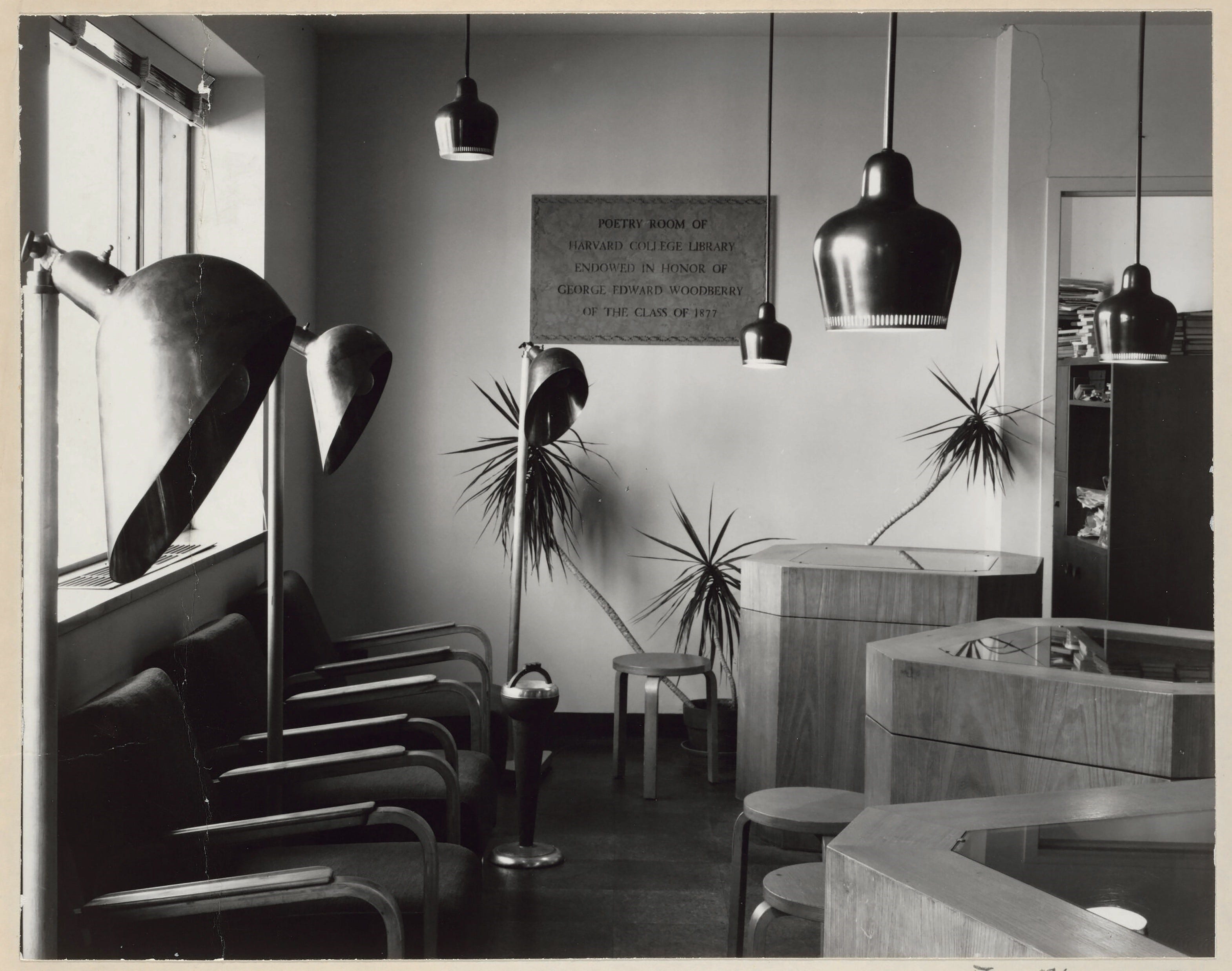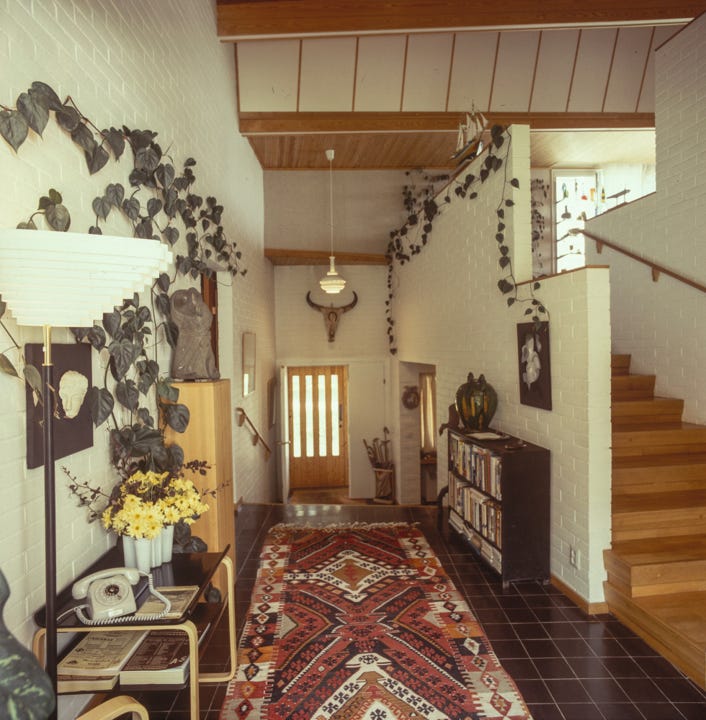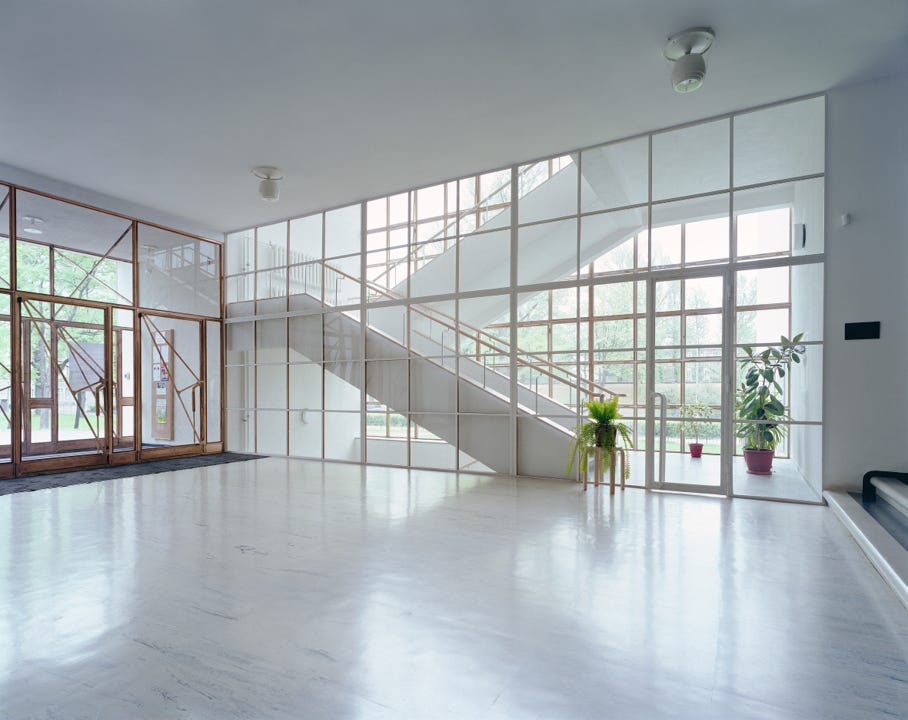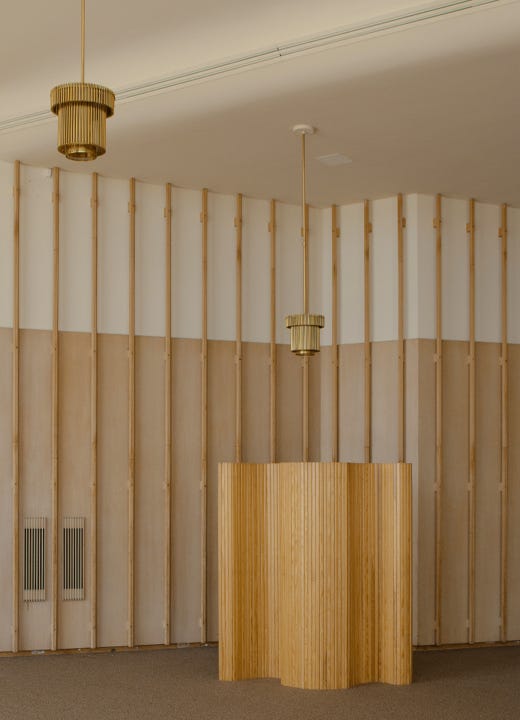
Alvar Aalto (1898–1976) was one of the most important architects of the twentieth century. He brought the principles of the Modern Movement into dialogue with the Finnish landscape, developing an architectural vocabulary distinctly his own. His fascination with undulating lines and organic forms helped shape a more humane modernism, attentive to the character of a place and to how people experience a building, and Aalto opened his architectural practice in Jyväskylä in 1923. Aino Marsio, an architect in her own right, joined the practice the following year, and they married that year, working together until her early death in 1949. Three years later, Aalto married architect Elissa Mäkiniemi, who became his partner in Studio Aalto and eventually led the office for eighteen years after Alvar’s death in 1976, completing several unfinished projects. The practice closed in 1994, the year she died.
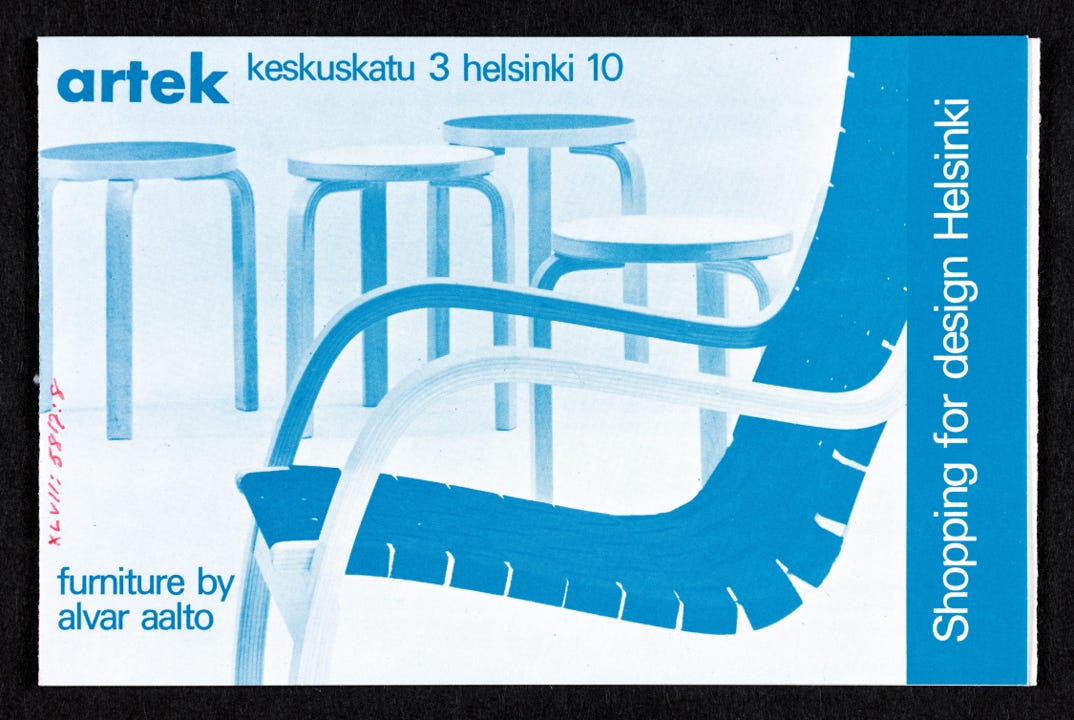
Over seven decades, the office undertook hundreds of projects, from town plans and public buildings to furniture and lighting, mostly produced by Artek, which Alvar and Aino helped found. As Sofia Nivarti, Associate Professor of Architecture at the University of Cambridge and Aalto’s expert told me, it was “the respect for and interest in natural materials, the poetry of the details, the respect for topography and site, and the desire to lyricize place humanized modernism, which became the foundation of Studio Aalto throughout its life.”
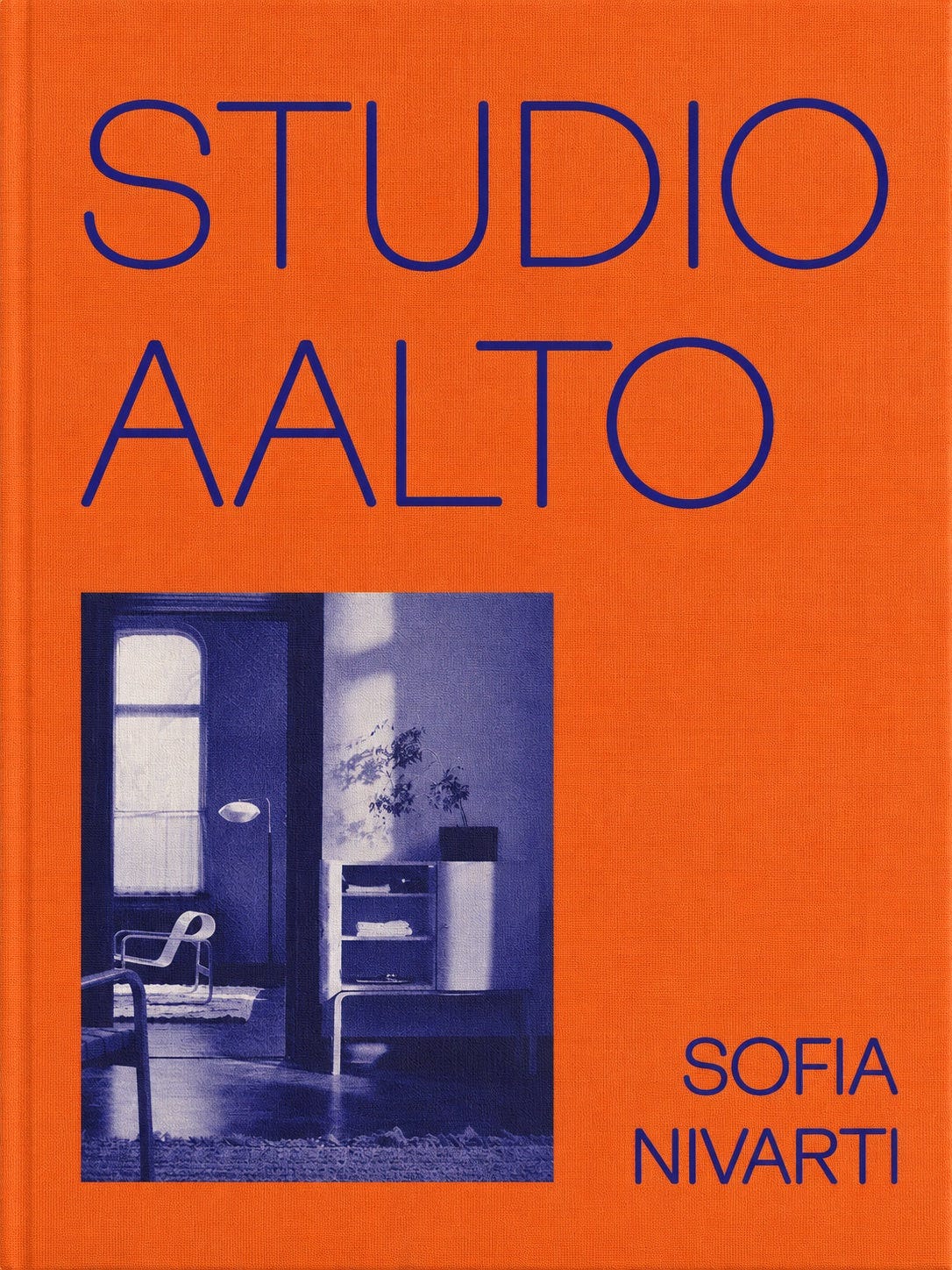
Dozens of books and hundreds of published essays have explored Alvar Aalto’s work as an architect, designer, and town planner, making him one of the most widely studied design figures of the twentieth century. So when I hosted Nivarti to discuss her new book, Studio Aalto: The Modern Legacy of Alvar, Aino and Elissa Aalto (Yale University Press), I asked Why another book on Aalto now? In fact, I had asked myself the same question when I first opened the book, and it didn’t take long to find an answer. Drawing on fifteen years of research, Nivarti follows the work of Studio Aalto beyond the moment of its completion. Her book offers a new interpretation of Aalto’s work and this is her contribution, as she is exploring the legacy, asking how the buildings have aged, what they mean to the people who use them, and what the ideas that shaped them still have to offer. Even the name Aalto, which means “wave” in Finnish, evokes the undulating forms that became synonymous with Alvar’s work.
“It is not what a building looks like on the opening day that matters but what it is like thirty years later,” Aalto once observed. This mantra could almost serve as the brief for Nivarti’s new assessment. Aalto understood that a building begins its life when it is completed and the decades since have shown how much beauty architecture can acquire through age and use. Nivarti finds that ideas central to the practice still speak to some of architecture’s most pressing concerns, from ecology and craft to social welfare and the particularities of place. Aalto occupies a place in Finland’s cultural imagination akin to Frank Lloyd Wright’s in the United States. His buildings are a source of national pride, a standing reinforced this year by the inscription of thirteen of them on the UNESCO World Heritage List – fifty years after his death -- in which Nivarti was instrumental.
Nivarti organizes the book around five concepts central to Studio Aalto’s practice: place, ecology, craft, emotion, and welfare. Together, they describe what gave the studio’s work its distinctive character and help explain its relevance today. How a building responds to its surroundings, what its materials and making can tell us, and how it serves the people who use it are all questions that shape contemporary architecture and this is an entire dimension in Aalto’s relevance.
When architects such as Mies van der Rohe and Le Corbusier were developing a language of modern architecture that could travel across national borders, devised an International Style, Aalto explored how that language could take root in a particular place. Finland’s independence from Russia in 1917 gave new urgency to the question of how to express a modern national identity, and he helped give that identity architectural form by drawing on Finland’s landscapes, local materials, and ways of life. For him, place was where the broad ambitions of modernism met the needs and cultural traditions of a community. Scholars have long emphasized Aalto’s ties to Finnish vernacular architecture and craft. Nivarti situates those ties within a cosmopolitan practice, showing how the studio’s engagement with international modernism helped it give architectural expression to the particularities of Finnish life.
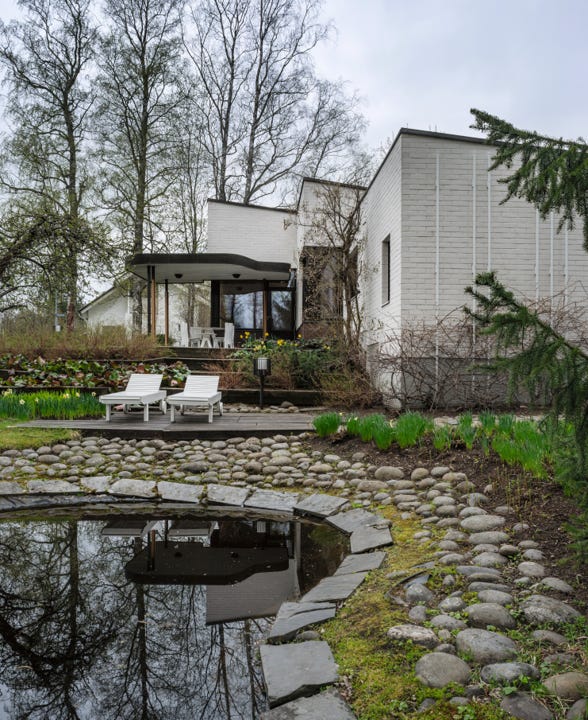
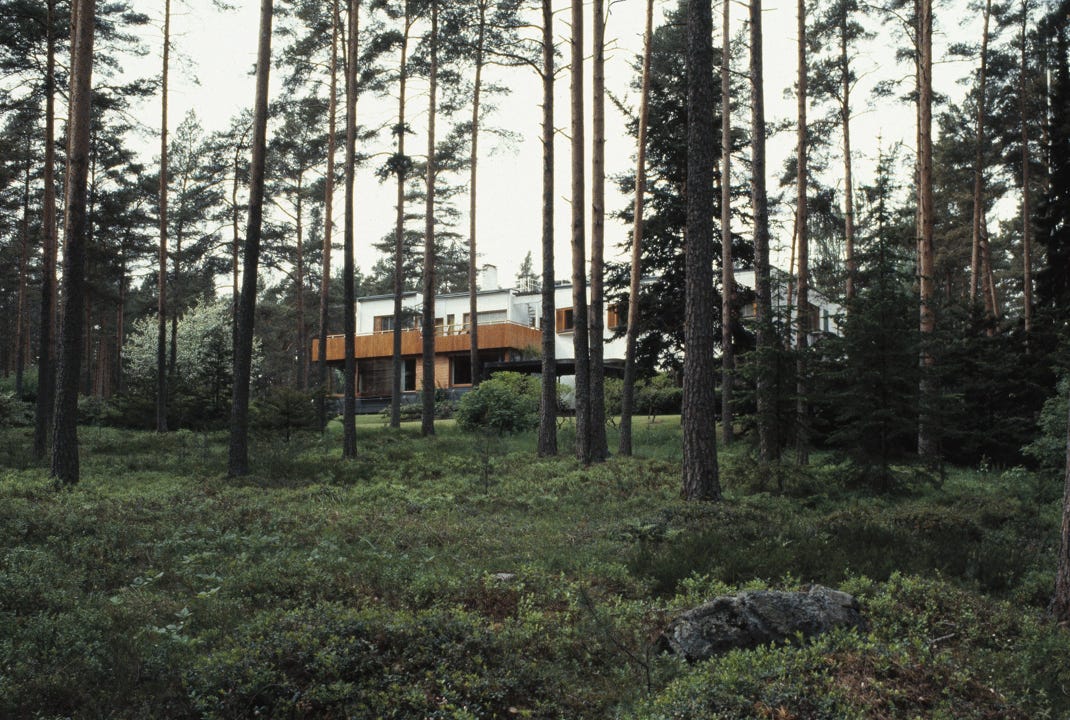
Nature, perhaps the theme most closely associated with Studio Aalto, is Nivarti’s starting point for exploring the practice’s approach to ecology. Natural materials and forms were fundamental to the studio’s work. In 1939, the historian Sigfried Giedion famously likened the contours of the Savoy Vase to those of Finnish lakes seen from the air, an association that helped establish the landscape as a lens through which to read Aalto’s work. “The buildings,” Aalto said, “shall not spoil the landscape,” Nivarti suggests that the studio’s work went a step further, expressing a conviction that buildings could and should add to the beauty of the landscapes they inhabit.
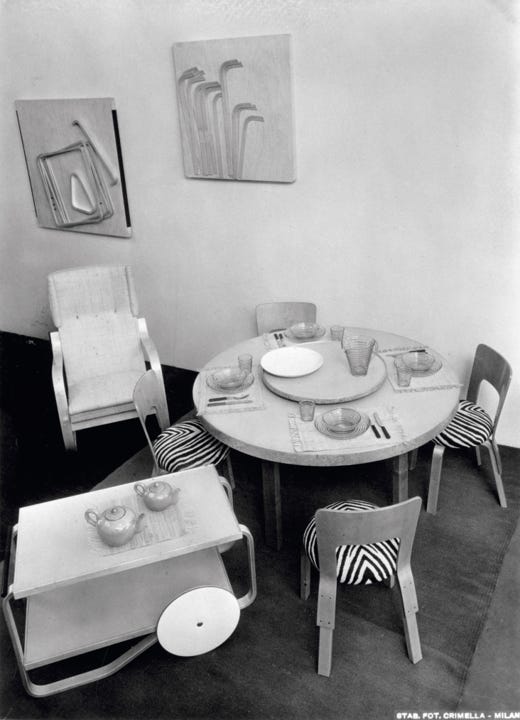
Craft, the third value on which the book is founded, became a hallmark of Studio Aalto at a time when many modernist designers placed their faith in the machine, perceiving it as both a means of bringing well-designed objects into everyday life and a model for a new aesthetic. Aalto embraced the possibilities of industrial production while giving craft a central place in his practice. Timber remains the material most closely associated with the studio, but Nivarti draws attention to the wider palette its architects worked with, from ceramic tiles and Carrara marble to bricks with irregular, crinkled surfaces. As she shows, bringing the repeatability of standardized production together with the tactile qualities of craft was one of the foundations of the Studio’s work.
Emotion is another intriguing aspect of Studio Aalto’s legacy. “Most people,” Aalto suggested, “principally grasp the atmosphere in a work of art.” When we speak today of designing spaces as experiences, or of creating homes that evoke an emotional response, we are touching on a dimension of architecture that Aalto sought to cultivate. Welfare, the last of the five qualities Nivarti identifies in her book, comes into focus in her discussion of housing and the studio’s attention to the needs of the people who used its buildings. The Paimio Sanatorium is the best-known example of how Aalto gave architectural form to well-being, putting modernist design in the service of healing. The same concern informed the studio’s housing projects and municipal buildings.
Grounded in detailed research and carefully sourced, Studio Aalto is also a pleasure to read and there is so much to learn from it. It is an essential addition to any library devoted to design, architecture, and Nordic culture.