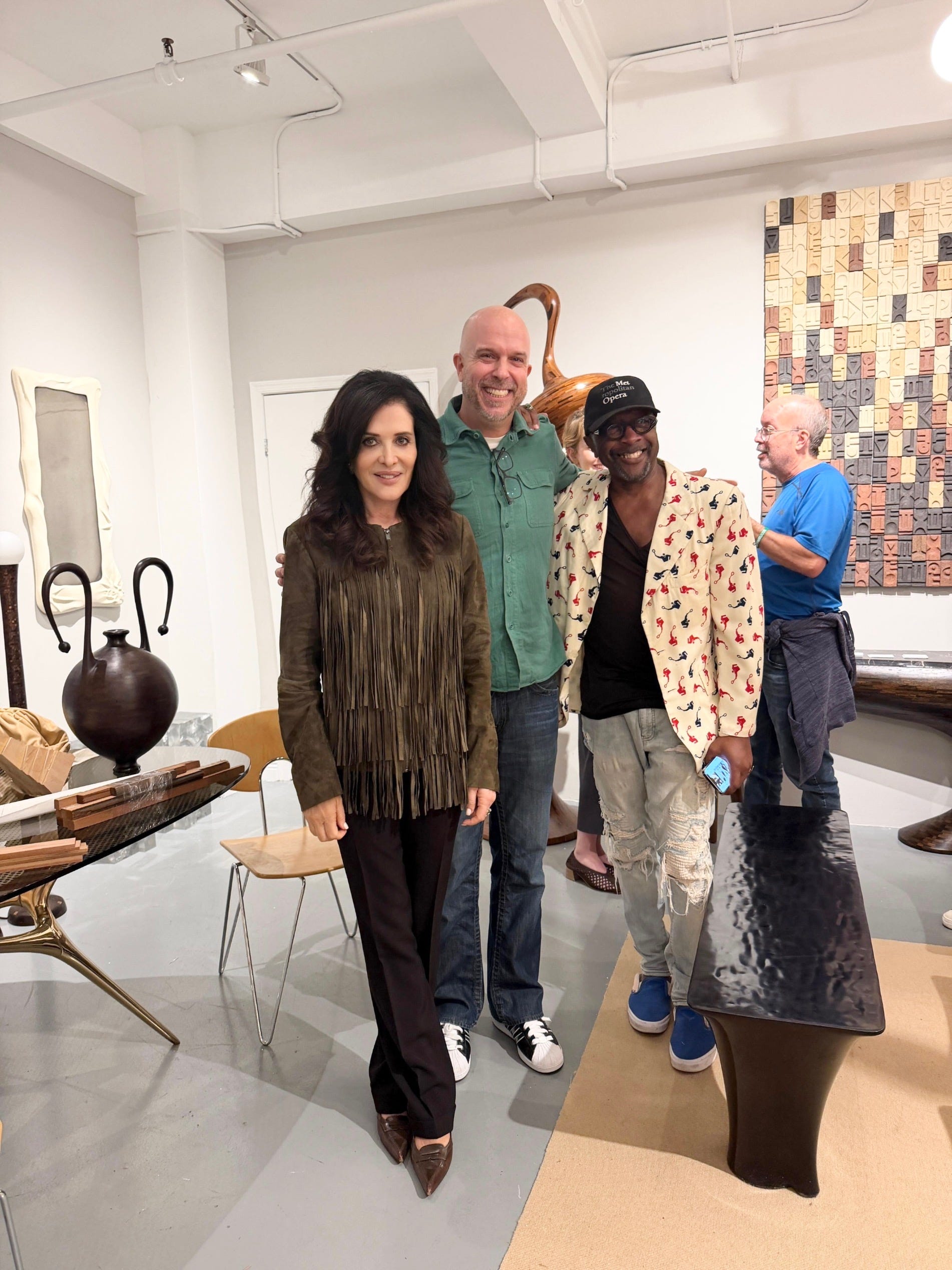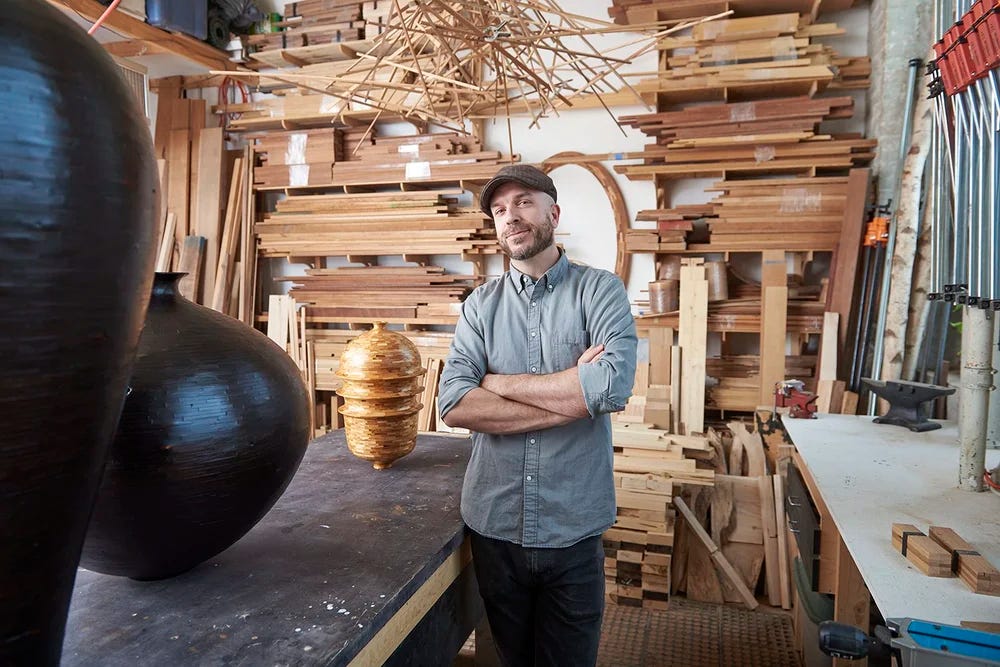
When I first heard about a woodworker who creates magnificent objects from timber reclaimed from New York City’s water tanks—the cedar and redwood structures that rise above Manhattan’s rooftops and store water for its buildings—I was immediately intrigued. This is how I came to meet Richard Haining, an American designer who was trained at the prestigious Rhode Island School of Design, and who became a woodworker; he views his practice as an extension of the postwar American Studio Furniture movement.
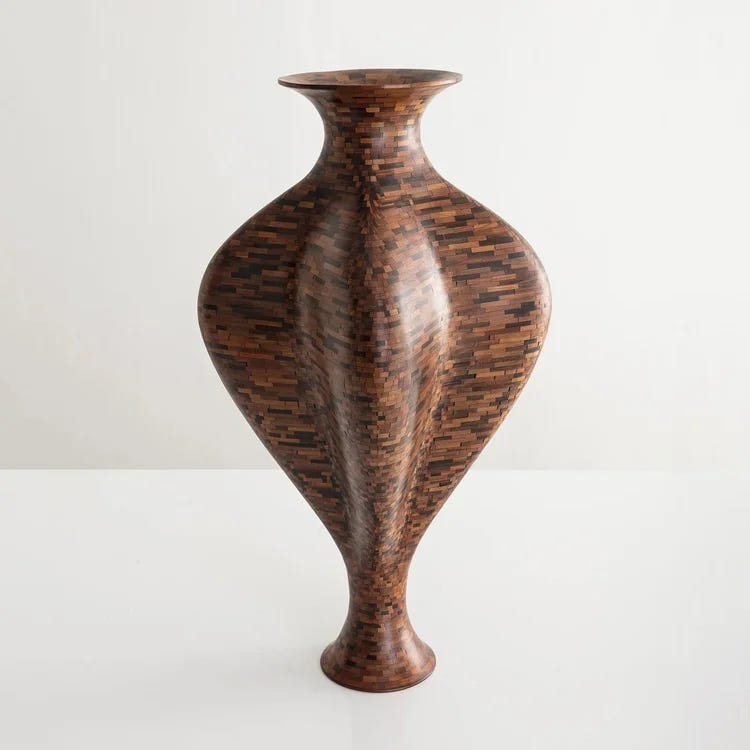
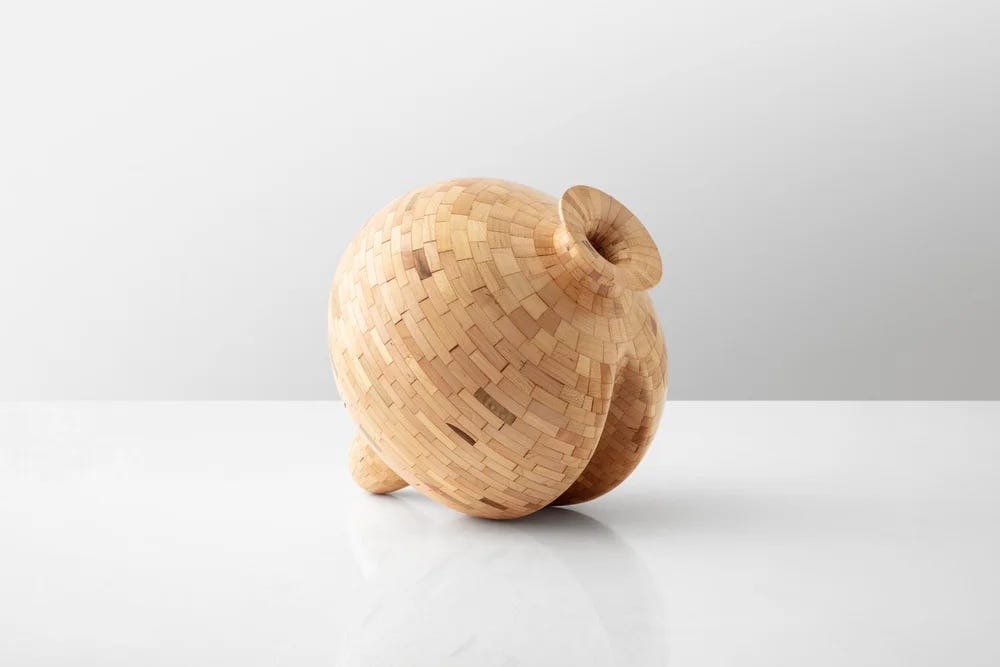
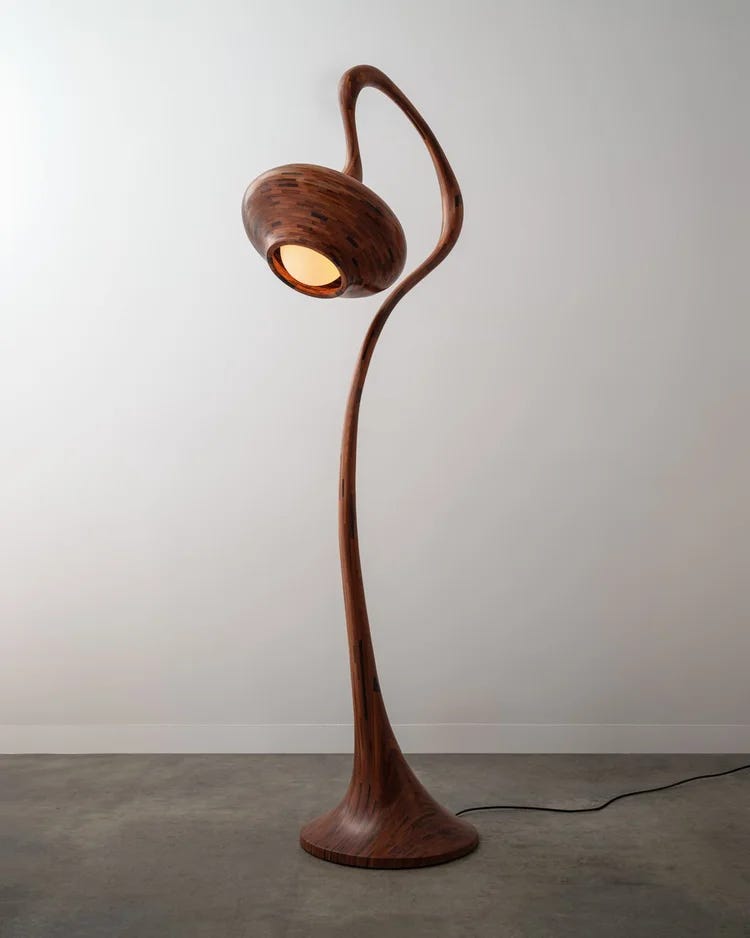
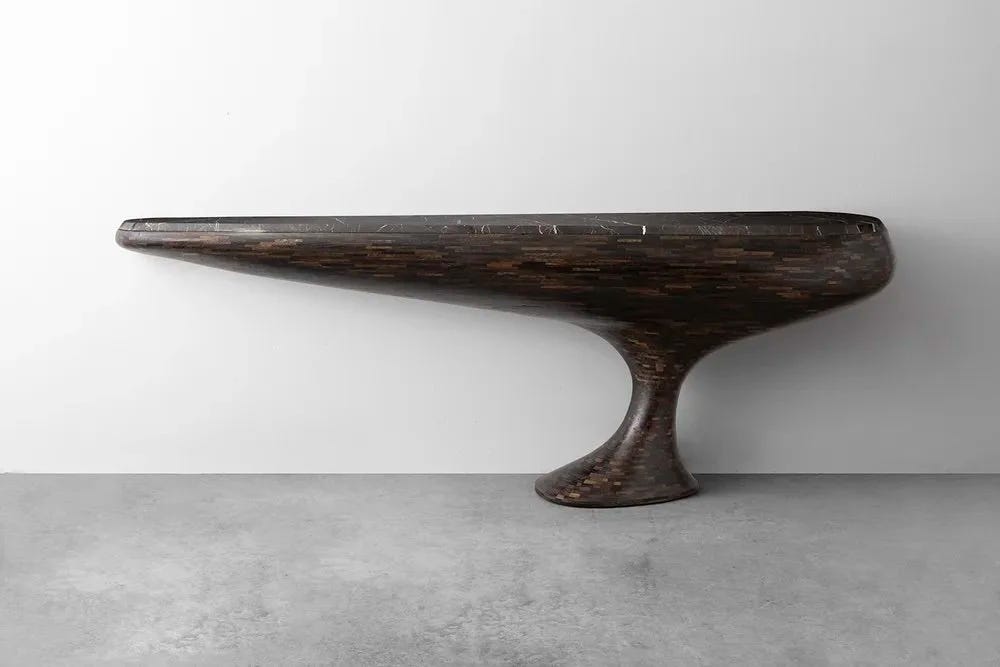
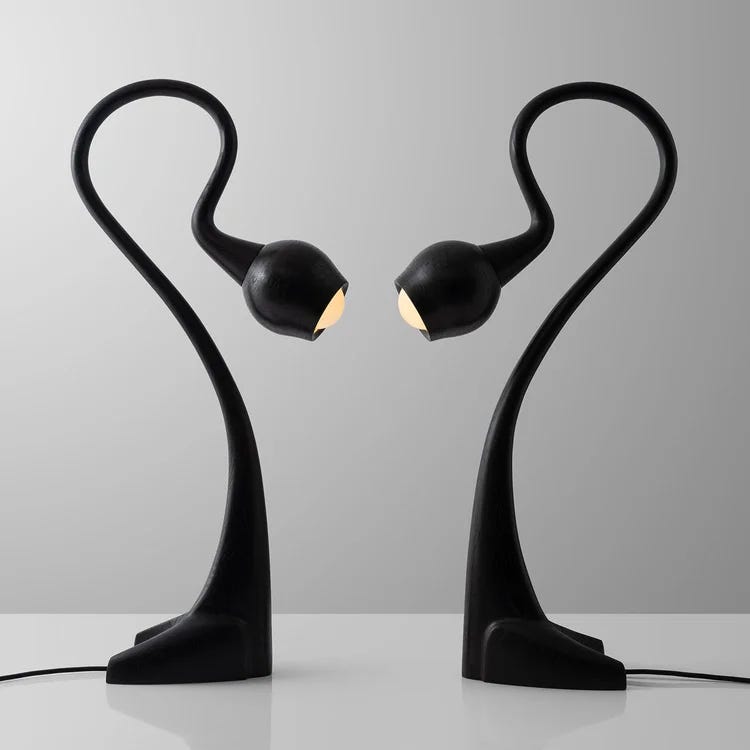
In his Brooklyn studio, Haining transforms discarded wood into beautifully crafted vessels, lighting, and furniture distinguished by a contemporary neoclassical sensibility and a language entirely his own. In recent years, he has expanded his lexicon of materials beyond water-tank timber to include reclaimed wood from demolished buildings, discarded furniture, and workshop remnants. He carefully cleans the wood and cuts it into small fragments, which become the building blocks of his objects.
In today’s world, using reclaimed timber represents an essential commitment to sustainability, and participation in reduction of waste, protection of forests, and lessening the environmental impact associated with harvesting and processing new lumber. In Haining’s work, however, reclaimed wood is more than an environmentally responsible material—it is his visual language. By transforming fragments of demolished New York buildings and decommissioned rooftop water tanks into one-off objects, he preserves part of the city’s architectural history while asking us to reconsider what we classify as waste.
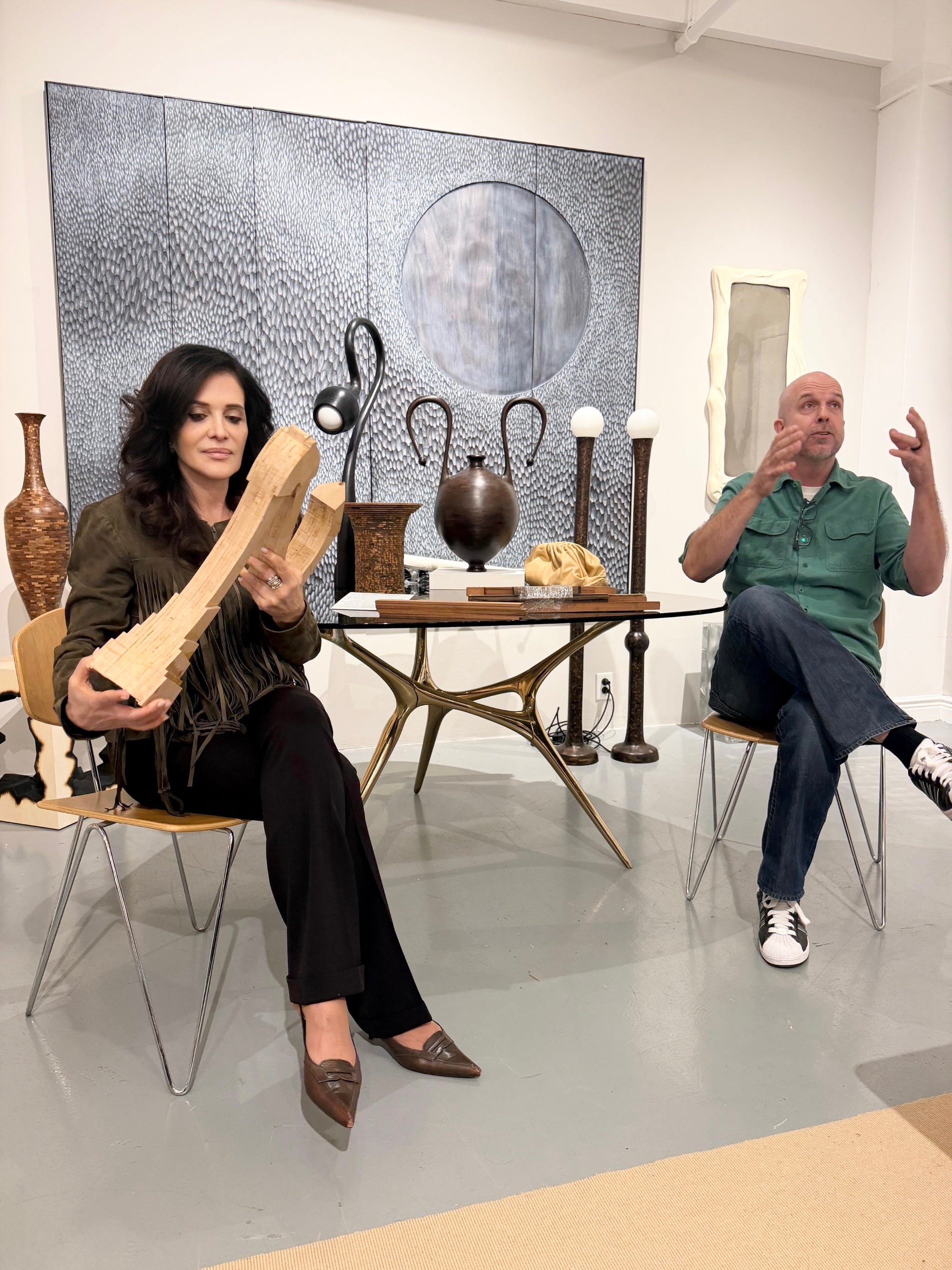
Like such pioneering figures of the American Studio Furniture movement as Wendell Castle, Jack Rogers Hopkins, and Phillip Lloyd Powell, Haining employs a stack-lamination process. He assembles small pieces of wood individually, layer by layer—almost as though he were building a coiled ceramic vessel, and once the form is complete, he carves and finishes its exterior entirely by hand. The resulting surfaces possess a rich, mosaic-like quality. Conceptually, Haining’s work explores renewal and memory. Rather than eliminating former lives, he incorporates the old into new and precious objects.
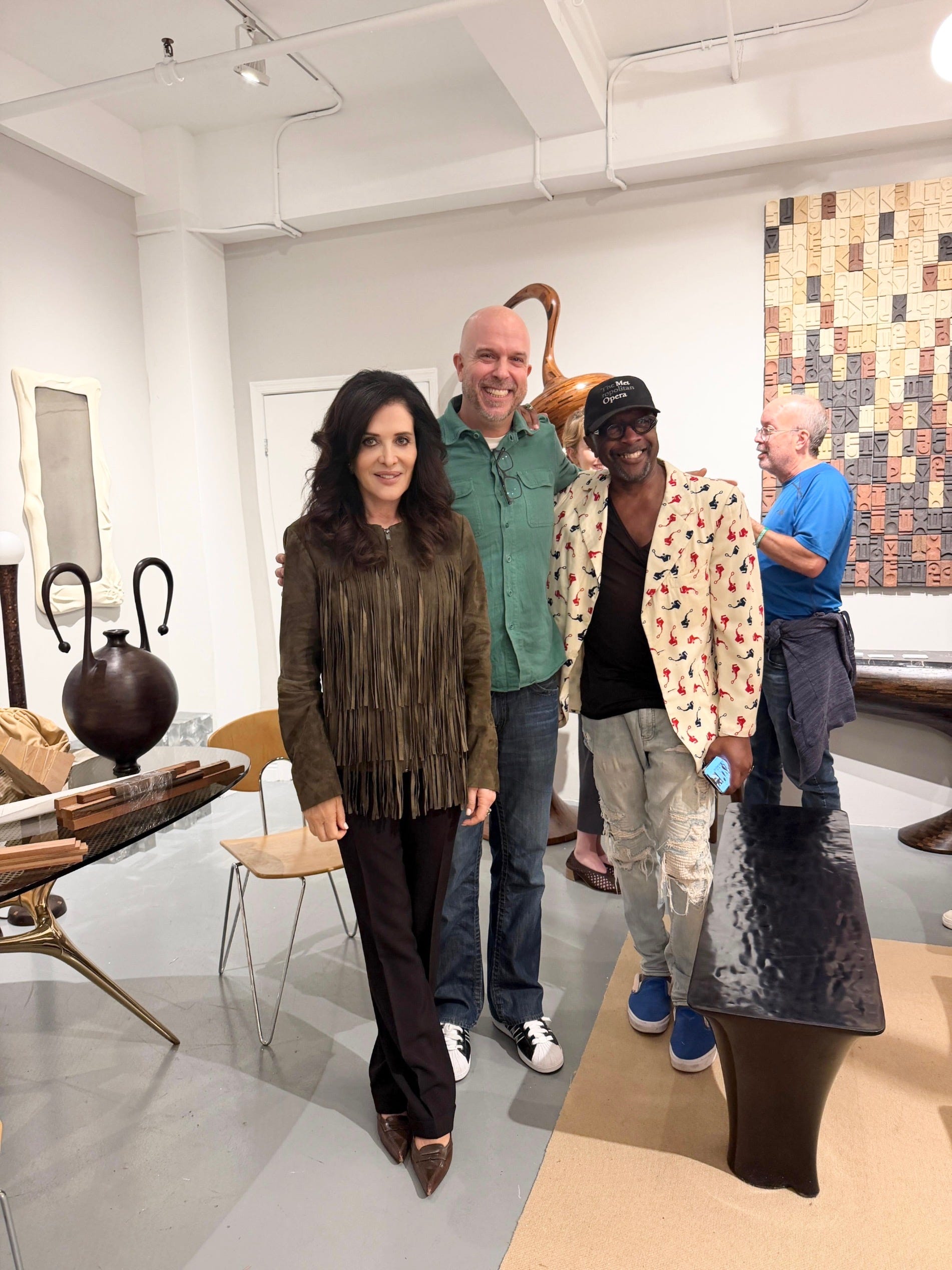
This week, I am thrilled to host a conversation with Richard at Wexler Gallery’s showroom during What’s New, What’s Next, as part of the New York Design Center’s centennial celebration. Wednesday, September 17th at 3:00 pm.
All images courtesy Wexler Gallery.