Italian architect Franco Albini (1905–1977) left an indelible mark on his native Milan. His design for the city’s metro touched the lives of millions: the modular signage and layout he created for Line 1 in 1962 set a new global benchmark for underground transit aesthetics, and it inspired the bold visual language Massimo Vignelli — who interned under Albini — later brought to the New York subway system. Albini’s totem for the 1956 Cortina Winter Olympics has since become an Italian icon; and his furniture is held in the permanent collections of museums worldwide. His legacy extends well beyond Milan, shaping cities across Italy — including Parma, Genoa, and Rome, where works such as the INA office building and the Municipal Offices of Genoa became synonymous with the country’s emergence as an international modernist force. Albini’s career spanned the rise and fall of Fascism and the economic miracle that followed Mussolini’s downfall.
A pillar of Italian modern design, Albini was a master of modernism and one of the defining figures of the Italian modern movement. As a young architect, he was instrumental in Rationalism, designing the IFCP Fabio Filzi district, one of Milan’s most significant residential neighborhoods. A graduate of the Politecnico di Milano — the school that trained many of Italy’s leading architects — he came to know his two great influences, Le Corbusier and Mies van der Rohe, personally. From Mies, he absorbed a defining philosophy: that structure, joinery, and technical detail should be exposed and celebrated rather than concealed. Albini carried this rationalist inheritance into the postwar era in his own idiom, fusing it with Italian craftsmanship and identity while preserving a minimalist, transparent aesthetic. Like his contemporaries Gio Ponti, Carlo Mollino, and Luigi Moretti, he worked across every scale, “from the spoon to the city.” As an exhibition designer, he was a visionary who transformed how art is displayed, discarding heavy, ornate pedestals in favor of floating mounts that invited direct engagement with the work itself.
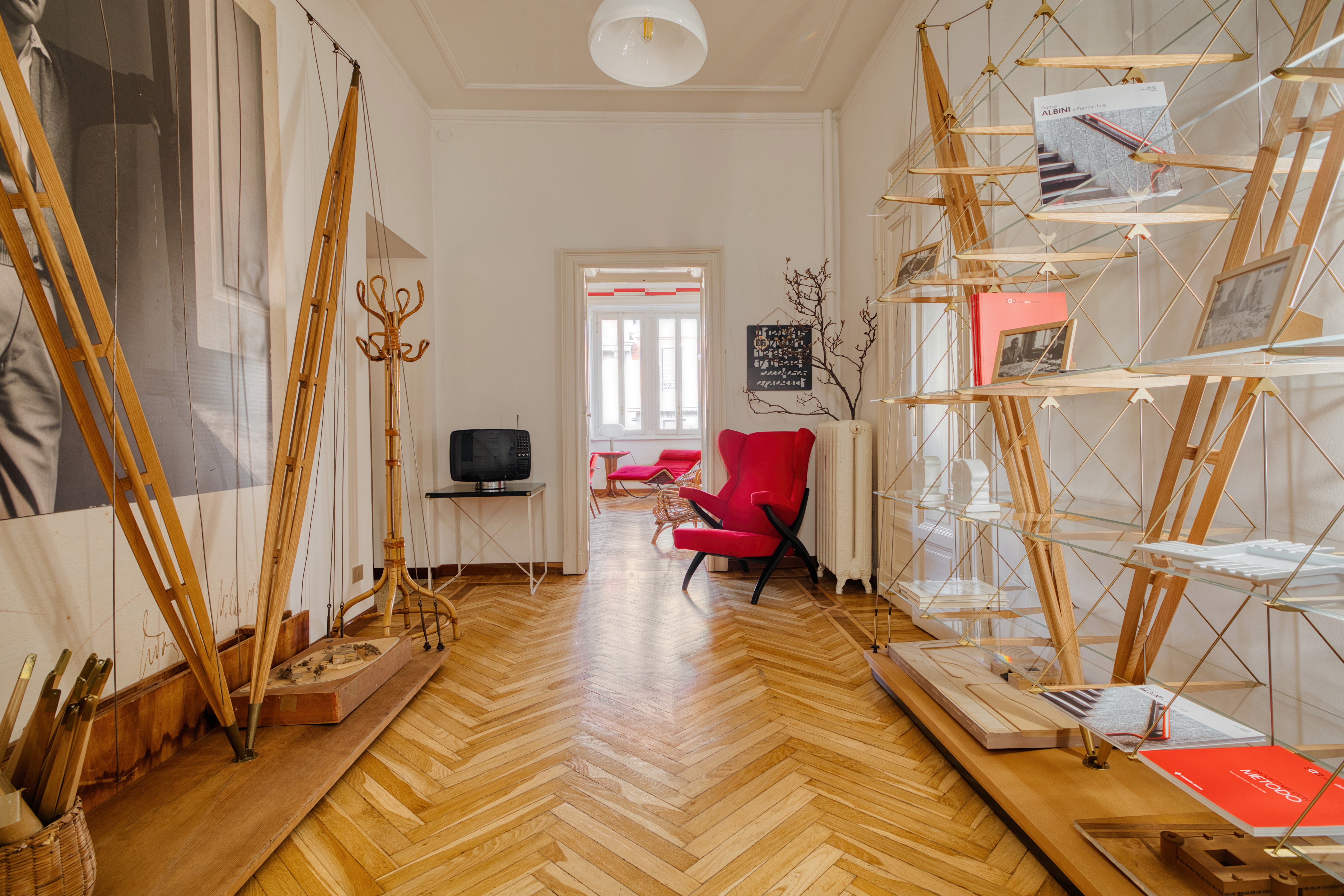
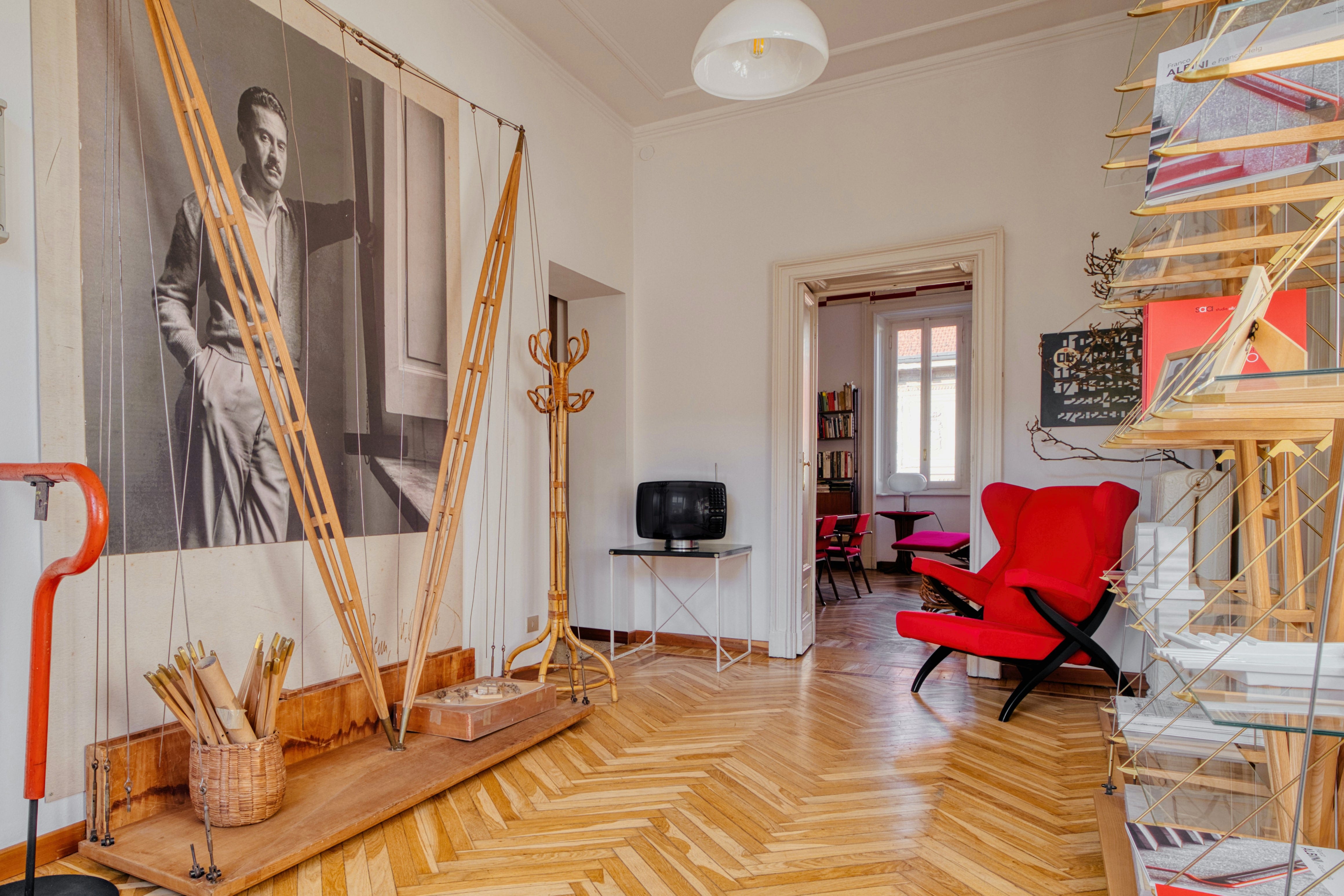
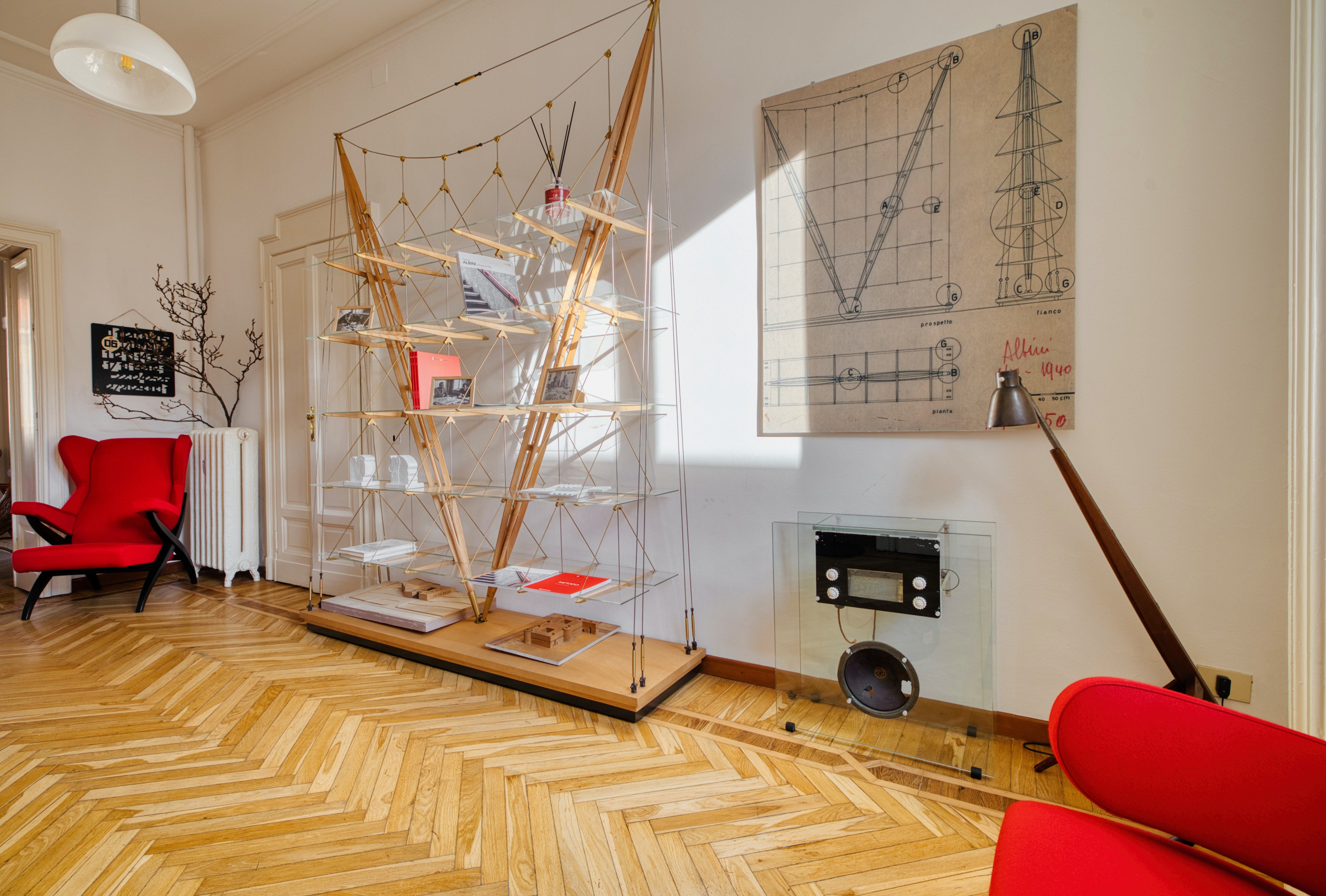
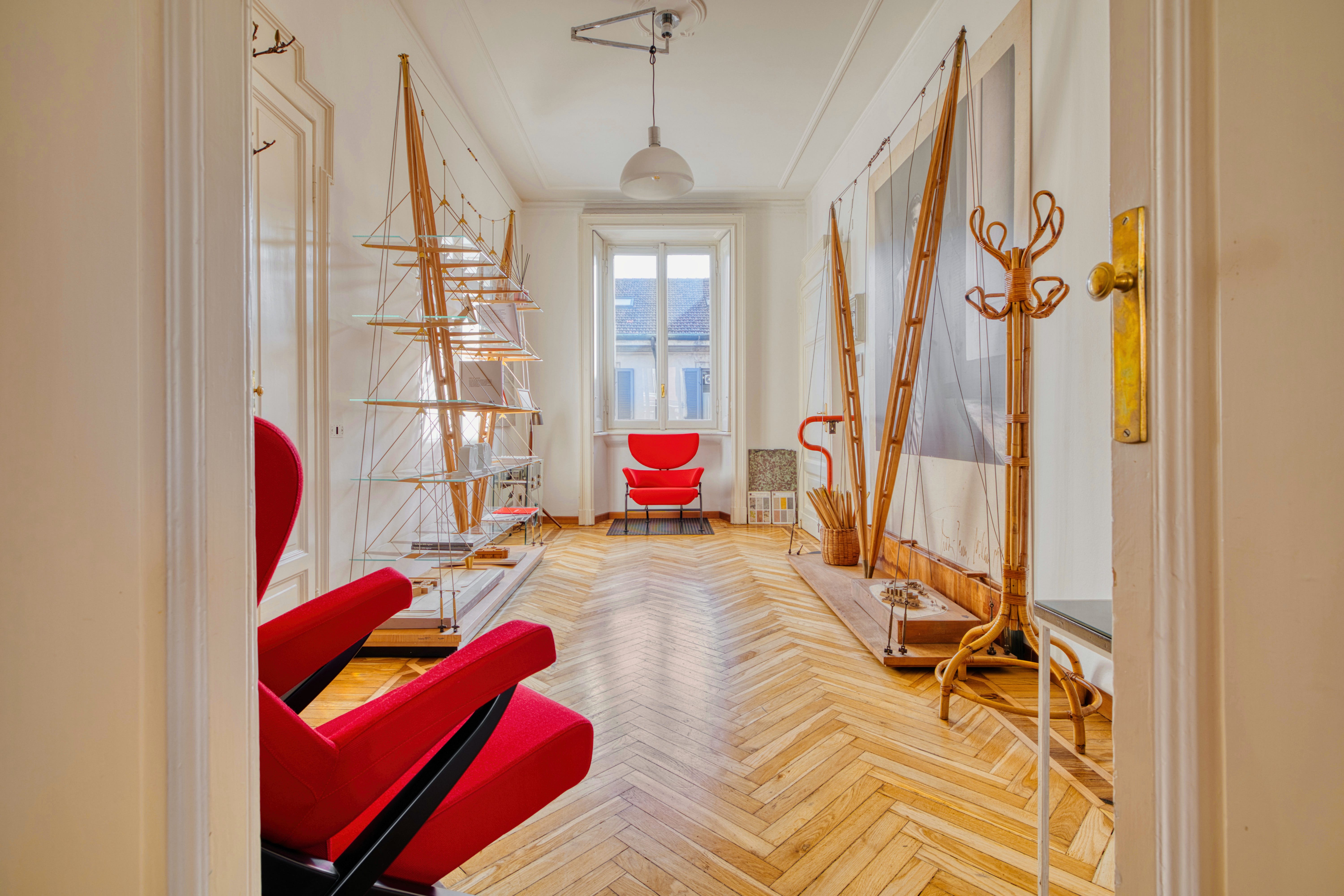
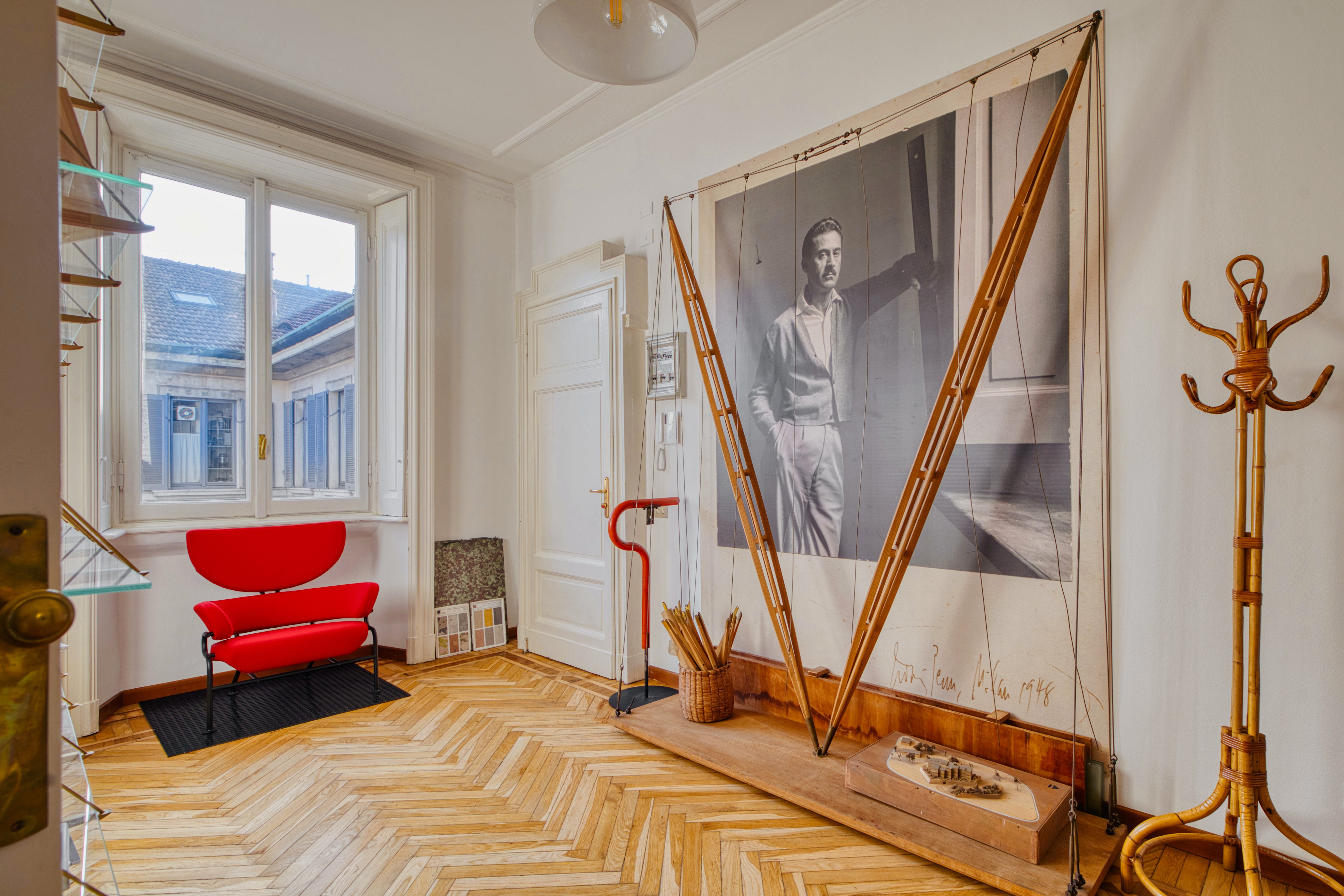
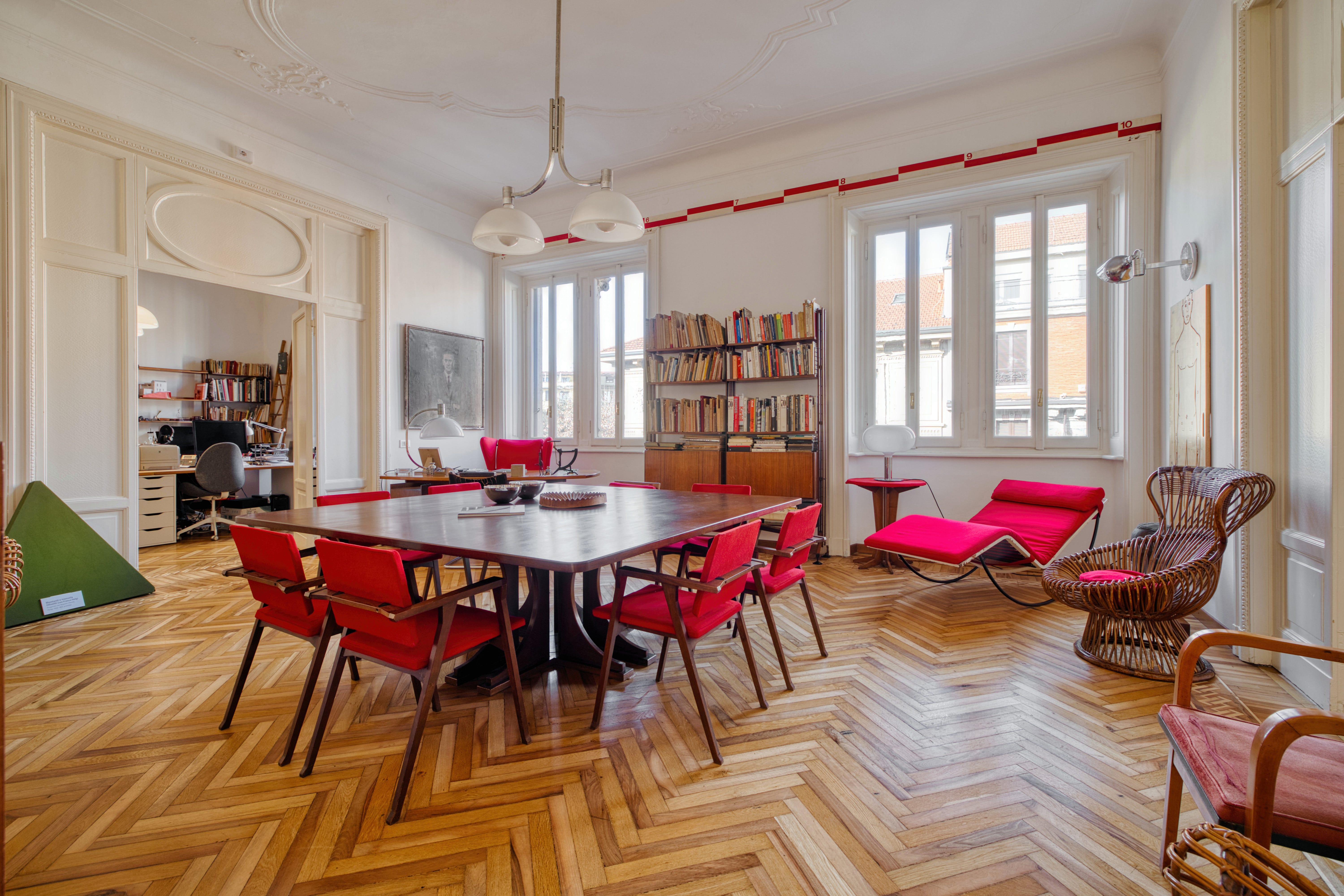
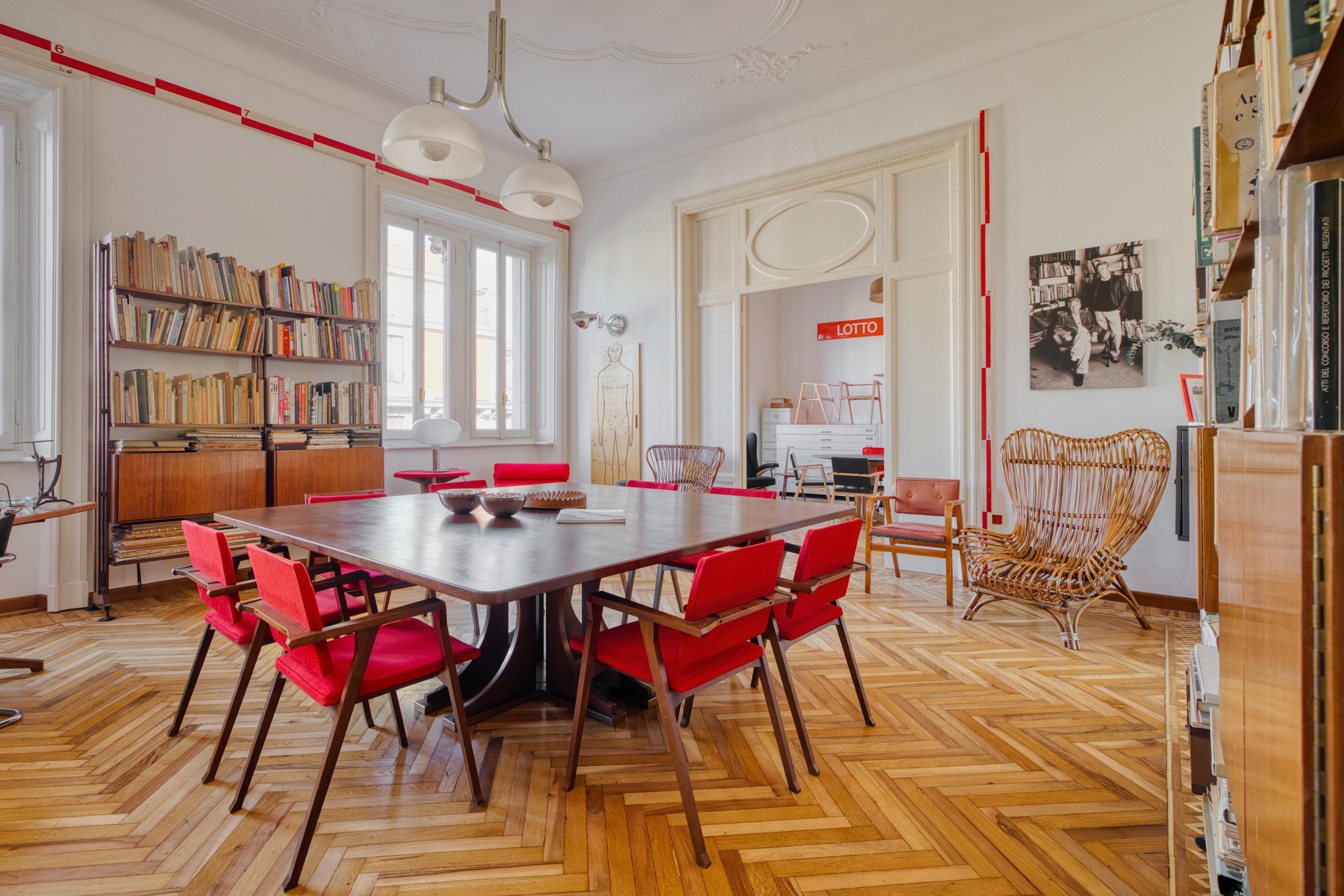
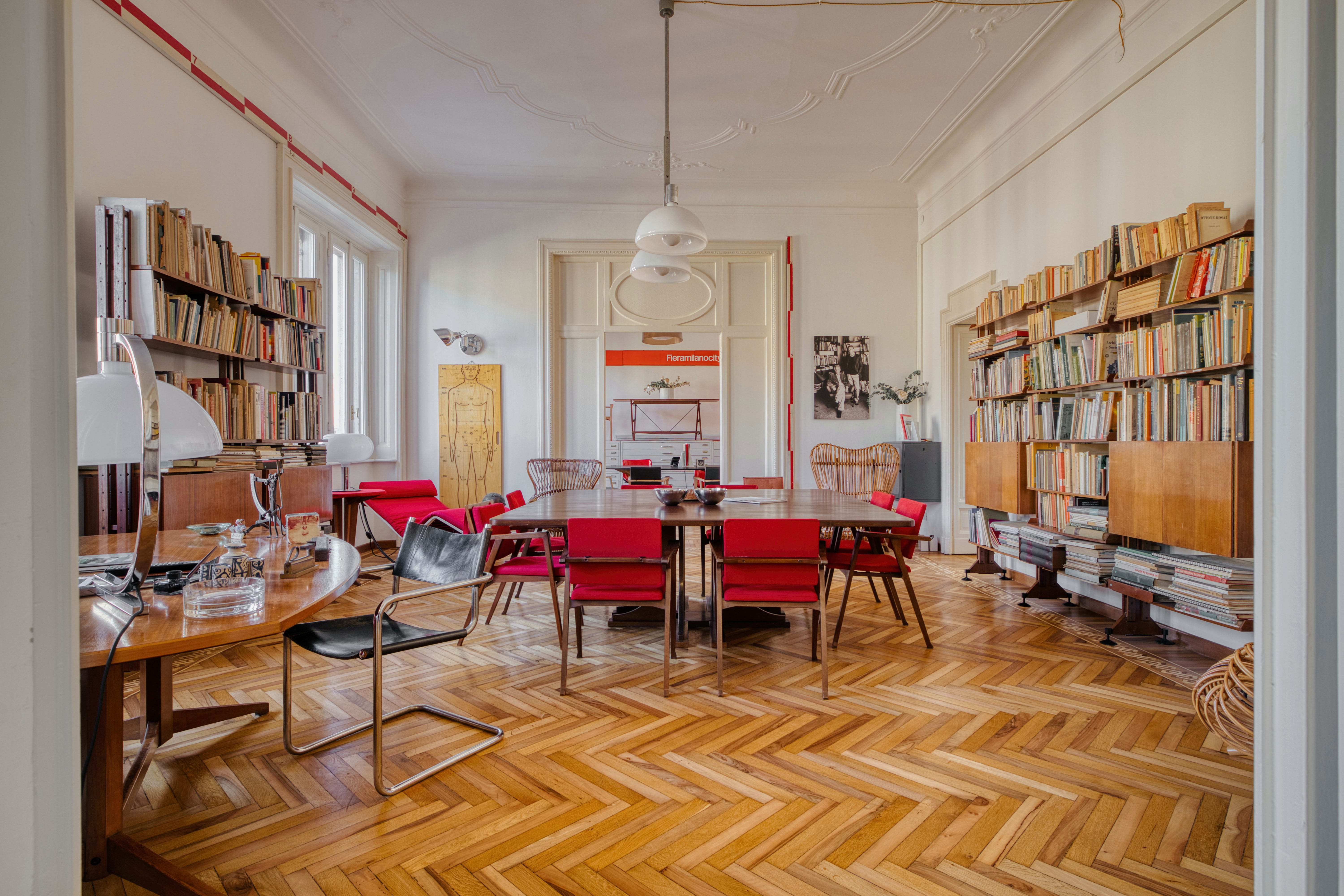
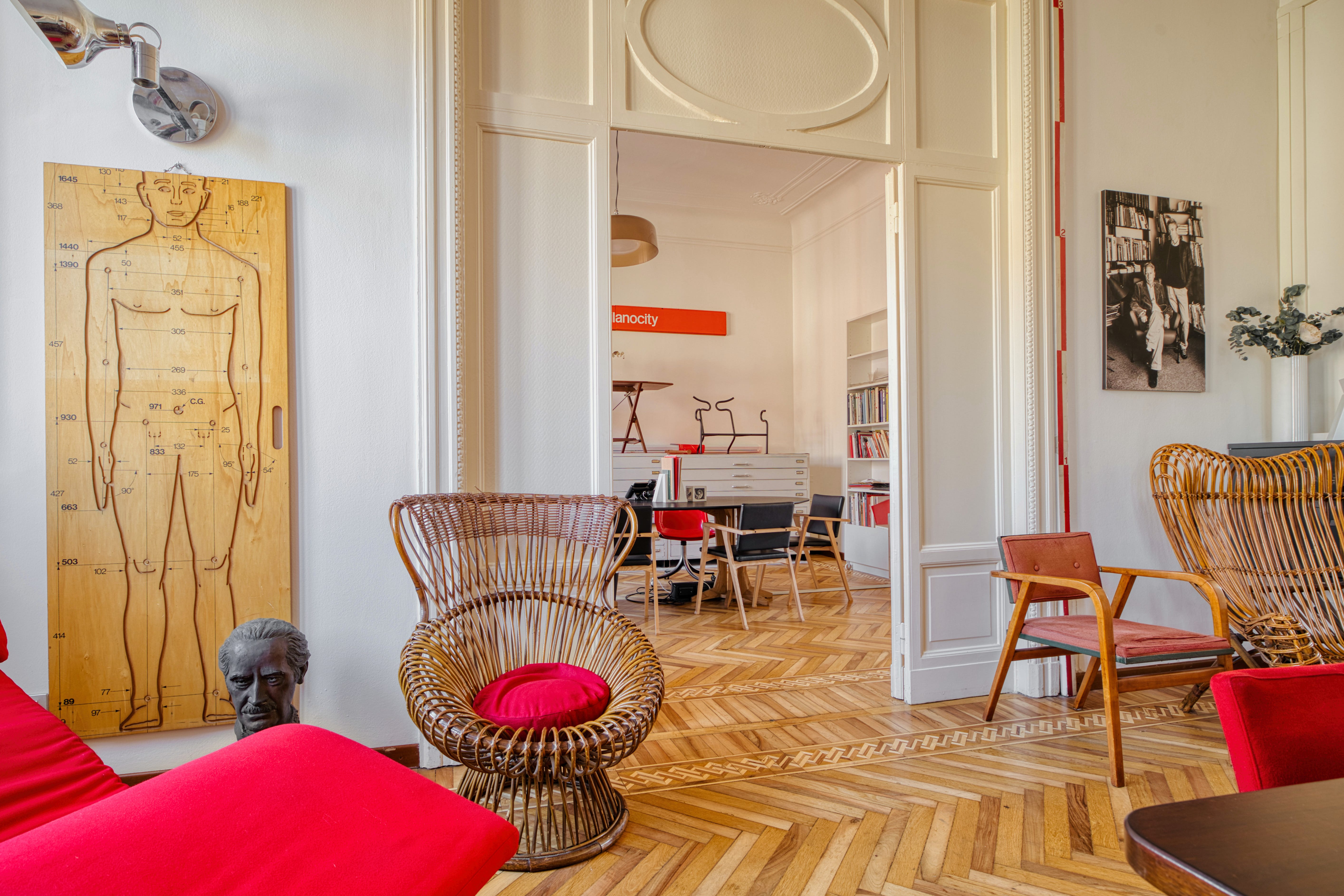
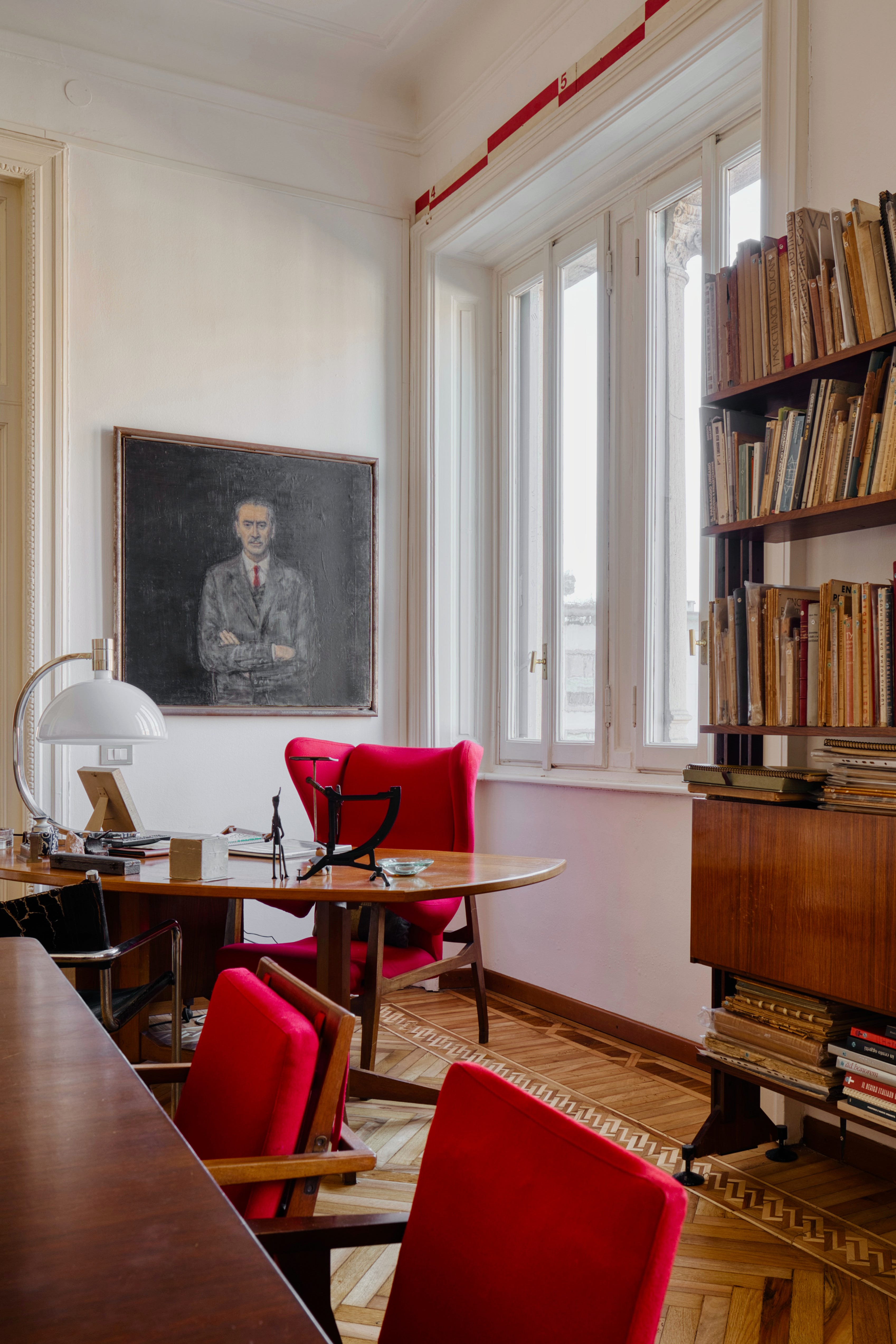
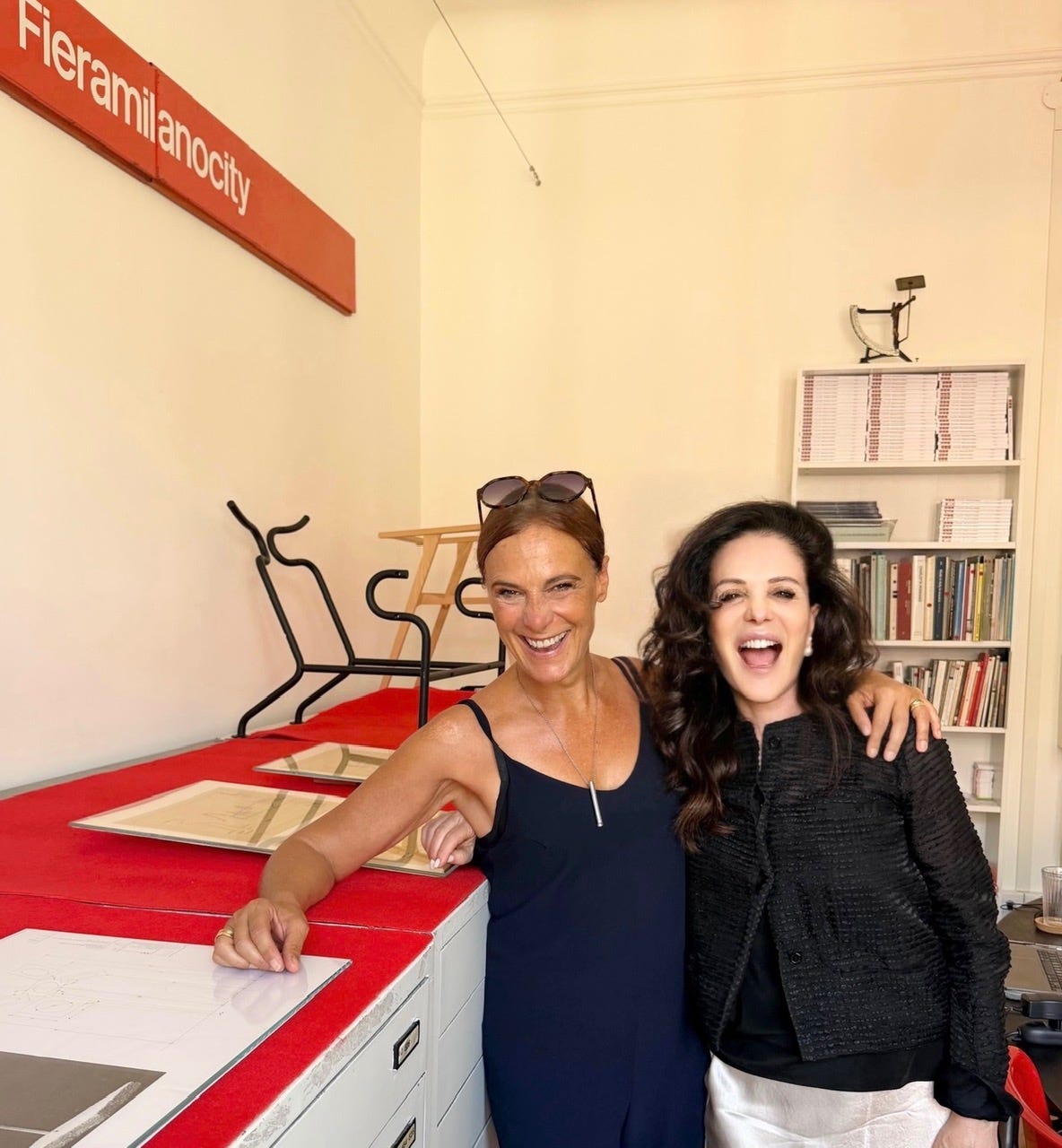
On a recent visit to Milan, I was hosted by Paola Albini — the architect’s granddaughter and President of the Fondazione Franco Albini — at the foundation’s new home, in the very neighborhood where Albini lived and worked throughout his life. His legacy feels palpably alive there. He never owned a home or an office of his own, she told me; many of his prototypes were kept at his residence or at the studio he shared with his partner Franca Helg and his son, Marco Albini. The foundation now holds thousands of architectural and furniture drawings, along with models, letters, and photographs — an extraordinary window into the world of one of the twentieth century’s most important architects. Anyone acquiring a vintage piece of Albini furniture (many models have been reproduced), should have it authenticated and certified by the Foundation. The space itself is striking: bright, open, and animated by both his furniture and his archives.
Albini designed numerous bookcases — a transformative piece of mid-century furniture that doubled as a room divider — but his most compelling work in this vein is the Veliero, a one-off piece from 1940 in which he explored the very idea of balance. This oversized bookcase remains the ultimate expression of his lightness and experimentation. Albini was never able to bring it into production himself; it was manufactured for the first time decades after his death, by Cassina. The central part of the prototype is exhibited in the Foundation’s space.
The Franco Albini Foundation is open to the public ON festive days. To learn more, visit the website.