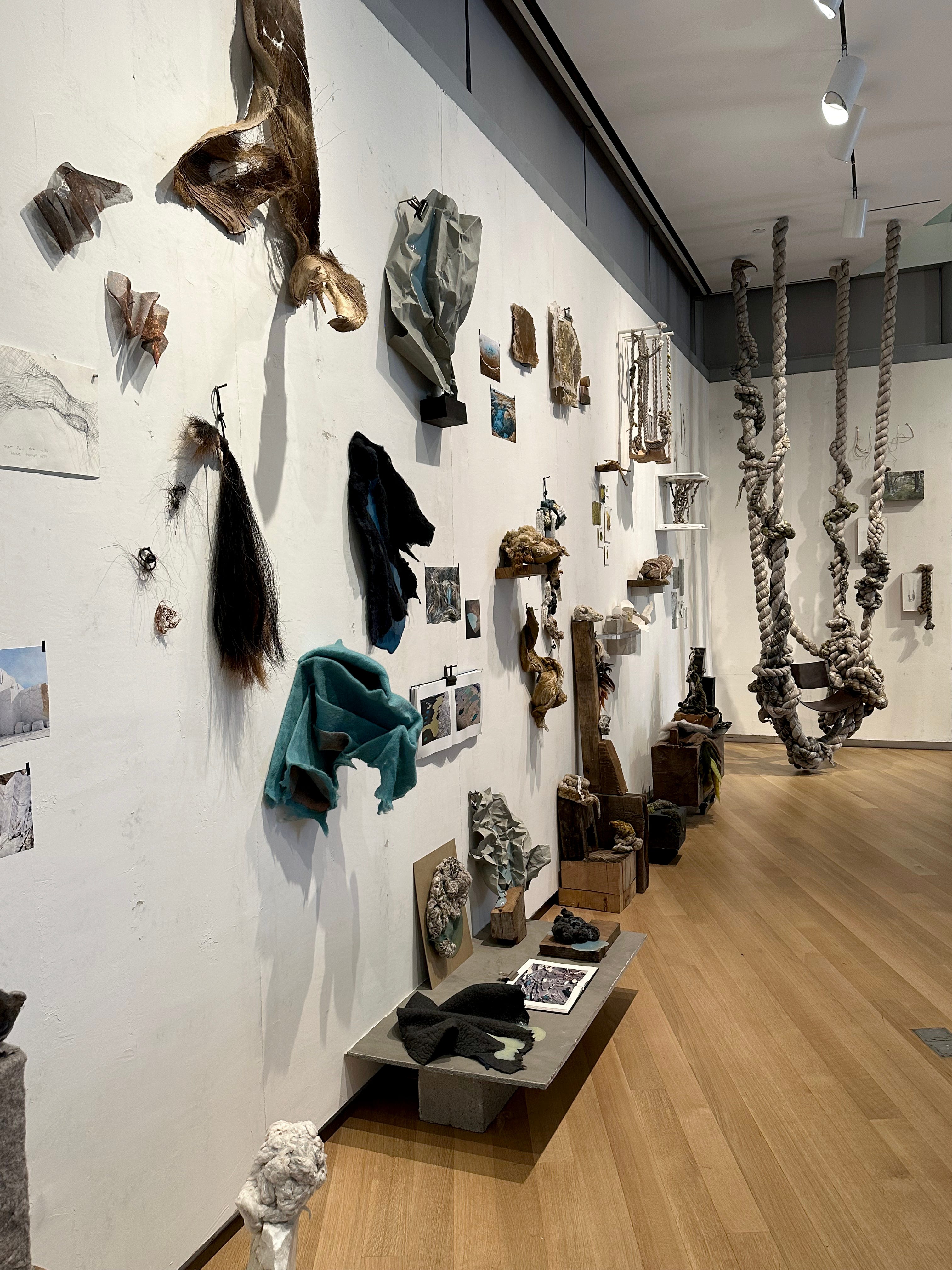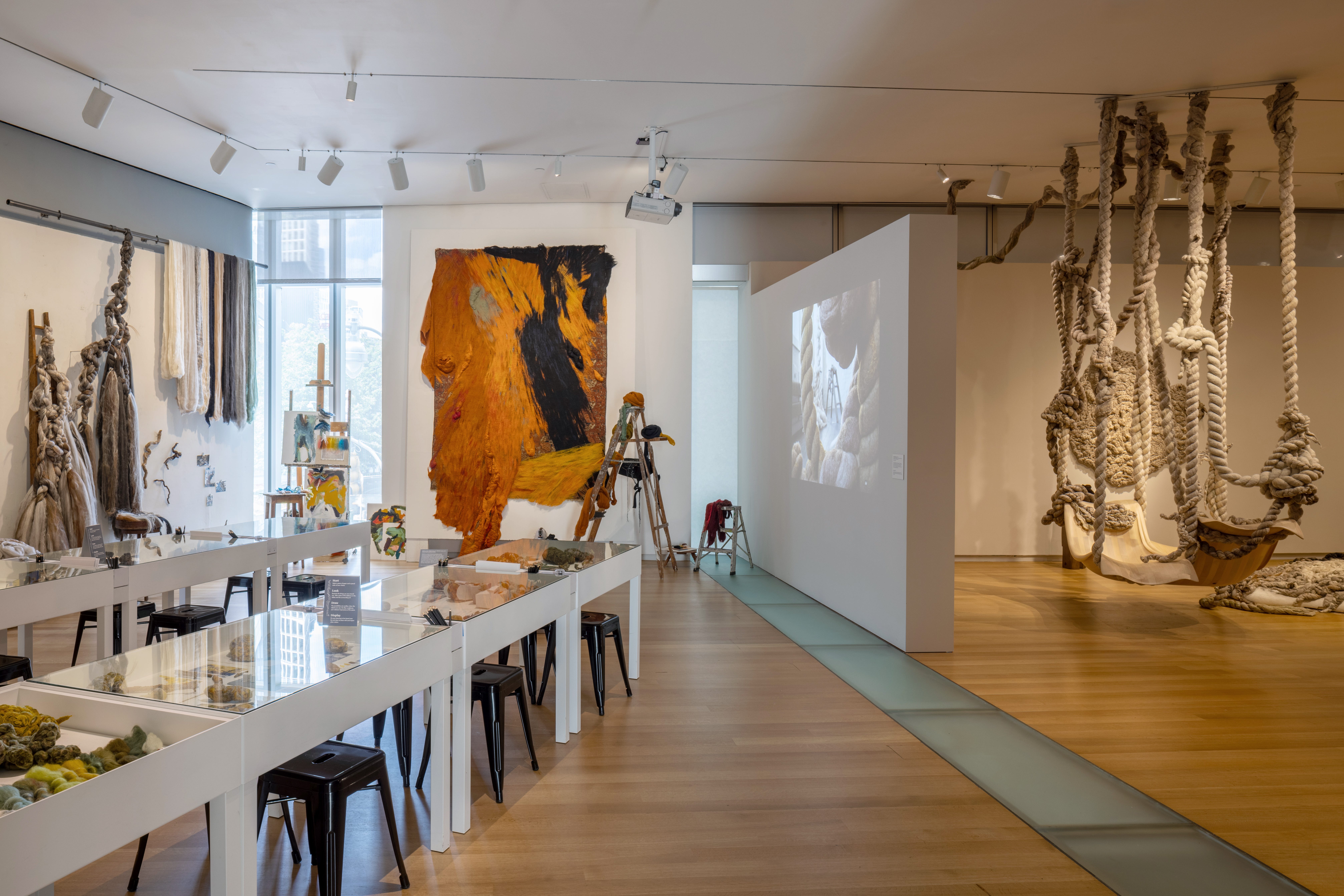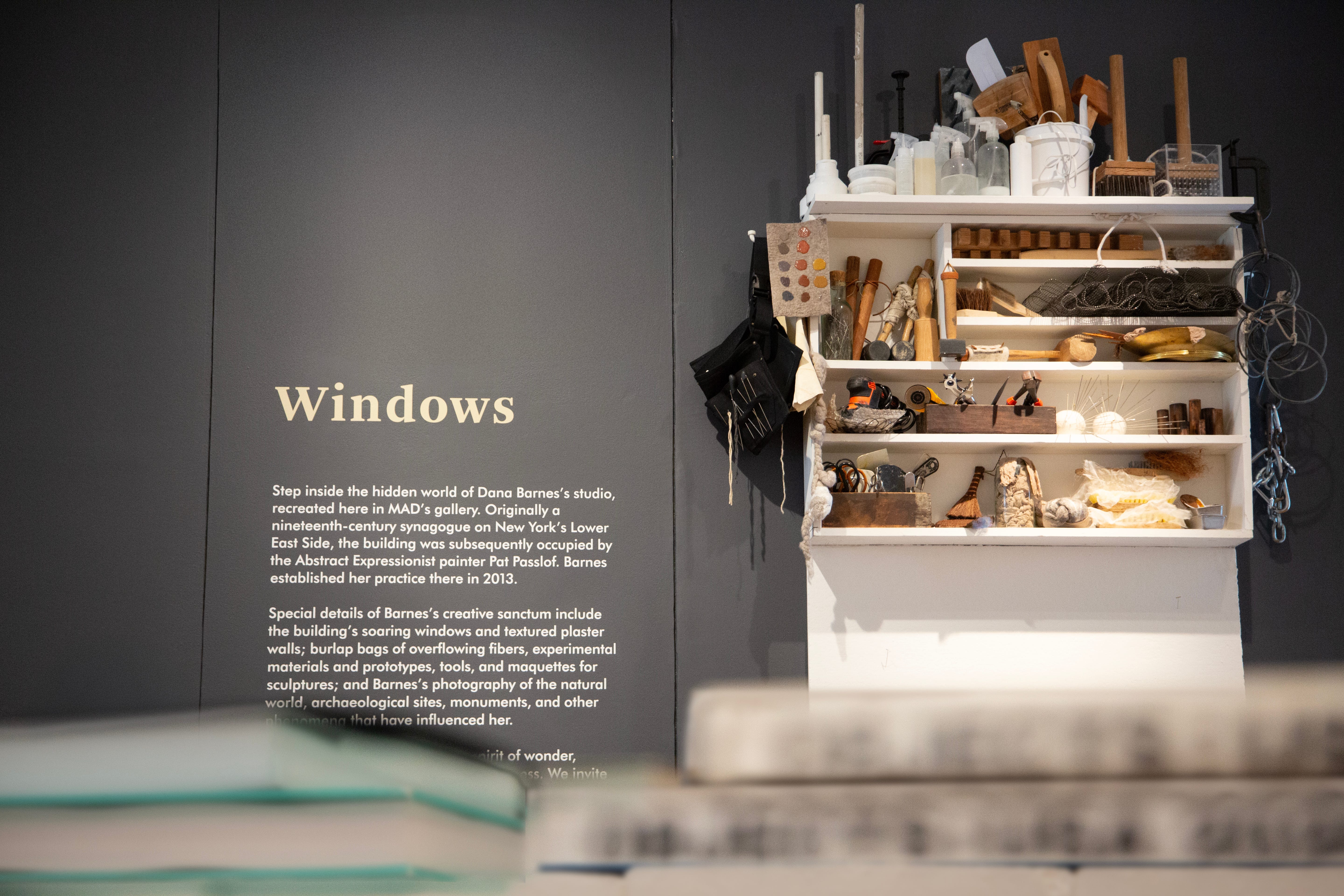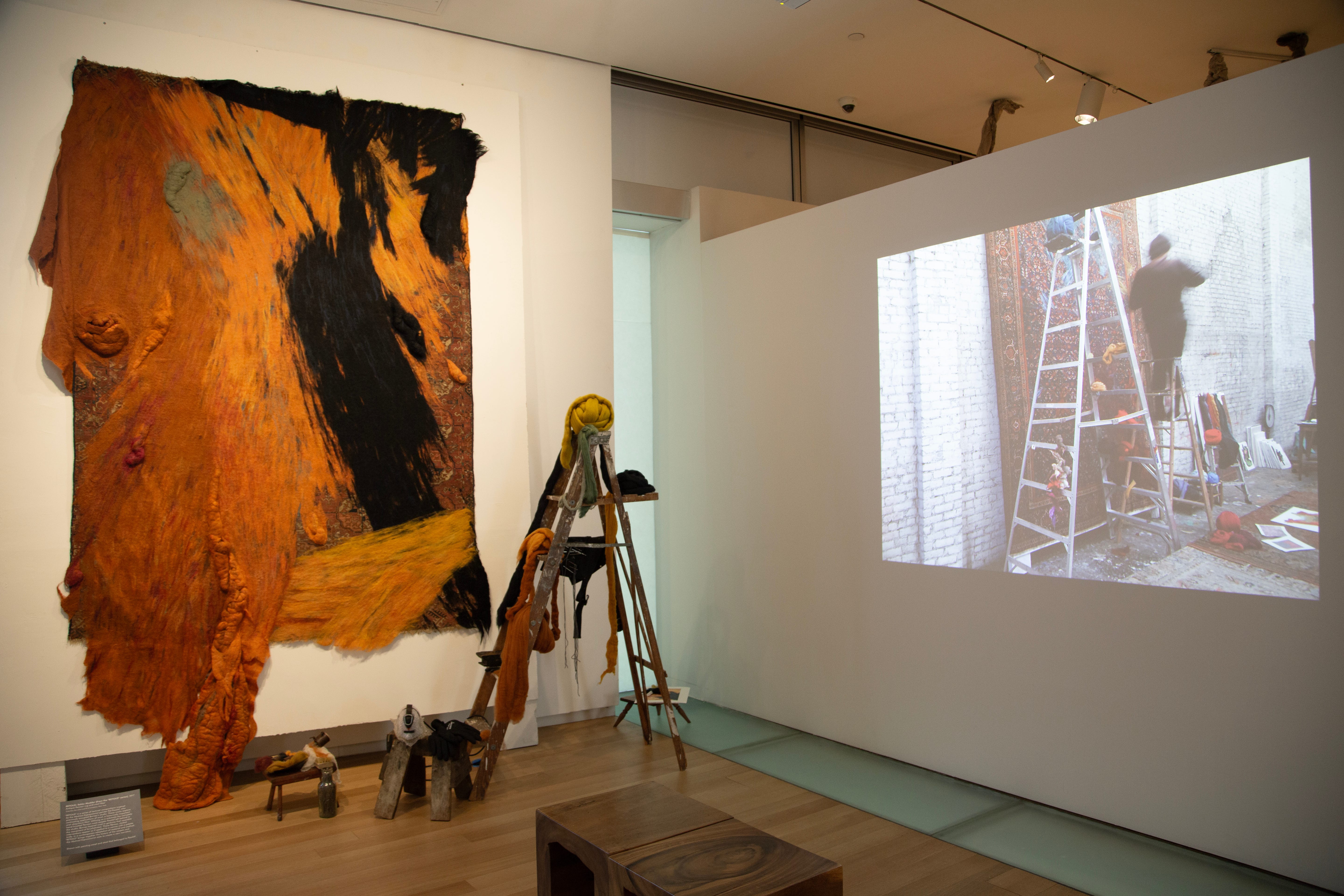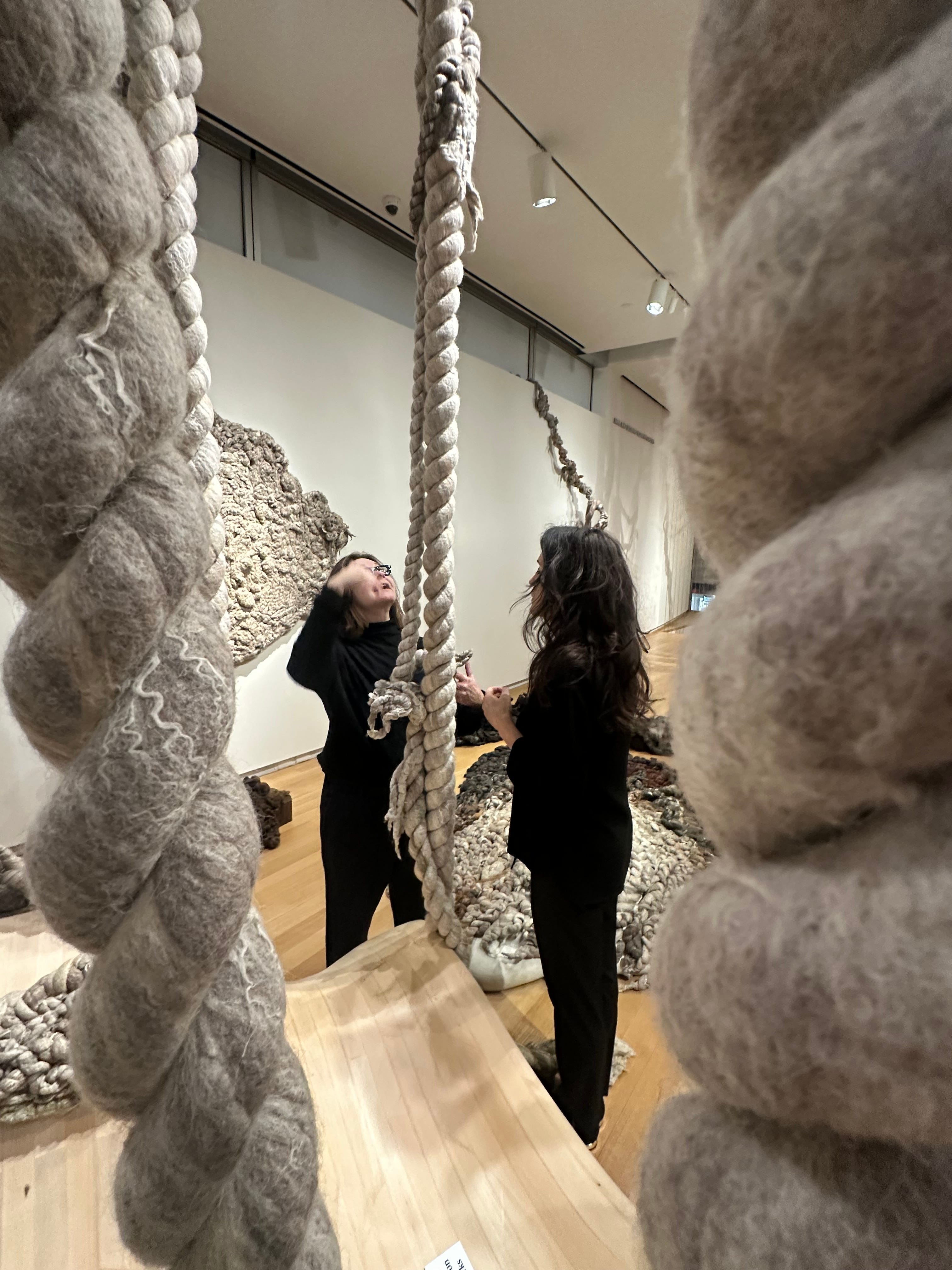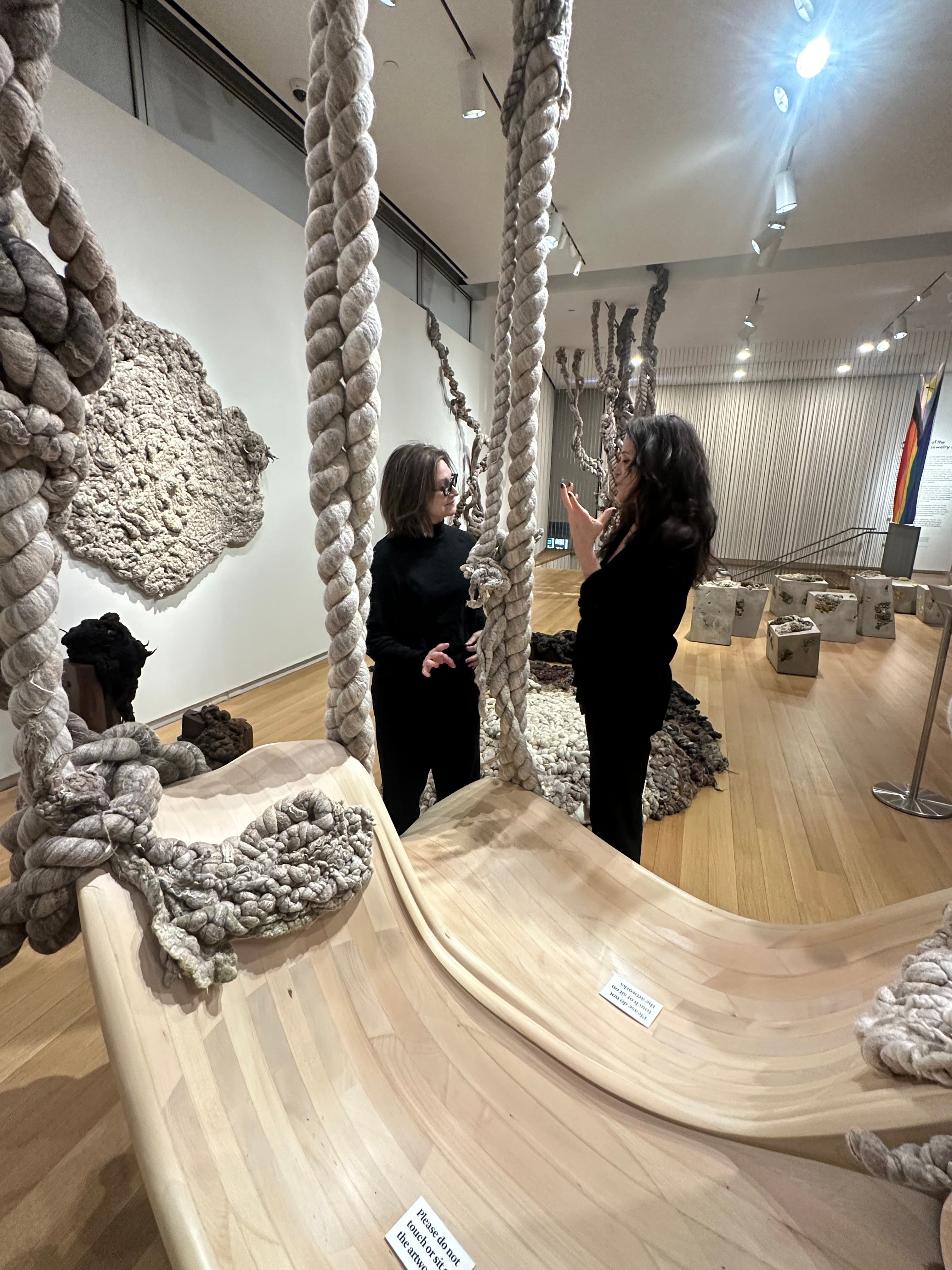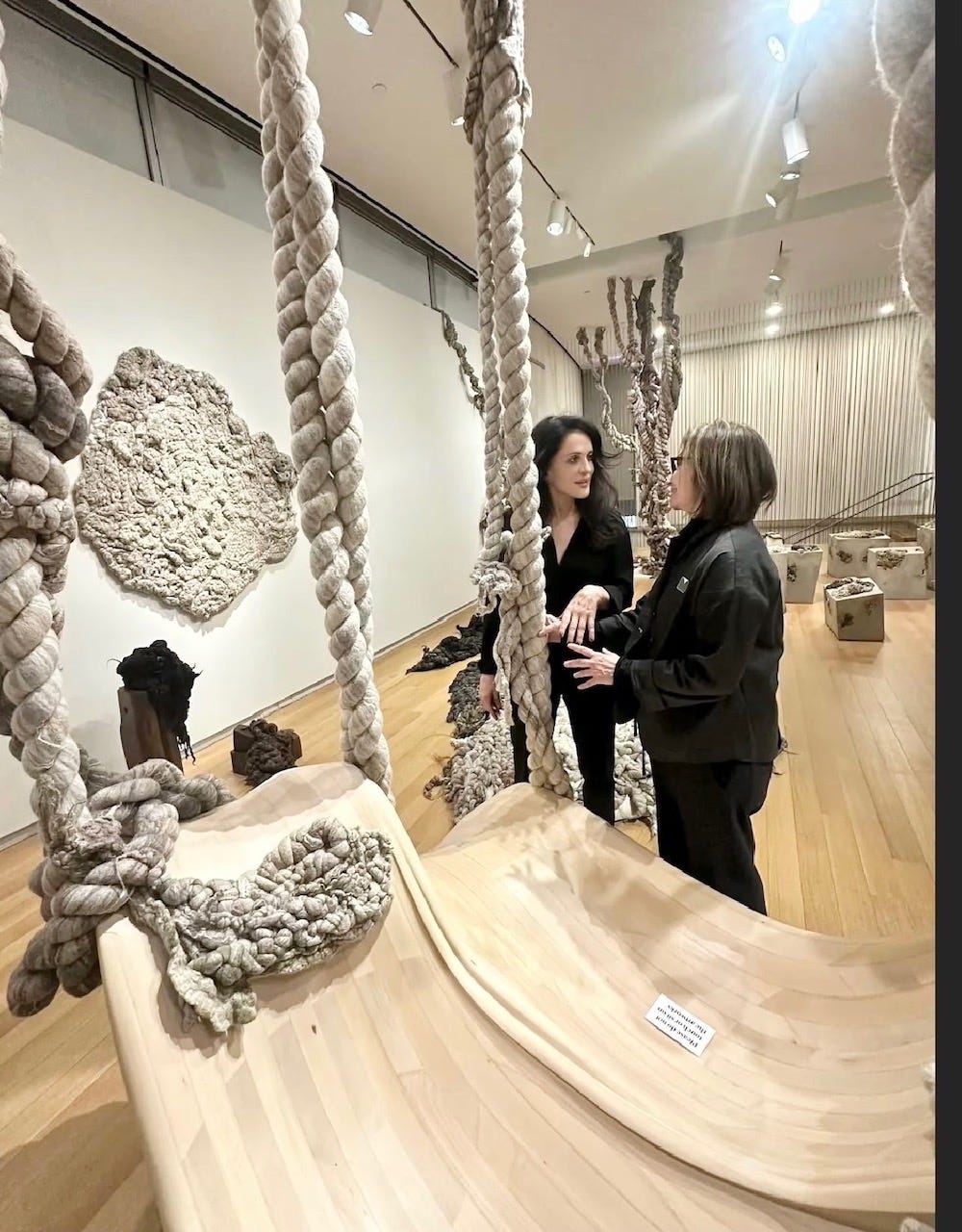
Transferring an artist’s studio into a museum to showcase the artist’s process and creative space is always challenging, as it requires careful packing, disassembling and reassembling countless parts, and disrupting the creative flow. This was the mission of NY-based fiber artist Dana Barnes when bringing her own studio into the Museum of Art and Design (MAD) for the occasion of her current solo exhibition, Untamed Gestures. The exhibition is composed of two parts. The first is an installation in the form of a topographical and picturesque landscape created and crafted of fibers, and the second part located in the adjacent space on the third floor of the museum is devoted to the recreation of Barnes’ studio. The two support and complement one another, and the deep connection between the two brings the viewers closer to her private world, because Barnes’ work is about the craft and the process. I joined Barnes on one winter evening just hours before Christmas to get a guided tour in her own voice and to hear firsthand account of the way her first museum solo show was born.
I have visited Barnes’ studio in the past and found it one of the most inspiring spaces in New York City. It is situated in historical Lower East Side of Manhattan in a 19th-centuty former synagogue with a brick façade, which was also the former home of famed abstract expressionist painter Pat Passlof. The patina of the building and its surroundings are mirrored in Barnes’ work in a way that flows, as it is where the artist creates her celebrated and monumental bespoke works in fiber and from which her pieces travel all over the world. Now that she has moved much of the studio into the interior of MAD—an equally unique and historic building situated on Columbus Circle and designed as a private gallery in the 1960s by Edward Durell Stone for Huntington Hartford, heir to the A&P supermarket—it is shown in a different light.
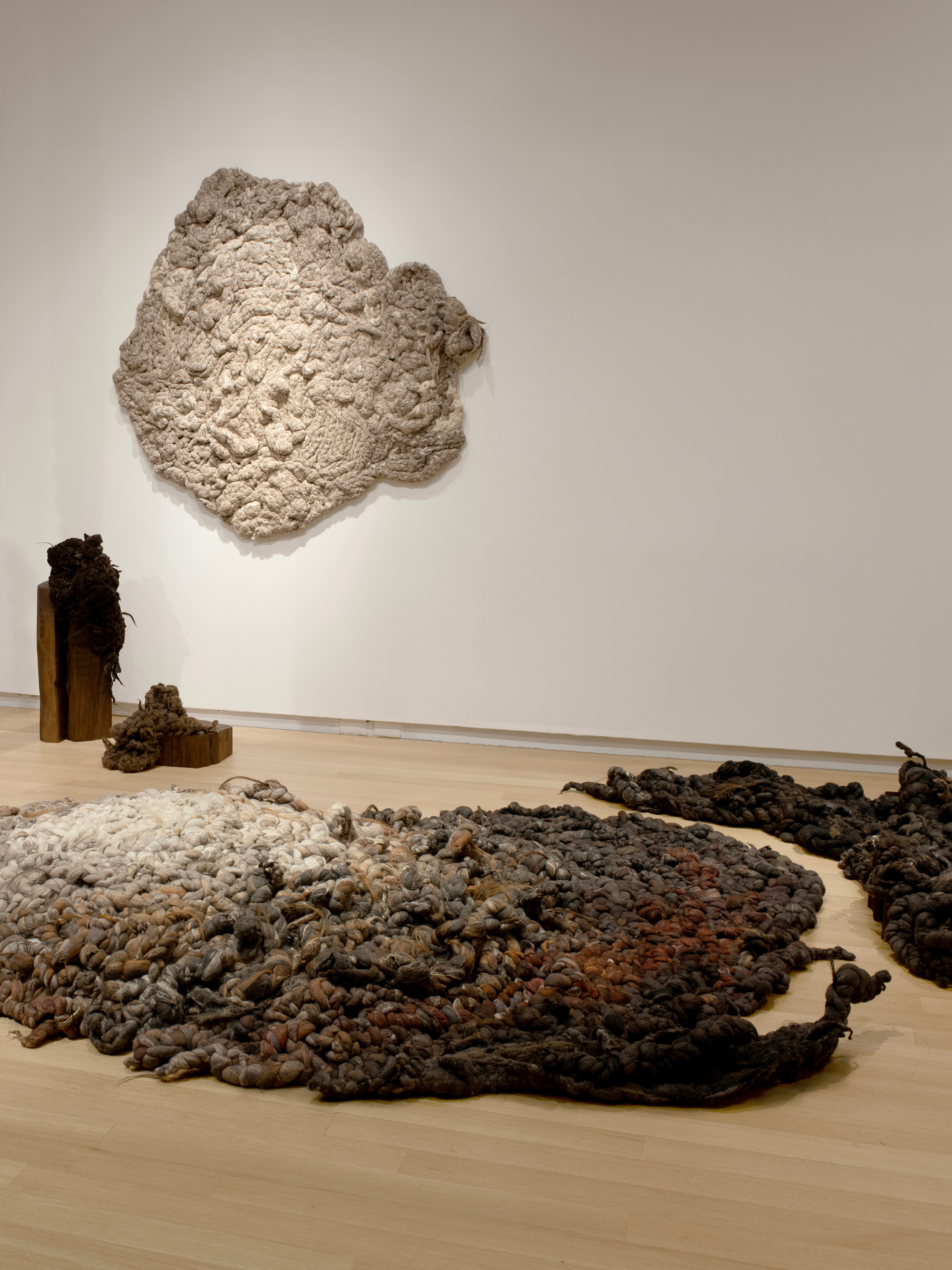
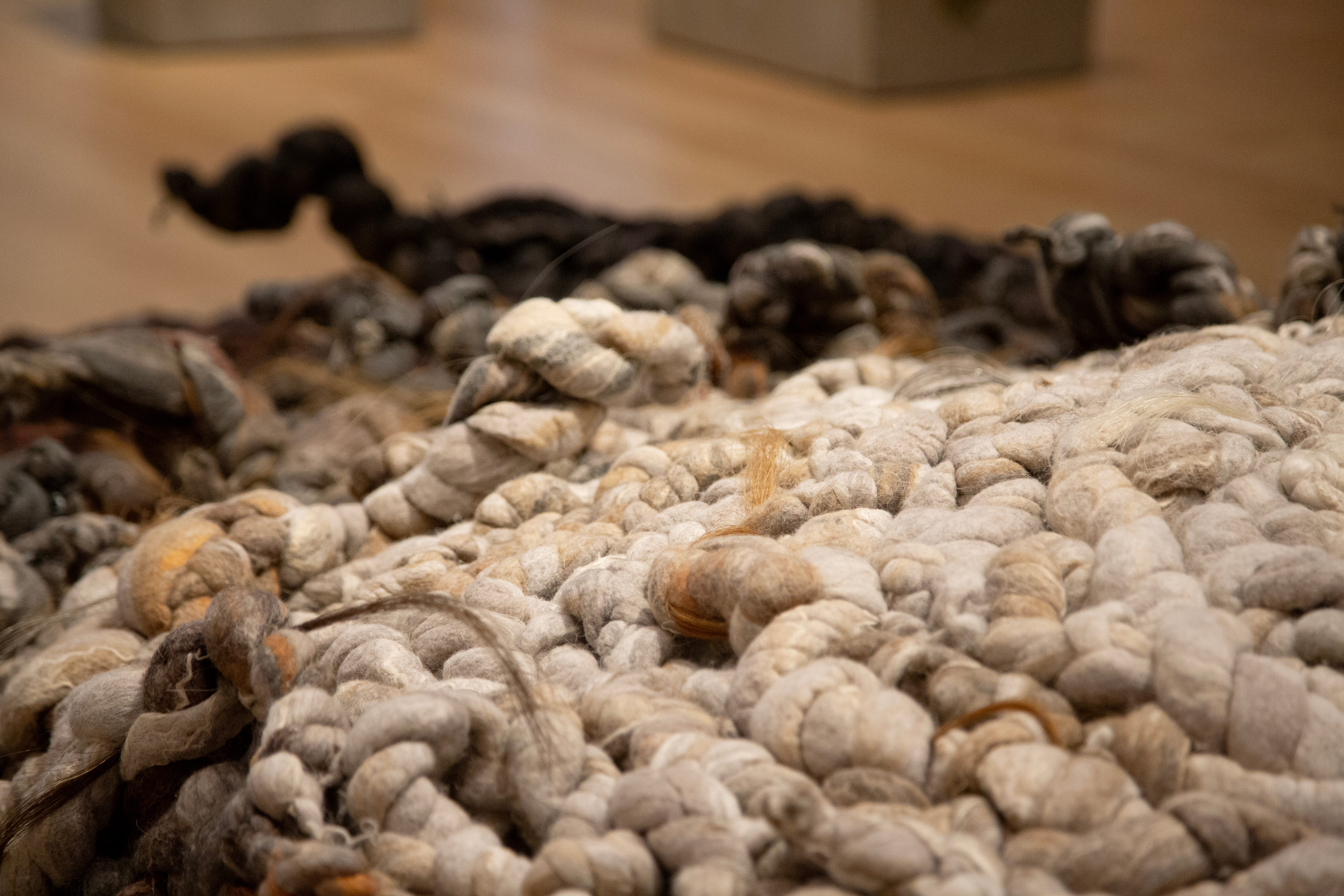
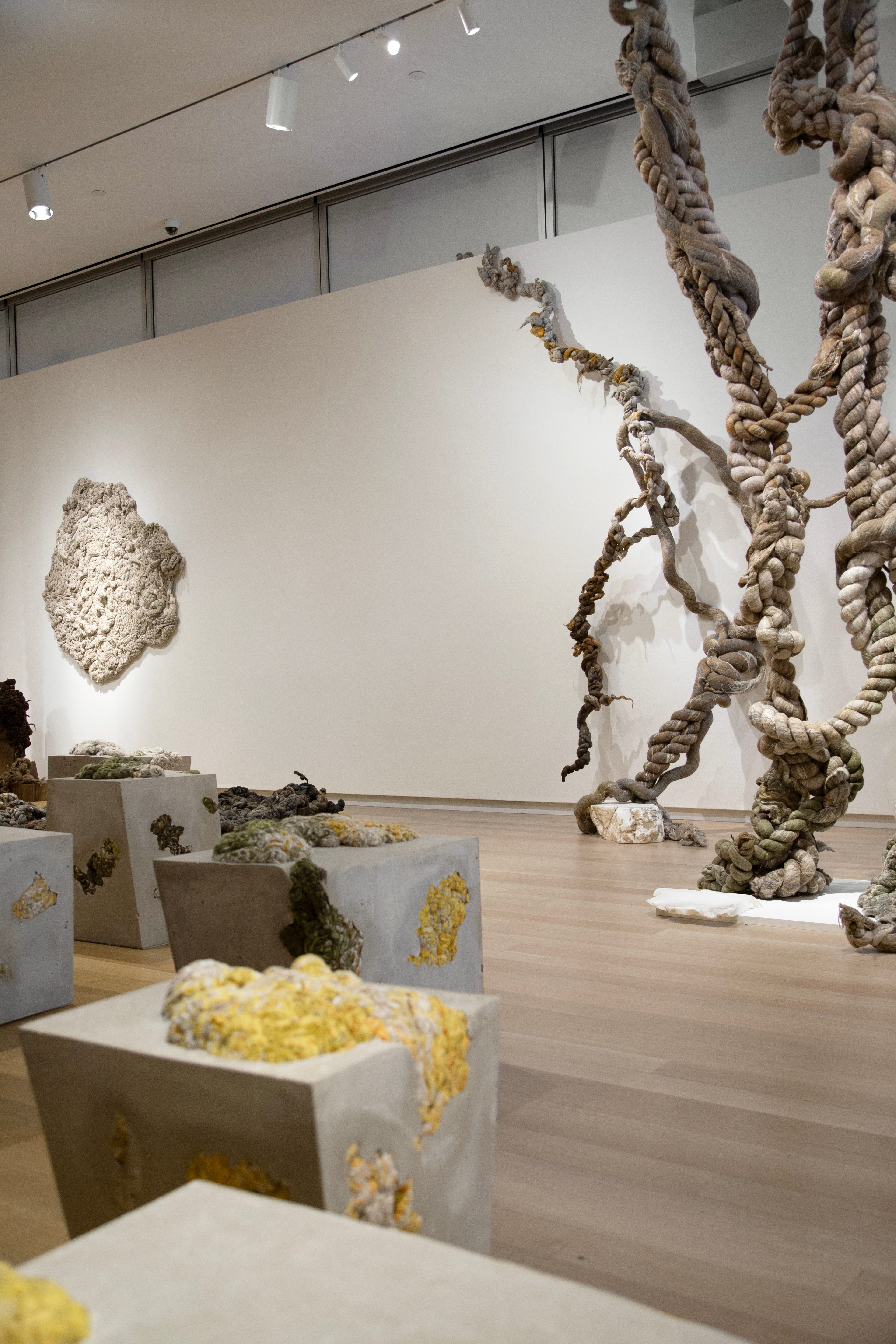
In her installation, Barnes sought to extend the landscape of Central Park, situated across the street from the museum, into the building itself; to entwine and twist nature of Manhattan’s most legendary park into the heart of MAD. This was the point of departure for creating the installation. By integrating the organic aspects of nature with modernist architecture, she achieved a unique and unexpected energy. It is an epic landscape that looks like a lush alien world, assembled of imaginative plants (silk, hemp, bamboo, horsehair, alpaca, etc.) that she uses as a powerful expression to the materiality. “With the Museum of Arts and Design located across the street from Central Park,” Barnes said, “it felt like the perfect place to imagine nature beginning its slow, unrelenting takeover. I envisioned it making its way into the building, winding itself throughout the modern architecture, gripping unclaimed surfaces, and clambering in and out of the structural cables surrounding the staircase.” The installation looks as if the building was taken over by nature in a similar way to abandoned buildings, where nature reclaims architecture through plants, vines, and trees that break in. But whereas abandoned buildings show structural decay and collapse resulting in surreal landscapes and ivy-covered walls, here, it is fresh, crisp, and aesthetically clear in a way that reminded me of the alien rainforest, vibrant floating branches, and lush moss found in the film Avatar.
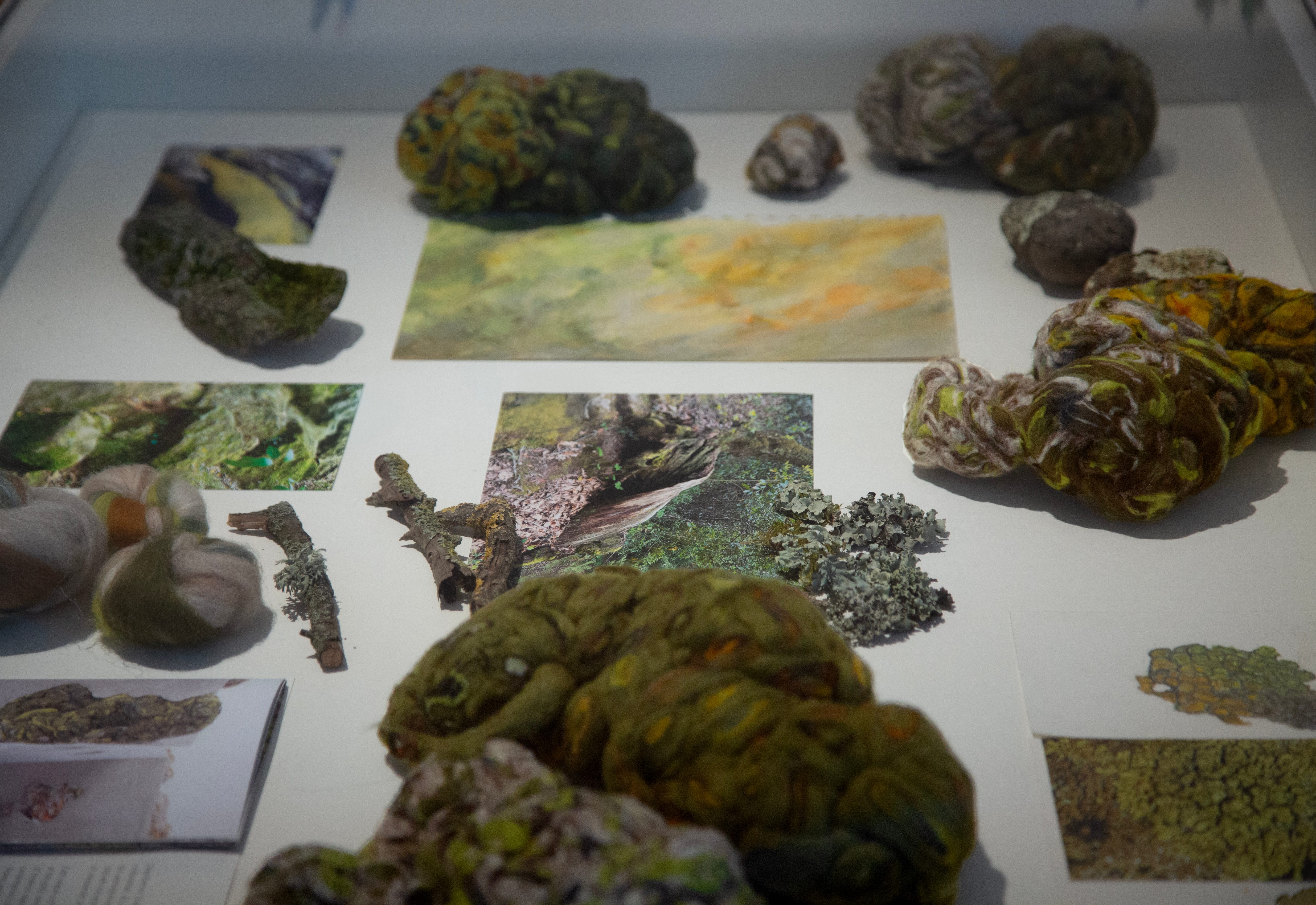
Barnes created that landscape of endless layers of fibers that twist and grow, resulting in a soft play of light and shadow. Architecture in fiber is her mastery, experience, and personal expression. But when you walk into the next space, where the studio has been recreated, you can see her entire oeuvre. The rugs, the tapestries, the furniture, the experiments, and the minerals, wood, and stones collected throughout her world travels as points of reference. She pushes the boundaries of the fibers when creating her sculptural installations. Just like a choreographer, she crafts dream-like compositions by knotting, twisting, and felting—her techniques. It is here where the vision comes to life, and where fantasy becomes reality. The reconstruction of the studio at the museum has shown a new dimension. Her work is about the process, the materiality, and the way she composes colors, textures, and fibers that come to life at the other section of the exhibition. At the core, it is her ability to construct an entire landscape out of the thinnest fibers into a metamorphosis: a profound transformation, expressing the potential of fibers to transform spaces.
The exhibition will be on vies at MAD until February 8th.