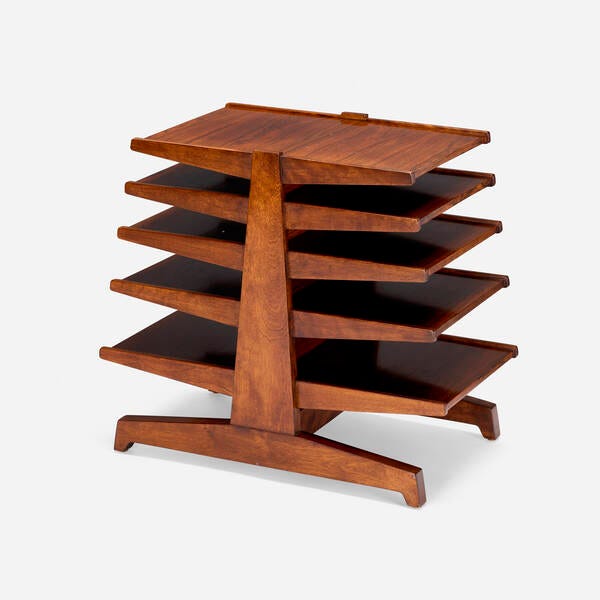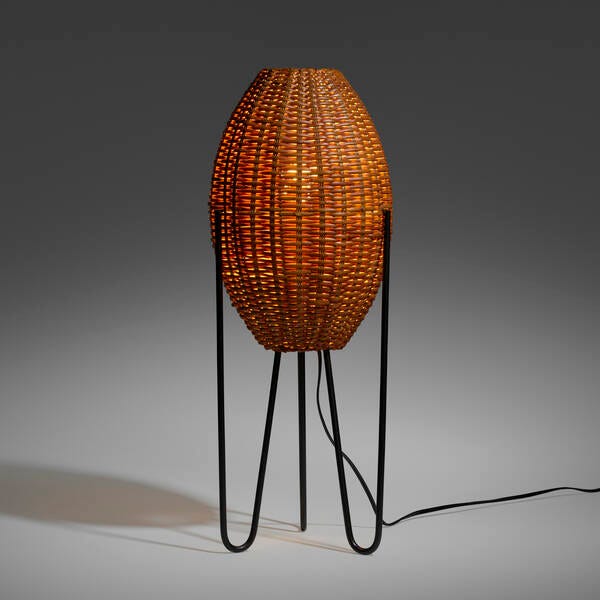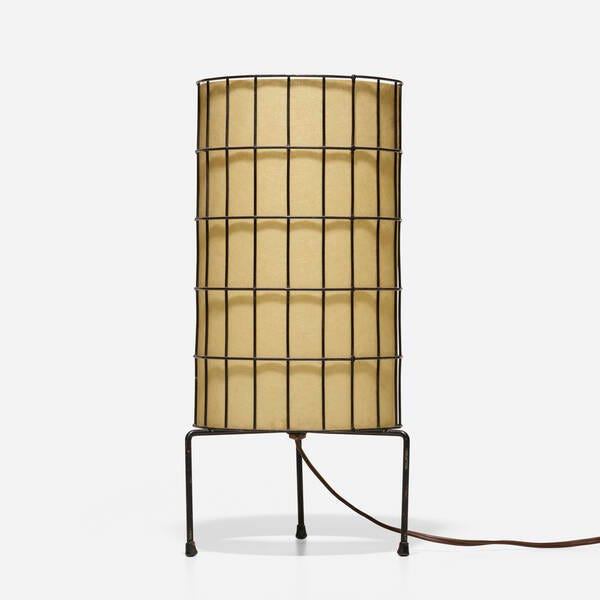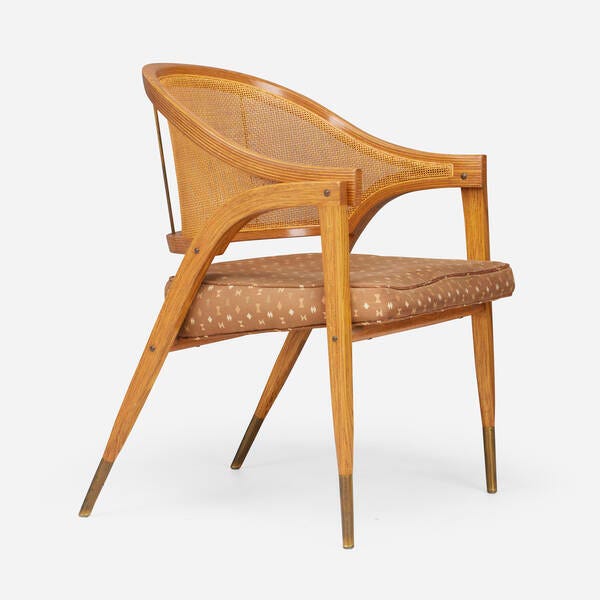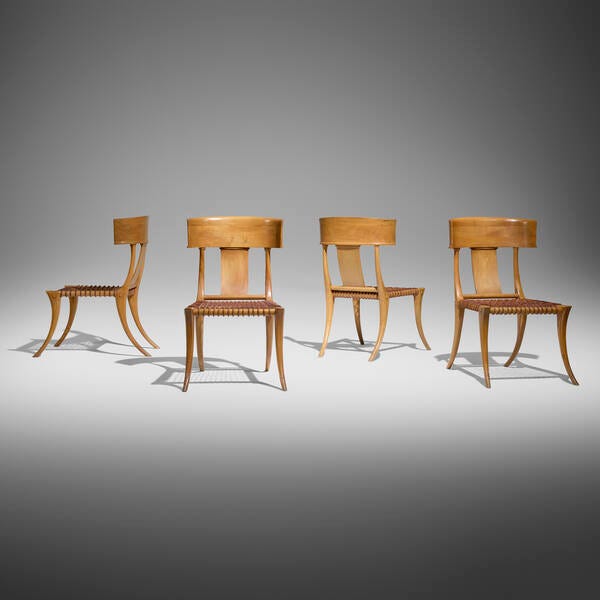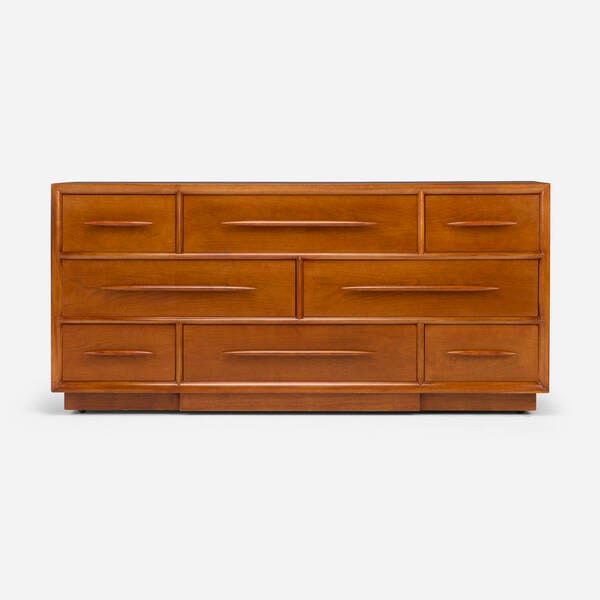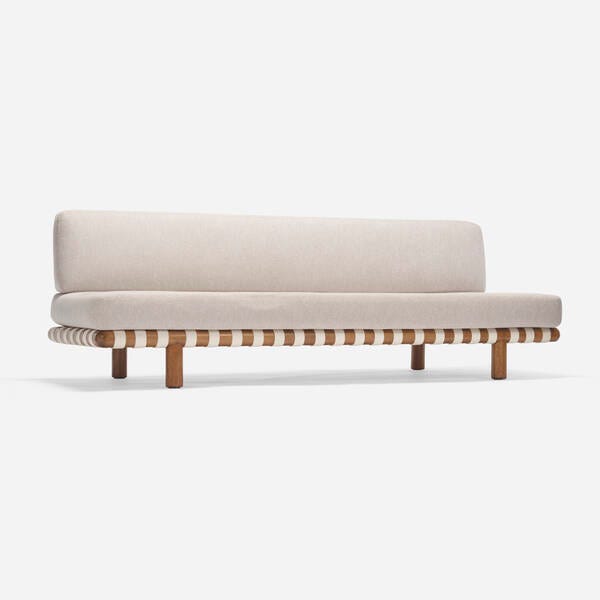
When I asked Larry Weinberg, founder of the research-driven design gallery Weinberg Modern, to select three designers for our talk on collecting postwar American furniture, his unexpected selections—T.H. Robsjohn-Gibbings, Edward Wormley, and Paul Mayen—are all designers who came to represent the market in its educated state, while also hinting at its dynamic shifts. They were not among the legion of star designers during the Age of Mad Men—quite the contrary. Designers like Ray Eames and Charles Eames, along with Harry Bertoia, Florence Knoll, and Eero Saarinen, were the household names, but not them. Each carved out a unique style during the mid-century period, and today their work has a special place in the design market as interest in mid-century modern furniture (1945–1965) keeps growing.
Larry Weinberg was my recent guest in the series ‘Collecting Design: History, Collections, Highlights.’ His four-decade career in the world of vintage American mid-century design has made him a leading expert in the field. He has seen the cycles of the market from the initial rediscovery and the entry-level, affordable collecting of the early 90s (when historical scholarship excluded mid-century design), to the specialized and stabilized, investment-driven collectors, museum acquisitions and exhibitions, handling thousands of authentic objects of design under his hands. There is simply no greater authority on American postwar design.
Weinberg graduated from Amherst College, and together with Andy Lin, co-founded Lin-Weinberg Gallery in New York – first in SoHo and then in Gramercy Park – when mid-century modern was sold at second-hand thrift shops. It was one of Manhattan’s earliest galleries focused on vintage modern design, which quickly became a hub for anyone intrigued by living with chic, fresh mid-century furniture and for those who sought to develop and deepen their taste with nostalgia. While this furniture was considered outdated and undervalued at that time, not long after, MCM was created.
Weinberg and Lin define the role of the design-dealer in New York. Not just commercial salespeople, but scholars who provide in-depth academic reach and authentication, who have the power to educate collectors, while developing the connoisseurship of a new field. It was before the emergence of scholarly literature and before museums devoted entire exhibitions to the subject. The only reference texts to reconstruct the narrative were old articles and manufacturers’ catalogues. In short, Weinberg positioned the sale of design in a similar way to that of galleries’ fine arts pieces. His forward-thinking approach and his elevation of postwar American designers are now seen as being ahead of the game, and that aspect of evaluating design has become part of the gallery’s identity. Lin-Winberg Gallery’s booths at the annual Modernism Show at the Park Avenue Armory, which pioneered the fair devoted exclusively to design, became known for museum-quality pieces and for presenting design in historical and cultural contexts. The gallery’s groundbreaking 2009 exhibition ‘The Future at Home: American Furniture, 1940-55,’ clearly put American design on the map.
In 2009, he opened Weinberg Modern, his own gallery, where he continues to offer design icons providing scholarly information as well. In recent years, he has shifted his focus to rare books and catalogs of design and architecture. This scholarly approach was also evident in our conversation, which focused on the three American designers—T.H. Robsjohn-Gibbings, Edward Wormley, and Paul Mayen—whose work is affordable and should be the focus of emerging collectors, interior designers, and those new to the market.
Terence Harold Robsjohn-Gibbings (1905–1976) was a decorator, furniture designer, tastemaker, and thinker whose innovative ideas on interior design during the postwar era had a formative impact on American domestic culture. He was prolific, and his books and articles on interior décor, his lectures, and industrial design all introduced him to the American public. He had three fundamental chapters in his career as a furniture designer, which were at the core of the furniture he designed throughout his career: his singular outlook on modern design (rooted in Greco-Roman sensibilities), classical principles, and early American domestic culture.
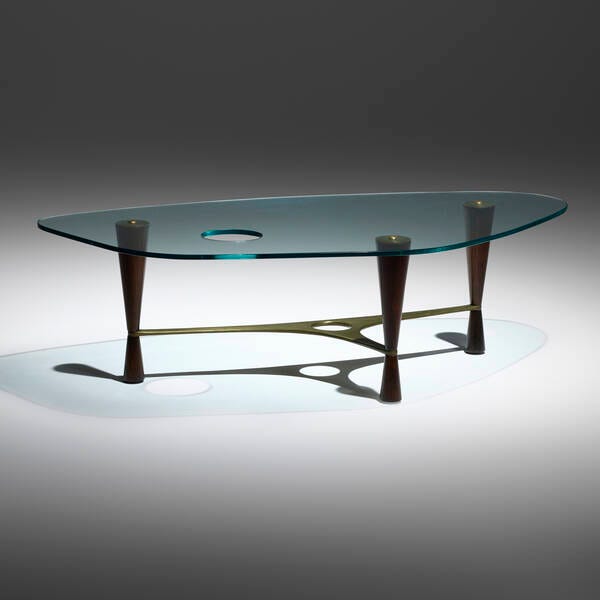
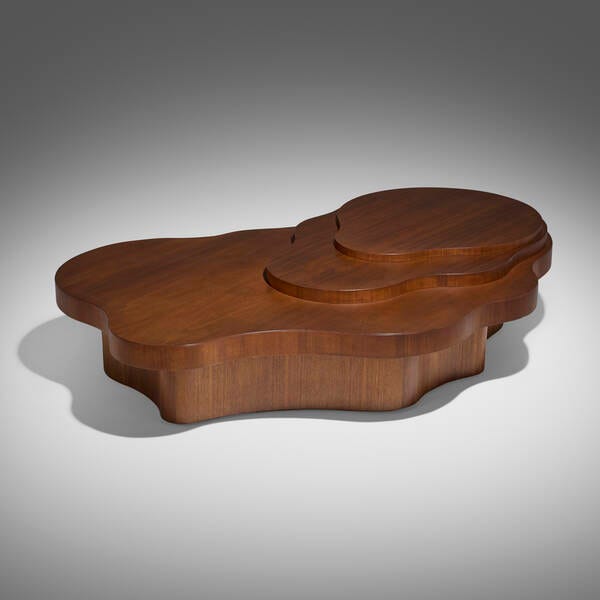
In the first chapter, he worked as an interior decorator in New York, creating luxurious and handmade furniture, mostly carved in wood, and designed in Grecian forms. This body of work includes the 200+ pieces he created for his most ambitious project, the interiors of Casa Encantada in Los Angeles. These pieces attracted extraordinary interest in the first decade of the 21st century but somehow fell out of favor and do not fetch their previous numbers. Robsjohn-Gibbings’ second chapter as a furniture designer was marked in the postwar years, when between 1943 and 1956 he entered into a partnership with the Widdicomb Furniture Company, working as its lead designer in Grand Rapids, Michigan. The designs, meant for postwar American suburban homes, are modernist with a touch of traditional American furniture and formed in classical sensibility, all made of wood. With the exception of the Mesa Table—the showpiece of the collection—these pieces remain affordable and are sold in auction houses in the US and Europe. The Mesa Table, a dramatic coffee table, designed in organic-biomorphic form, is fetching six figures today and is regularly used by leading interior designers such as Pierre Yovanovitch. Weinberg recalled handling them when they were sold for $10K. The third chapter began when Robsjohn-Gibbings moved to Athens in 1960 and collaborated with Greek cabinetmaker Susan and Eleftherios Saridis, designing furniture inspired by ancient Greek pottery. These pieces are still in production.
Weinberg’s selection of Paul Mayén (1916-2000) was surprising. The Spanish architect and industrial designer, with a bachelor’s in Fine Arts from the Cooper Union in New York City, and a master’s in architecture from Columbia University, became known for designing the visitors center at Frank Lloyd Wright’s Fallingwater. He also designed furniture and lighting. In the 1950s, Mayén met fellow art student Edgar Kaufmann Jr., with whom he would have a personal relationship and work partnership that would last until Kaufmann’s death in 1989. His unadorned lamps and tables were made with modernist industrial materials—aluminum, glass, chromed brass, and Plexiglas— and were produced by his company, Habitat. The forms are structural, minimalist, functional, with geomantic precision, clean lines, and structural honesty. His pieces, often offered by Wright Auction, typically sell for a fraction of their production cost.
We concluded with the most obvious choice, American designer Edward J. Wormley (1907-1995), whose work was the subject of a 1997 groundbreaking exhibition at Lin-Weinberg, “Edward Wormley: The Other Face of Modernism.” It introduced and rediscovered one of the most productive designers of the Age of Mad Men.
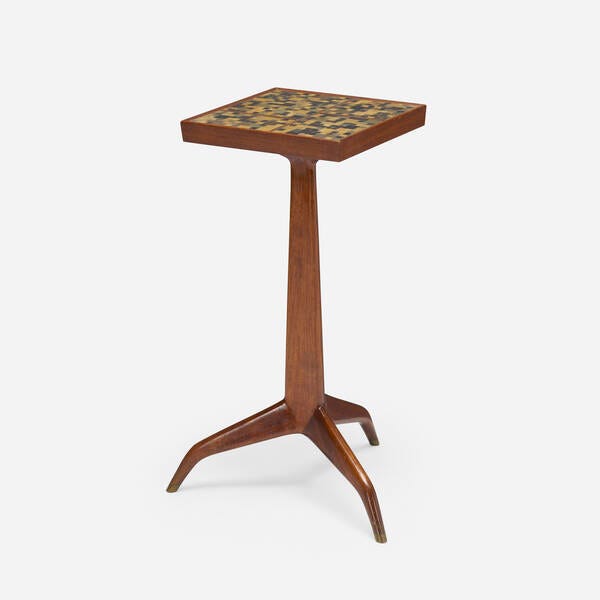
The 55-year-old Wormley was one of the six furniture designers featured in what has become an iconic photograph published in the July 1961 issue of Playboy Magazine, in an article titled ‘Designs for Living.’ There, he was seated on his Armchair model 5480 produced by Dumbar with which he forged a decades-long relationship. During this time, he designed over 20 pieces of furniture a year, and both he and the company were very successful. Although Wormley was a modernist, he sought to fuse modern ideas with traditional values and to imbue his furniture with handcraftsmanship. His tile-topped tables, which were inserted with clay tiles by Otto Natzler and glass tiles by Louis Comfort Tiffany were particularly striking, demonstrating his approach in merging craft with industry.
In today’s collectible design market, American mid-century design is the winning way to live with affordable vintage modern. All objects images courtesy Wright.