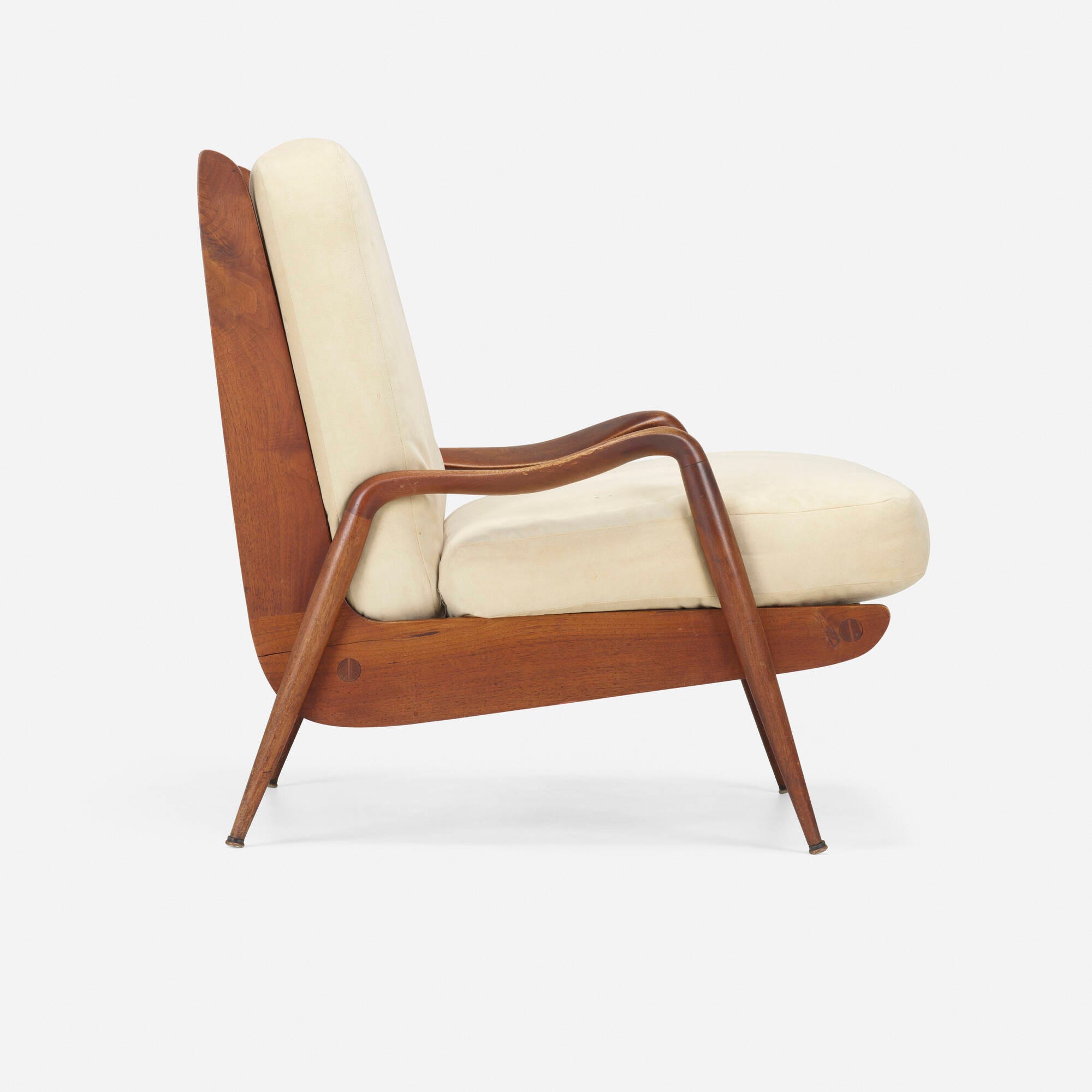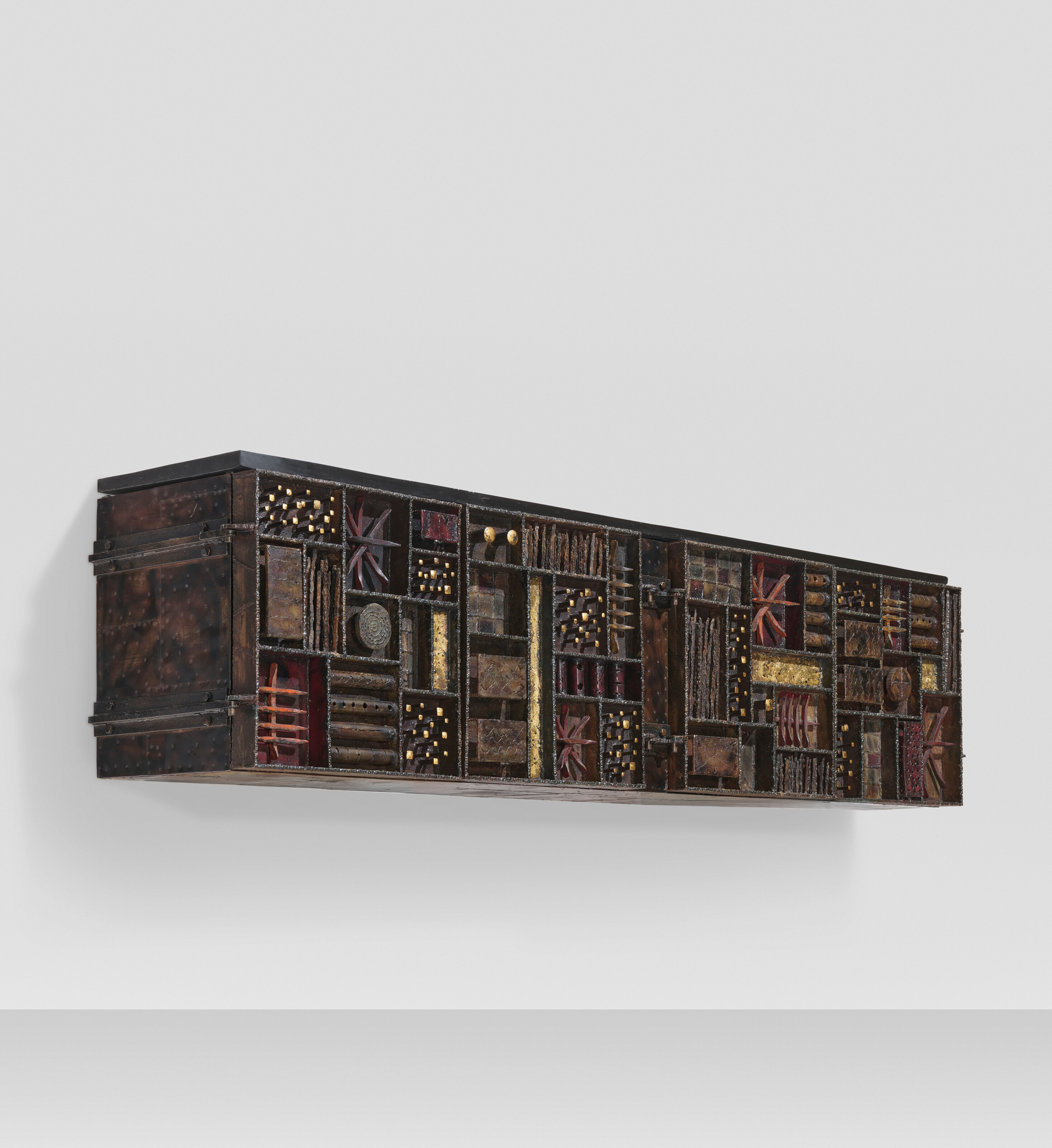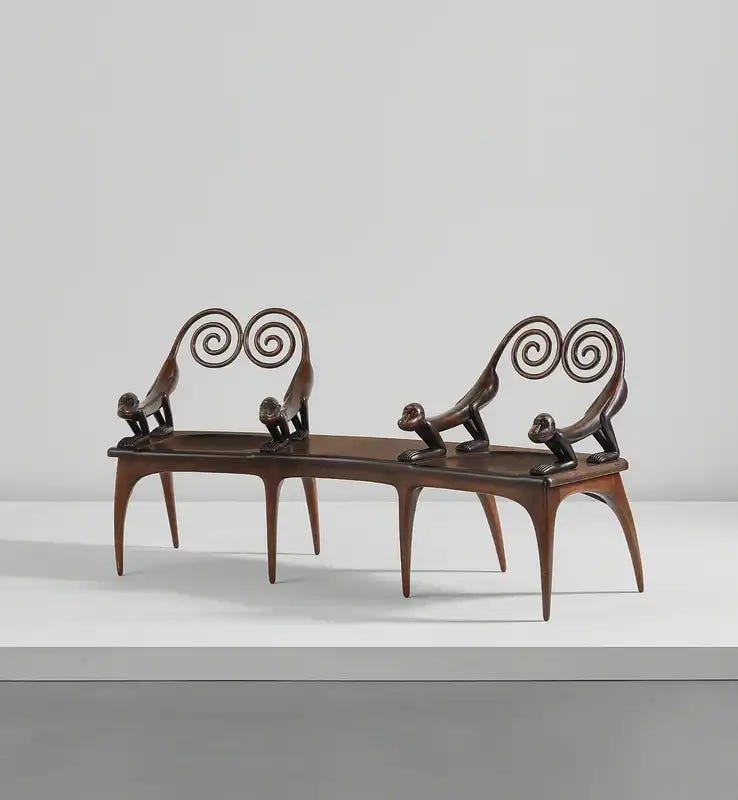
I was recnetly interviewd by Julia Haney Montanez from the Design Release about the upcoming acclaimed series Collecting Design: History, Collections, Highlights, of which spring 2026 opens on February 18th. I started collecting design at 25 and have spent the past two decades teaching collectors and curious observers how to look at objects and the power of living with good design. In the conversation, Julia spoke to me about why this course feels especially meaningful now, how I define “collectible design” in a market saturated with the term, and what it means to develop an educated eye in an era driven by trends. We also touch on the market vs tastes, rediscoveries, and how institutions, scholarship, and the market shape the objects we value. I want to thank Julia and the Design Release for devoting so much of its attention to this topic.
TDR: You’ve been teaching Collecting Design: History, Collections, Highlights in various forms for over a decade. What felt important to rethink for this season?
DO: I started teaching ‘Collecting Design: History, Collections, Highlights’ with Phillips in 2014 and taught it continuously until three years ago, as the only program devoted to this territory. I recently moved my virtual program to other themes, but it feels that now it is time to go back to it.
I am a collector and have lived with collectible design since I was 25, before the term was coined. I have grown together with the market and have witnessed closely the evolution of the field and the shaping of design connoisseurship in recent years, as my interest is twofold - as a collector and as a design historian.
The world’s best interior designers work exclusively with collectible design, and today the field of interiors is largely divided into two camps: those who create curated, sophisticated interiors at the forefront of contemporary practice, the kind that appear in shelter magazines for their personal and distinctive concepts, and those who rely on furniture produced industrially and sold through shops.
While the market is becoming increasingly educated, there remain important issues that are not fully illuminated by galleries or auction houses, and therefore remain less known to collectors. These are precisely the areas that need to be revealed, discussed, and critically analyzed.
The market itself is constantly evolving, shaped by shifting tastes, new scholarship, economic changes, discoveries, museum exhibitions, and collectors’ engagement. It is also essential to remember that the design market differs fundamentally from the art market: it is rooted in interior design and architecture, in enhancing how people live. Design is acquired to be lived with - not stored away.
TDR: The design market feels both more visible than ever. How did the current moment shape the way you structured this course?
DO: You are correct. Auction results and design fairs are now widely covered by headlines and social media. Collecting Design addresses themes at the forefront of the design market, with content closely connected to recent events, exhibitions, and auction results. At the same time, we study design history because it is impossible to understand design or evaluate contemporary work without a solid historical foundation. And while the market is highly visible, there are still many grey areas that are rarely discussed and need to be made more transparent and critically illuminated.
Brazilian mid-century furniture is a good example. It is one of the hottest areas in the market today, yet authenticity remains a major issue due to the flood of forgeries, fakes, copies, re-editions, and frequent misrepresentation. Brazilian design first came to the attention of American collectors nearly twenty years ago, when R & Company began bringing vintage pieces from Brazil to New York. At the time, it felt fresh and undiscovered - often described as the last overlooked mid-century movement, following American, French, Italian, and Scandinavian design.
Since then, the market has evolved, been reshaped, and prices have risen, introducing new challenges that must be addressed. Some dealers now offer Brazilian design without sufficient knowledge, while changes in tastes continue to affect value. Whereas Joaquim Tenreiro initially emerged as the star for his elegant, classical designs, attention has more recently shifted to Zenine Caldas, valued for a bold aesthetic and its sustainable approach to wood. Every segment of the market deserves this kind of analytical discussion.
TDR: This season brings together a wide range of topics, from Japanese ceramics to American interwar design. What connects these seemingly different areas under the idea of collectibility?
DO: What connects all of the topics covered in the program is that they stand at the forefront of the world of collecting design today, none of them is outdated. The course is also sensitive to current events. For example, our discussion of Verner Panton coincides with the centenary of his birth on February 16, 1926, with many related events and publications taking place this year. Not everything I include is a blue-chip category; in fact, I prefer to focus on themes that are more accessible to my audience rather than those that feel less approachable, although there is certainly much to say about blue-chip design.
TDR: You talk about learning to “read” objects. What does that mean in practice, and why is it such a crucial skill for collectors today?
DO: “Reading” objects means learning to look at them with a trained, knowledgeable eye. It is the only way to develop a critical eye and, honestly, the only way to fully enjoy design at its highest level by distinguishing between greatness and mediocrity. This skill is what makes someone confident and proficient in design. Like any skill, it has to be learned and practiced, and developing it is a lifelong journey that requires real investment of time and attention.
If you are serious about understanding design, about developing passion and personal taste, even if you do not live with design, you must be able to analyze and interpret objects by looking beyond appearance, understanding context and meaning, and cultivating objective observation. As a collector, the experience of living with design becomes far more substantial, interesting, and real when you can truly “read” objects. You have to look, and look, and look, but you also have to study.
TDR: There’s a lot of conversation right now around what actually counts as collectible design. From your perspective, what truly qualifies an object as collectible? Or do you feel its meaning has expanded?
DO: It is a super important question. The term ‘collectible design’ has been misused and overused, becoming a ‘brand’ name and a tool of sale. But a lot of what I see in the press and elsewhere which is termed ‘collectible design’ is in fact far from this definition. What makes a design object ‘collectible’?
One thing that we have to remember is that objects enter the prestigious pantheon of collectible design for a reason and the reason is that they are historically significant, that they represent vision, originality, the spirit of their time, and they were forefront of design when created. They represent technological advancements, political ideas, lifestyle of their time, and something new and fresh. Objects of the past do not become collectible if they were not among the greatest of their time. Same with contemporary design. The fact that a fair is called itself ‘collectible’ or artists presented their design objects as ‘collectible,’ or that an object is offered at a gallery – all of these cannot turn object ‘collectible.’
TDR: Today, design is often judged by taste, trends, or market value. When you evaluate an object, what factors matter most to you beyond whether you simply like it?
DO: You are correct about the central role of taste and trends in determining market value. However, there is a common misconception about collectible design, and it relates directly to your question. The single most important quality of any collectible object is that it represents the best design of its time. It must be born from an original vision, that of its designer or architect, and embody not only a personal philosophy, but also the spirit of its era.
Design does not become collectible if it is derivative or created outside the values of its time. For this reason, one of the most beautiful aspects of collectible design is its quality, the fact that it represented the highest level of design when it was created. When I advise interior designers or collectors, I always consider budget, but I never compromise on quality. Good design has inherent value, and even if its market value is low at a given moment, it has the potential to grow precisely because of that quality. A design object may fall out of fashion, but it should still be considered collectible if it possesses these traits. Rarity, of course, is also extremely important.
Let me give you an example. The steel furniture pieces by Danish modernist Poul Kjærholm were once highly prized, attracting global collectors and commanding very high prices. Today, they fetch significantly less. Why? First, the taste for pure modernist forms is no longer what it once was. Second, it later emerged that two years after Kjærholm’s death in 1980, his trustees entrusted Fritz Hansen with the production and sale of The Kjærholm Collection - designs originally created between 1951 and 1967. Pieces from the original postwar production will always remain prized, and truly collectible.
TDR: For people starting to collect now, what are the most common misunderstandings you see about historical or cultural significance?
DO: The most common mistake I see, again and again, is collectors or interior designers entering auctions or galleries without the guidance of a professional advisor. There are many factors to consider before acquiring a piece of furniture or lighting, and making a purchase without proper expertise is often a recipe for disaster. While the advice offered by gallery staff is legitimate, it does not necessarily represent the client’s best interests.
This is equally true in the realm of contemporary design. When visiting a solo exhibition by a designer or artist, one needs a trained eye to identify the strongest work - something that cannot be expected from the dealer. I frequently see acquisitions that are simply wrong: pieces that have been improperly restored, lack proper provenance, or are missing original parts, all of which significantly diminish their value. The same principle applies to designers creating contemporary collectible design, who should also be supported by professional advisors throughout the process.
TDR: How should collectors think about re-editions today? Are they a useful point of entry?
DO: Re-editions are a no-no. Under any circumstances. When you buy a re-edition, you do not bring authenticity into your home. Furthermore, the piece will never hold its value; it is no different from buying a piece of furniture in a store, which loses value the moment it leaves. But re-editions have many more faults.
In many cases, re-editions are actually more expensive than the originals, simply because furniture is more costly to produce today. There is also something immoral about re-editions - and I am fully aware of the enormous industry behind them - because they interrupt the natural flow of design evolution. Manufacturers prefer to buy rights from estates rather than hire designers to create new and innovative work. Why? Because it is cheaper and safer. The result is a lack of visionary furniture in the industry.
We also have to remember that the entire re-edition industry is a byproduct of the thriving market for collectible design. It is the popularity of mid-century design - Scandinavian, French, American, Brazilian - that has encouraged companies to reproduce furniture from the past. The final and perhaps most damaging consequence is that re-editions distort public taste. Many people no longer understand what is truly contemporary in design and mistake a mid-century look for something current.
I always say that if you want to buy a new piece of furniture of today, buy an original and not a copy of something done in the past because it is no longer relevant, no longer connected to the spirit of the age as it was when it was first designed.
TDR: You mention the rising interest in the work of newly-discovered stars, notably Judy Kensley McKie, Line Vautrin, and Shiro Kuramata, which weren’t always the market’s focus. What does their rise tell us about how taste evolves?
DO: Judy Kensley McKie is the new star of the collectible design market, particularly for her bronze furniture from the 1980s and 1990s, which is now fetching up to half a million dollars. She is an American designer, and her market is almost entirely based in the US. Although McKie is still alive, her work is considered “vintage” because she is no longer producing. Trained as a painter and sculptor, she began creating her art furniture in the 1970s, producing highly sculptural pieces often shaped as real or imagined animals.
The rediscovery of McKie’s work is a strong indicator of today’s taste, and of the growing desire for furniture that can truly transform a space. Collectors are drawn to pieces that are unique, crafted, and expressive, but also institutionally recognized; McKie’s work, for example, can be found in numerous museum collections. At the same time, we are seeing less furniture rooted strictly in the ethos of the Modern Movement, following Mies van der Rohe’s mantra of “less is more.”
Line Vautrin is not new to the market, but the rising value of her work, particularly her mirrors, crafted in her Marais atelier and sold through her boutique on the rue du Faubourg Saint-Honoré in Paris, points in the same direction. Collectors today are looking for objects that are personal, dramatic, and original: pieces that are crafted, expressive, and unmistakably non-derivative.
TDR: What role do auction houses, galleries, and fairs play in shaping - or sometimes confusing - the idea of collectible design
DO: The auction houses, galleries, and the design fairs act today as the tastemakers of the collecting design world. They are the curators.
TDR: Looking five to ten years ahead, do you think the category of collectible design will become more precise or more diffuse?
DO: Collectible design is a relatively new territory and like anything new, it is evolving, changing, and constantly reshaping itself. I can say that it is dynamic and will keep moving.
TDR: What’s one grounding principle you hope students take away from this course?
DO: I would be happy if those taking my programs became more confident in their knowledge and taste, because the knowledge they gain through my programs is the foundation of true confidence. Taste is not something we are born with, but a cultivated skill that you have to work hard to define and perfect over time. It is developed through exposure, critical thinking, and the ability to judge aesthetic quality.
TDR: What still excites you about teaching and collecting design today?
DO: Living with collectible design excites me every day. Seeing my kids living with collectible design because this is how they were brought up fills me with joy. It is an unparalleled design experience to be surrounded with good design and with objects I love. In terms of teaching, I always tailor new contents according to the spirit of the moment. The content is based on my research and my constant presence in the marketplace.
TDR: Are there regions, materials, or typologies you think are currently undervalued or misunderstood?
DO: Absolutely. Japan is currently one of the world’s most important and intriguing centers for the production of cutting-edge crafted contemporary design. Across the country and particularly along its west coast are dozens brilliant artists of all generations, who have turned traditional craft materials– clay, lacquer, bamboo, fiber, wood, metal – into new and innovative, daring, and fearless design expressions. By achieving the highest level of originality and by introducing new perspectives to the crafts, while at the same time referring to and respecting historical precedents, these artists have made an immense contribution to the design culture of the 21st century.
Yet, despite the prominent achievements and presence in Asian collections of some of the world’s best museums, and despite the growing design conversation and showcases that are increasingly global, I’ve puzzled over the limited attention paid by Western collectors, auction houses, and galleries to the extraordinary production of Japanese Kogei (crafts). Why don’t we see Japanese objects in leading design galleries? Why are they rarely included in the world’s finest interiors celebrated in European and American shelter magazines? Why have those sensual, beautiful pieces, which have the potential to make an enduring impact on spaces, exclusively remained within the territory of Japanese collections and galleries? We explore more in a session of my course devoted to Japanese contemporary design.