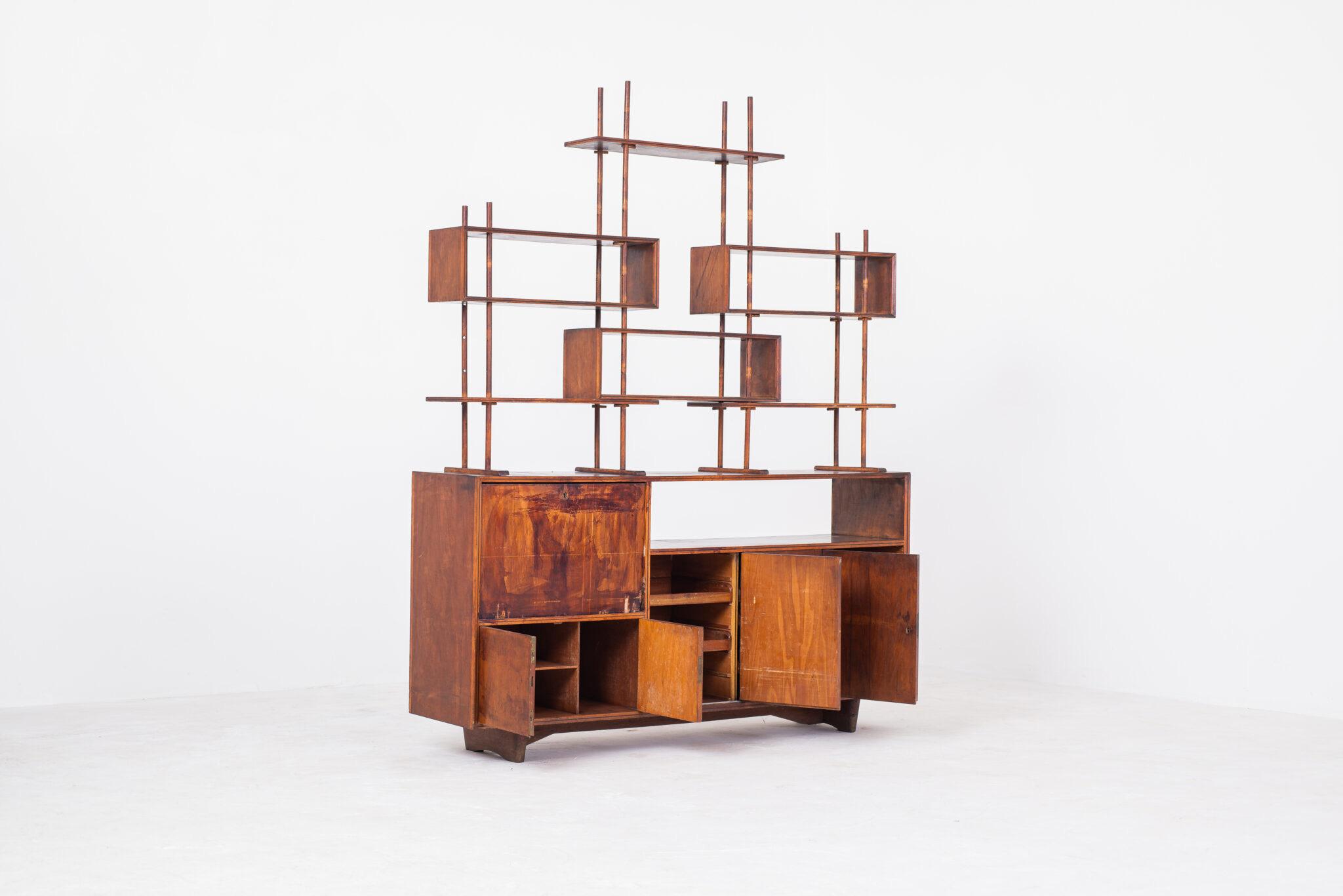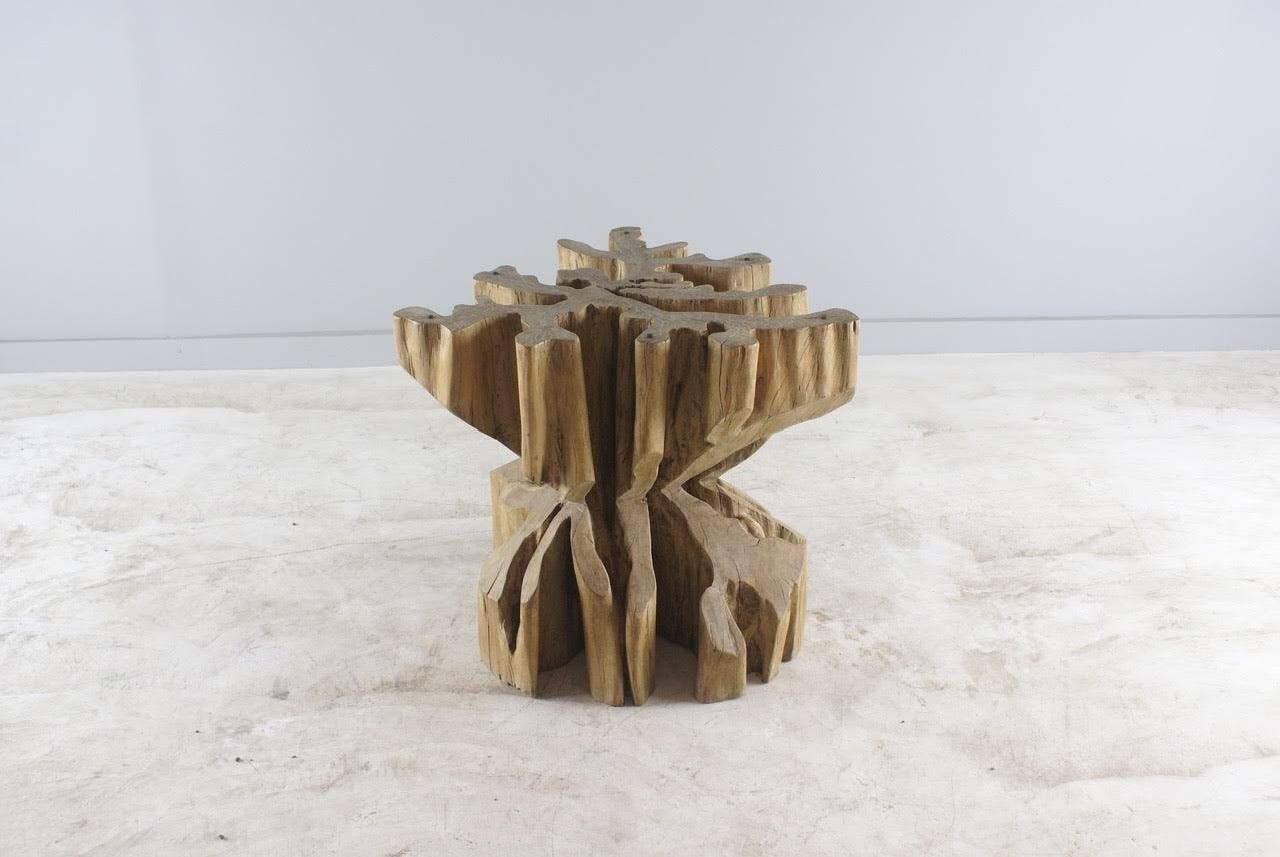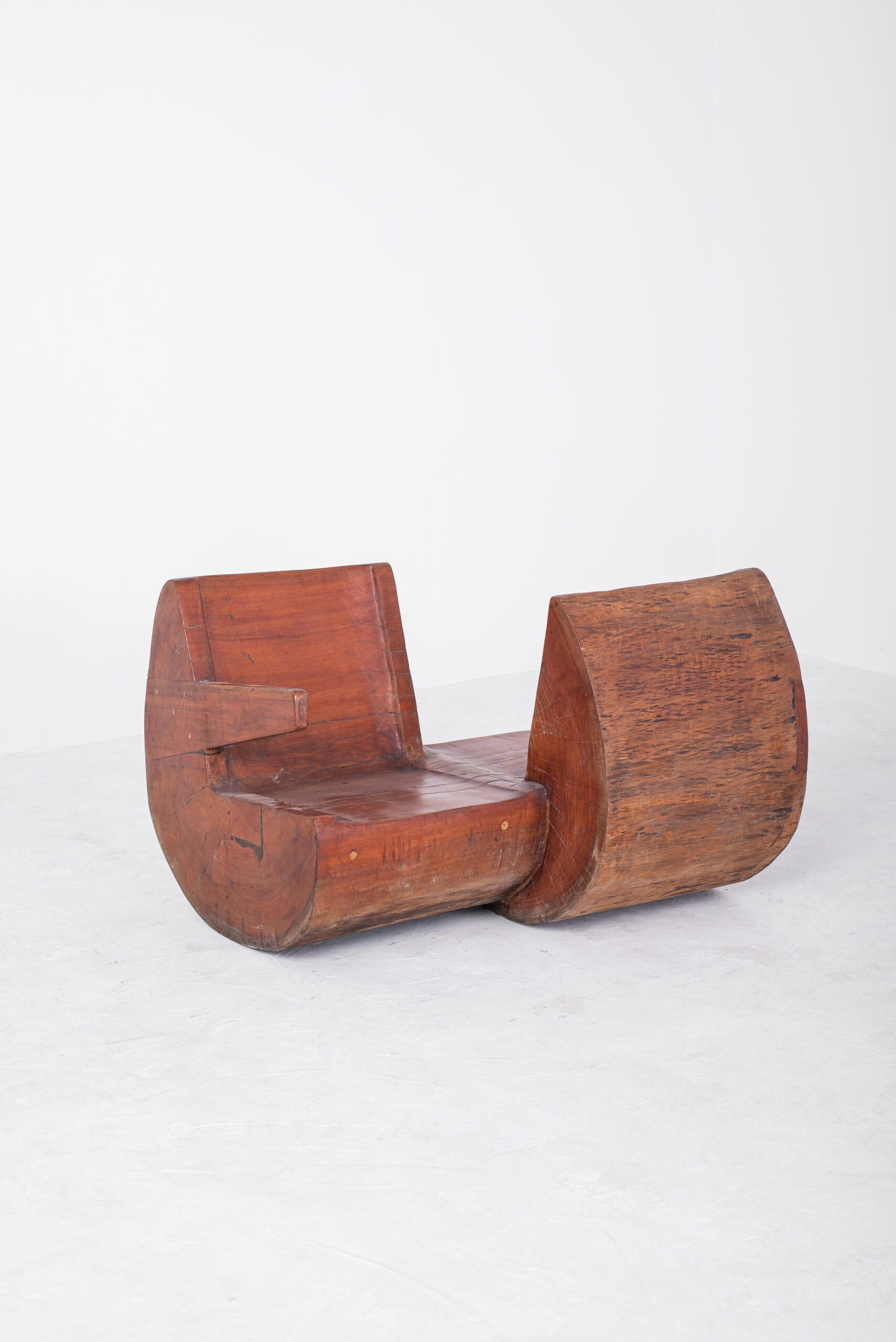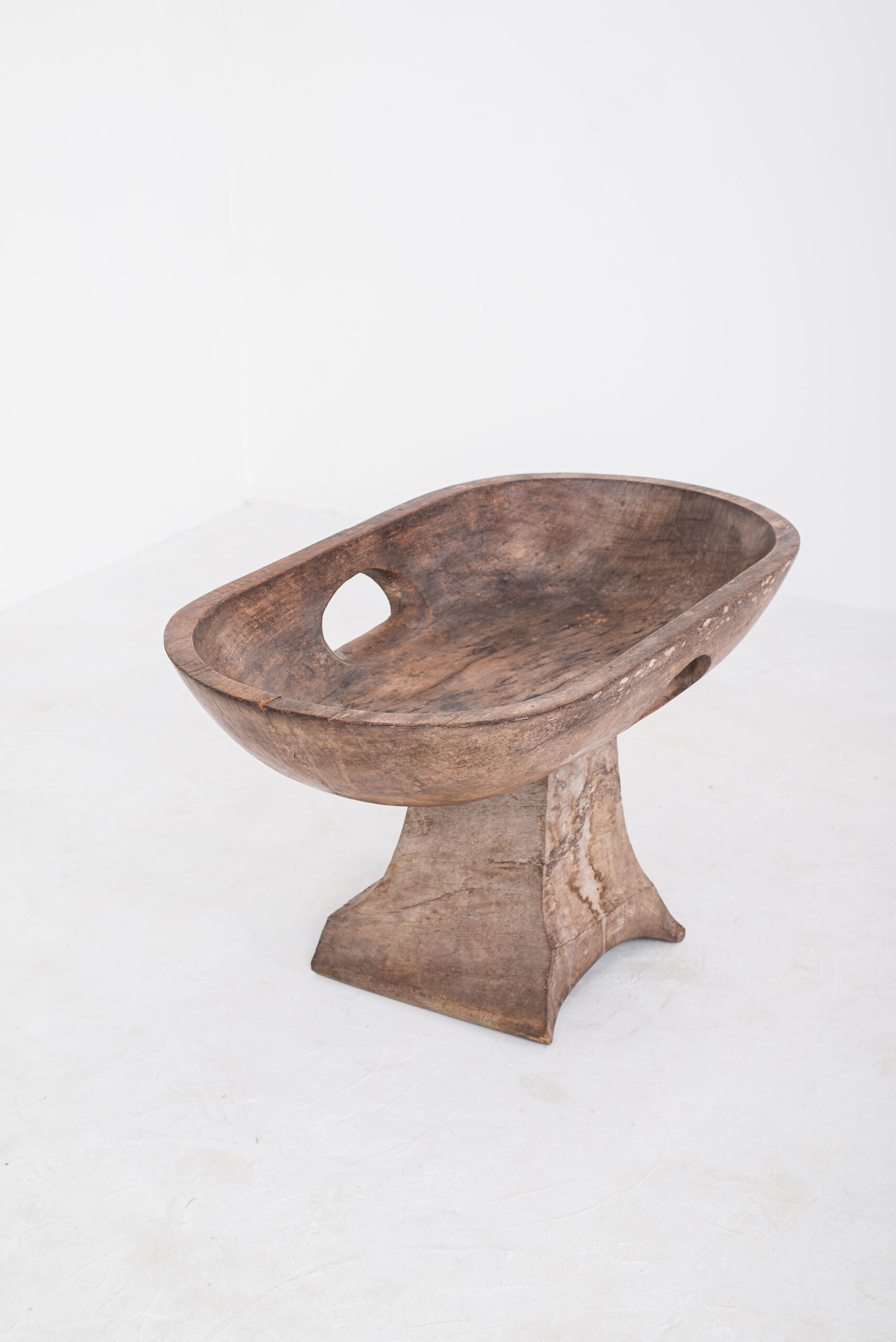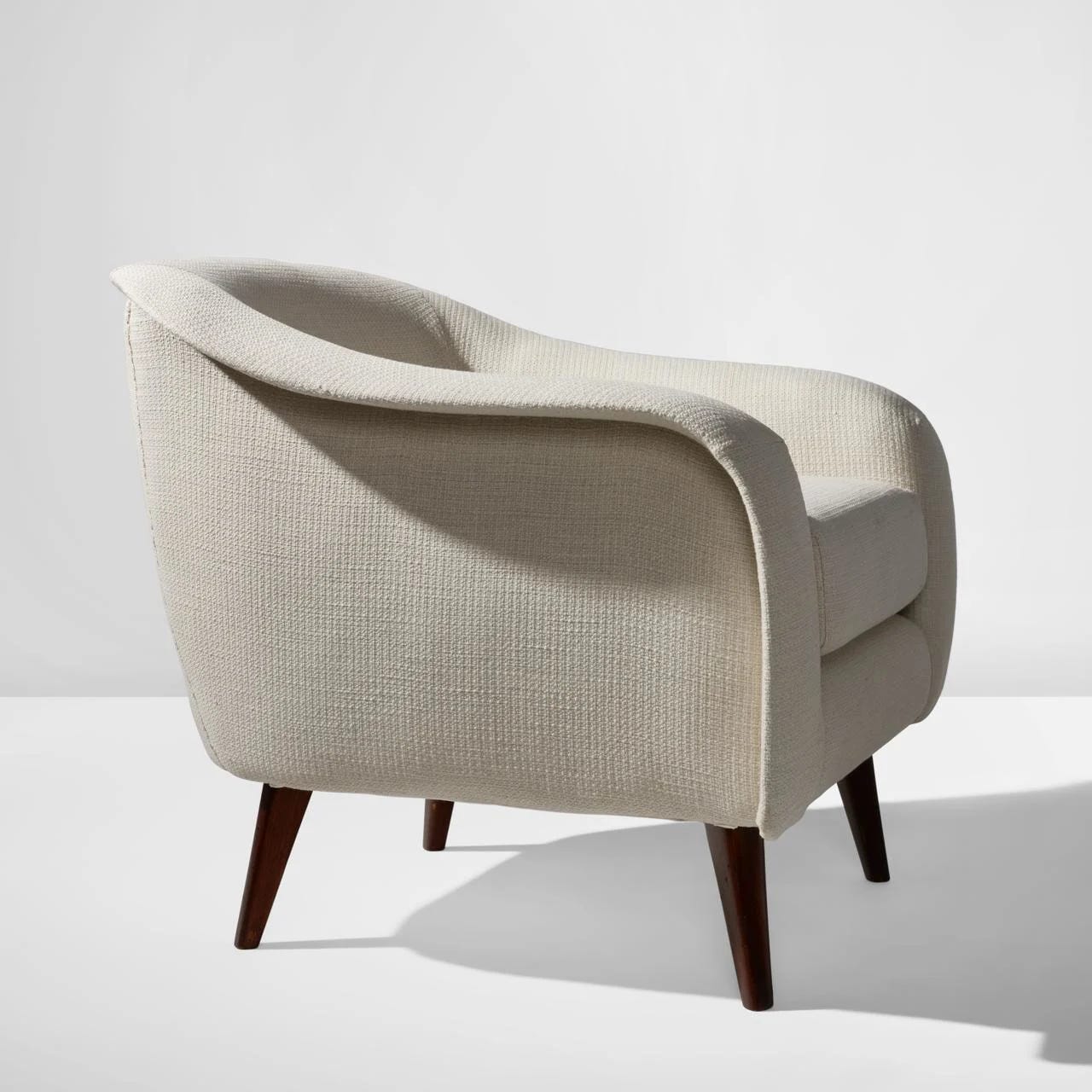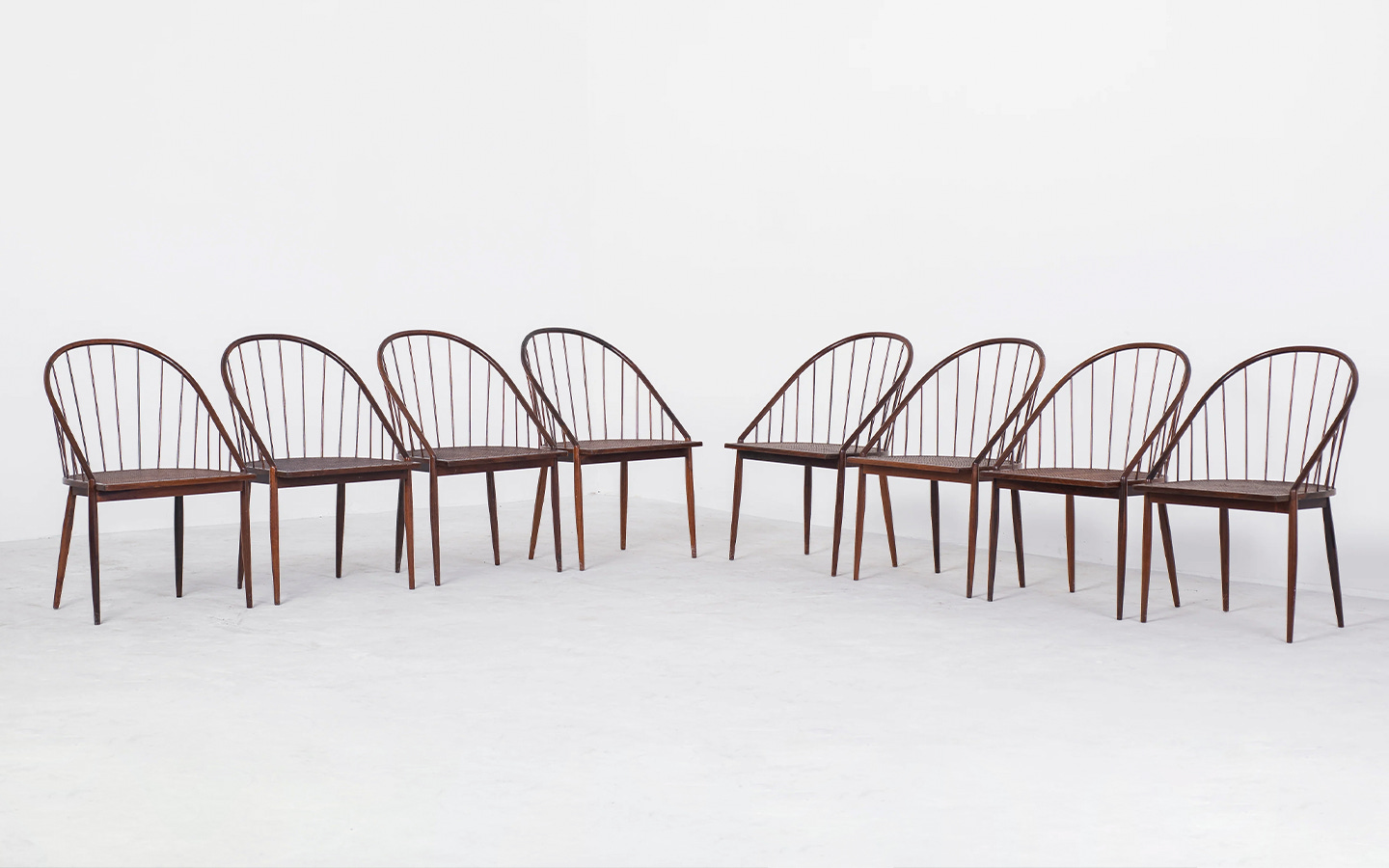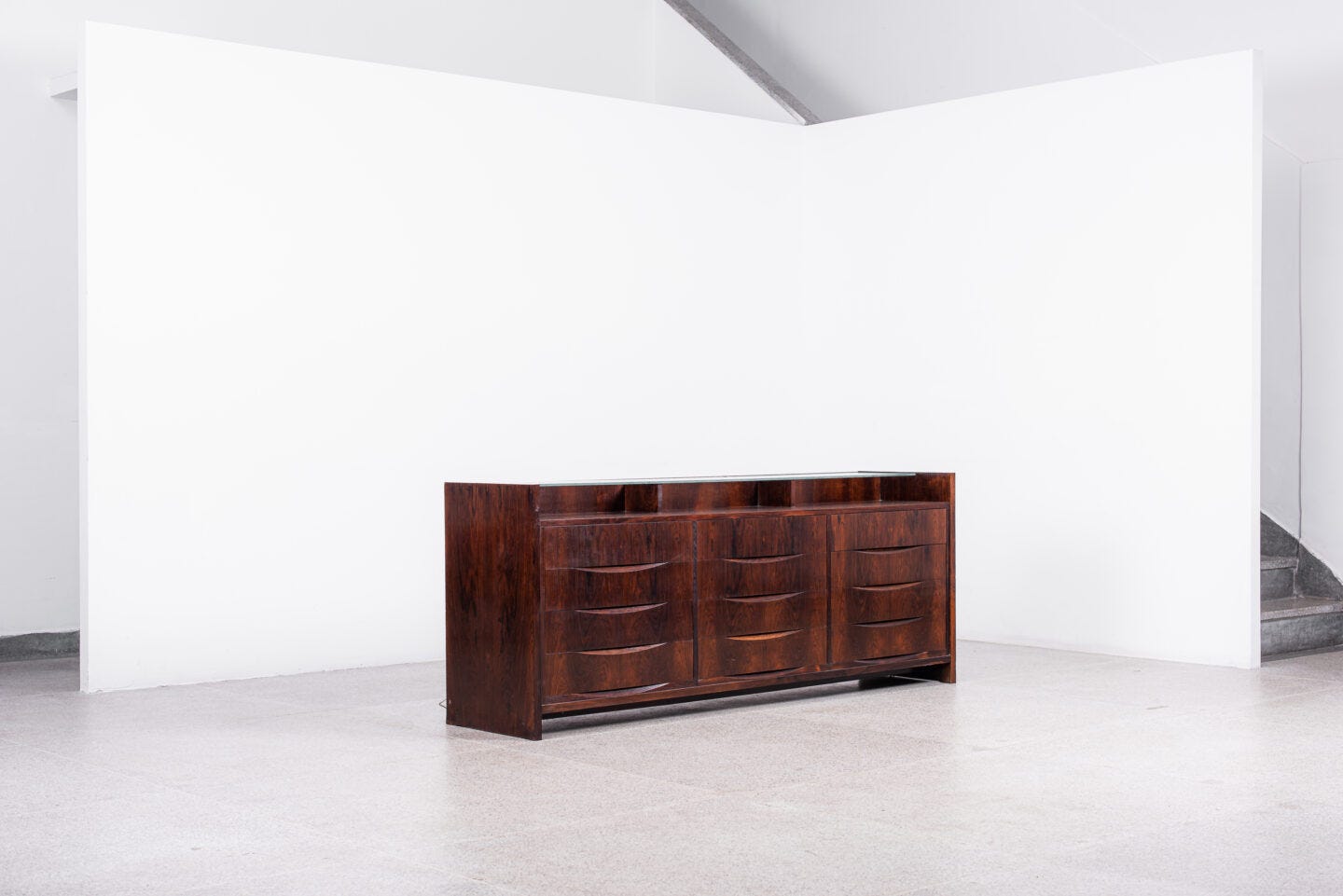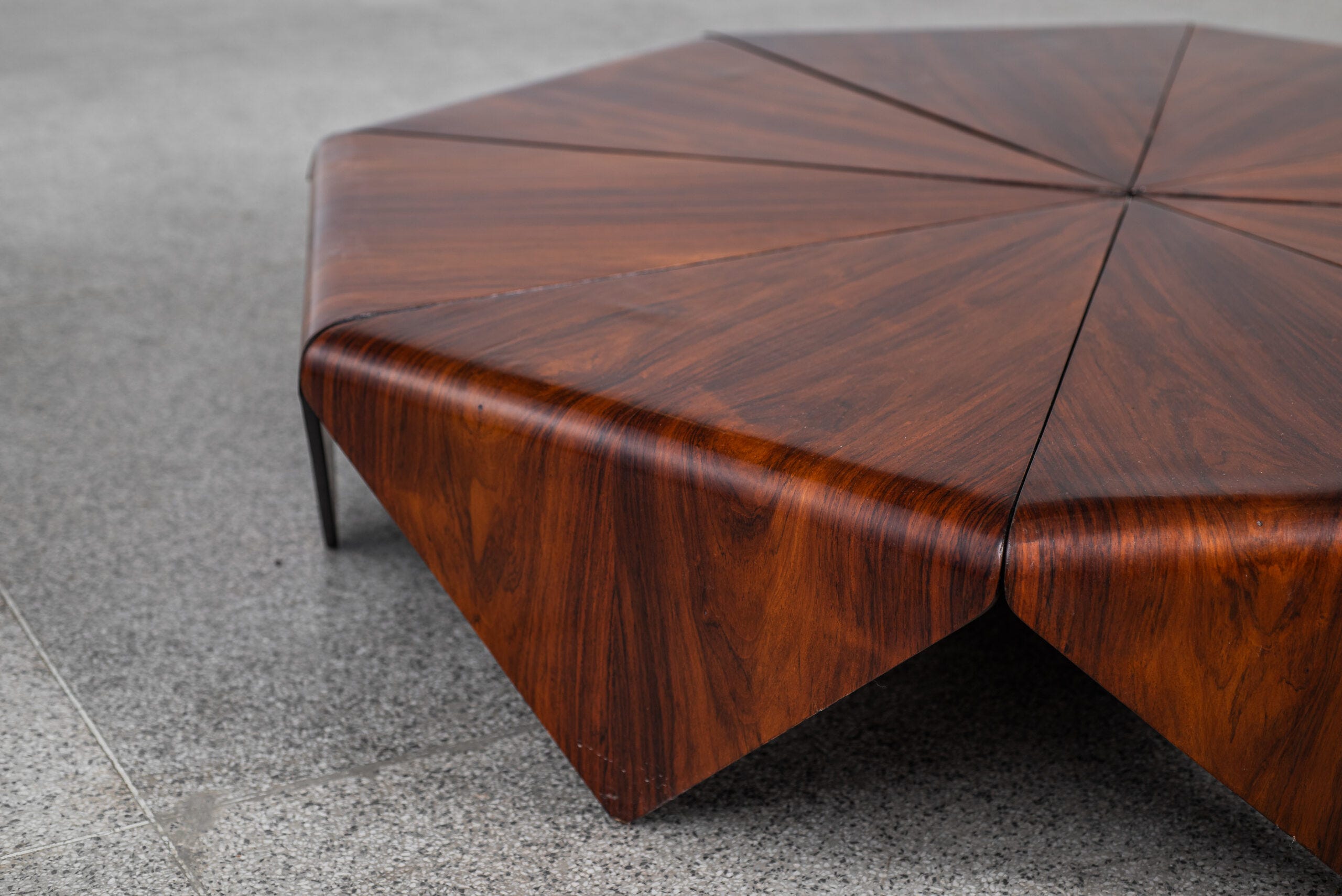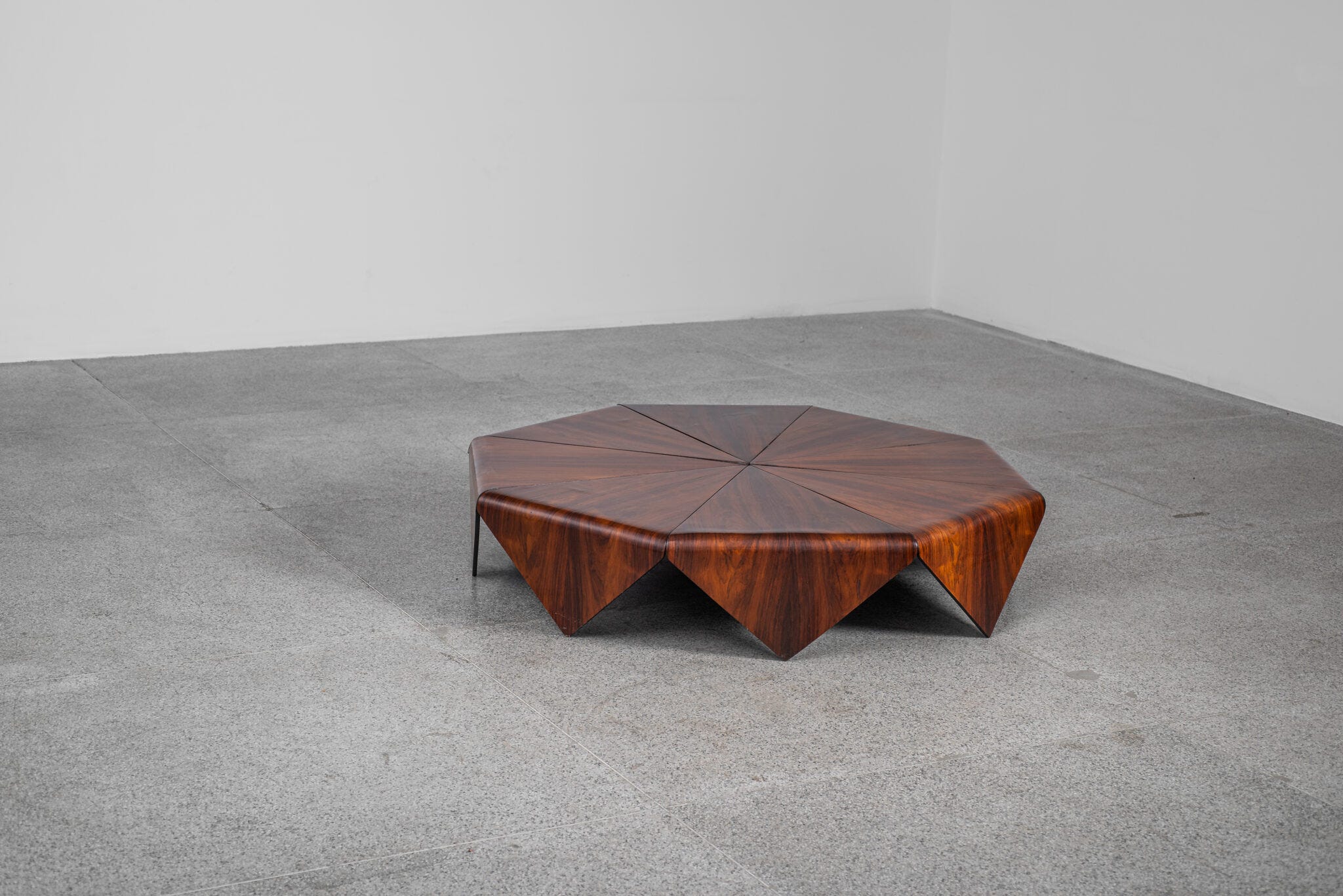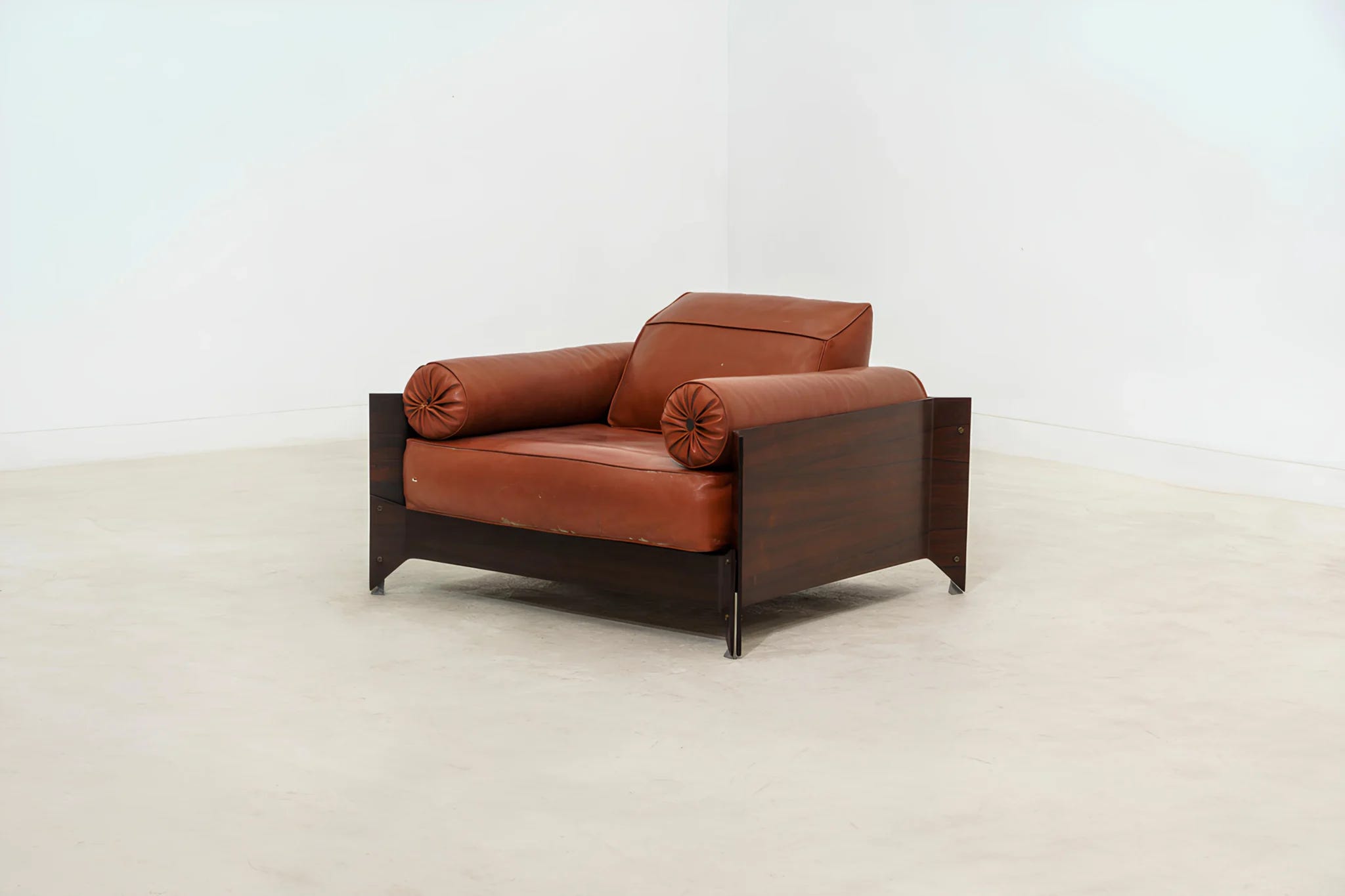
Brazilian vintage furniture is everywhere these days and can be found at design auctions, in monographic exhibitions at galleries and museums, in the digital marketplace, in magazines and academic literature, and in interiors featured in shelter magazines. The furniture, designed in postwar Brazil by a handful of modernists, was crafted pieces in modern, chic, sculptural forms from local exotic hardwoods, imbued with a strong sense of local identity, distinct from mid-century furniture created elsewhere. These furniture pieces have a powerful, dramatic presence in the interior space and stand out from what was produced in other countries during the postwar years. As soon as Brazilian furniture entered the global market in the early 2000s, it became an instant favorite among art collectors, interior designers, and architects. Yet, with the enormous number of copies flooding the marketplace every season in recent years and the industry replete with unauthorized reproductions, replicas, and unauthentic pieces, Brazilian mid-century furniture has long moved away from the innocuous position it held when it first entered the international design market. It is no longer newly discovered, yet it is still praised as the last undiscovered piece of furniture from the mid-century era.
In the two-and-a-half decades since it was first exhibited in European and American galleries, Brazilian Modern has slowly but steadily gained connoisseurship, emerging from the shadows cast by postwar furniture from France, Italy, Scandinavia, and the US, while establishing a permanent place at the forefront of the collectible design market. Today, it is among the most desirable areas of historical design, admired by collectors, architects, interior designers, and museum curators for its unique sensibility, sensuous and unique forms, richly grained hardwoods, regional handcraft traditions, and its inherent postwar narrative of Brazil, as the country transitioned from dictatorship into democracy, marked by urbanization and modernism. From 1945 to 1964, it was known as the Fourth Republic. To illuminate the current position of Brazilian furniture in the global design market, I invited Flavio Santoro, founder of the São Paulo-based gallery, Diletante Brasil, a pioneer of this market, and one of the world’s most trusted sources for exceptional, authentic Brazilian furniture.
Like many other design dealers across the globe, Santoro started his career with a ‘second-hand shop. This was in the early 2000s, years before Brazilian furniture became collectible and long before the emergence of any English-language literature on the subject. The pioneer scholar, São-Paulo-based historian and curator Maria Cecilia Loschiavo Dos Santos, began documenting and analyzing modern Brazilian design history in the early 1980s and has since published numerous books, articles, and critiques in magazines and international academic conferences. Santoro has worked with her in cataloging some of the pieces he discovered.
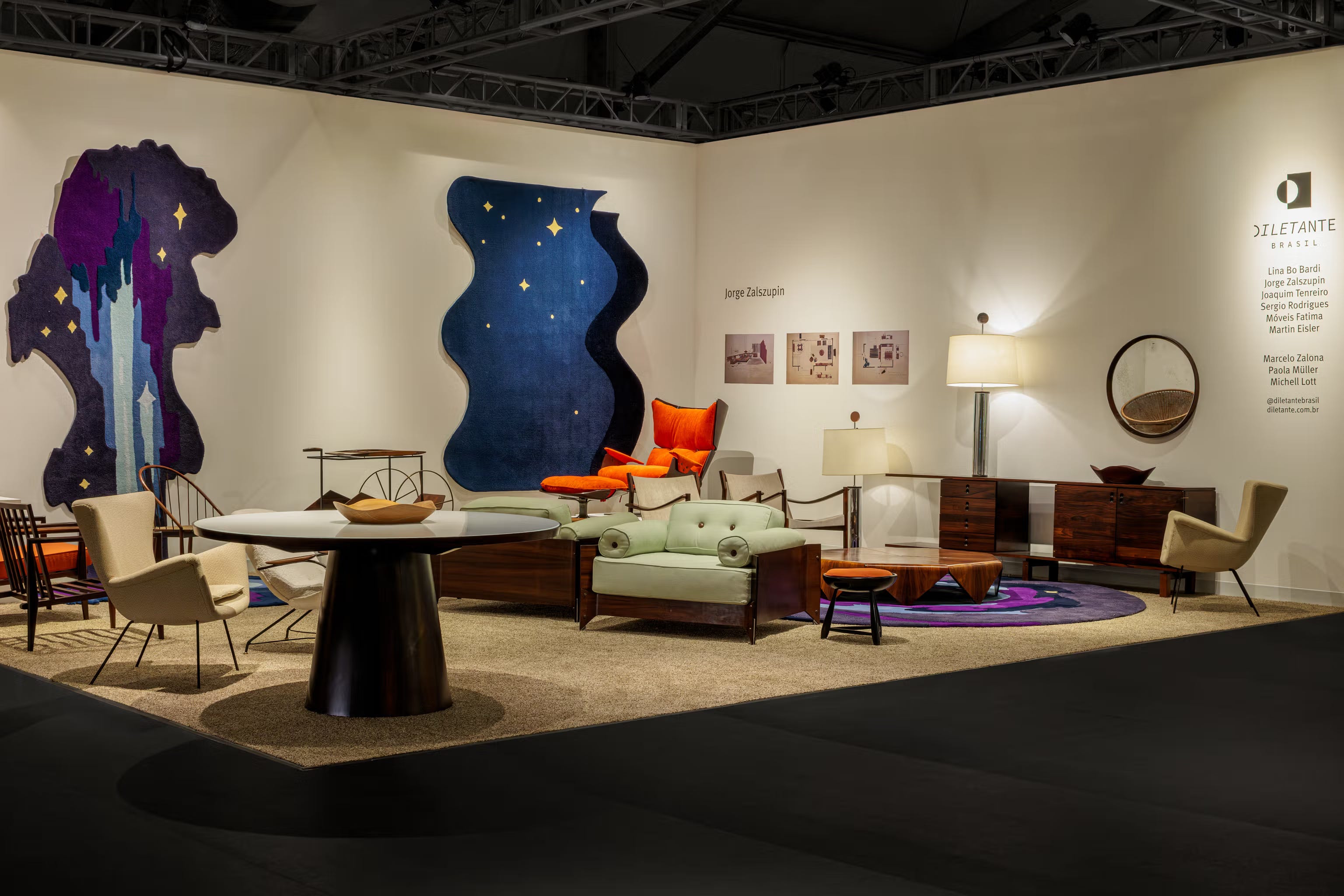
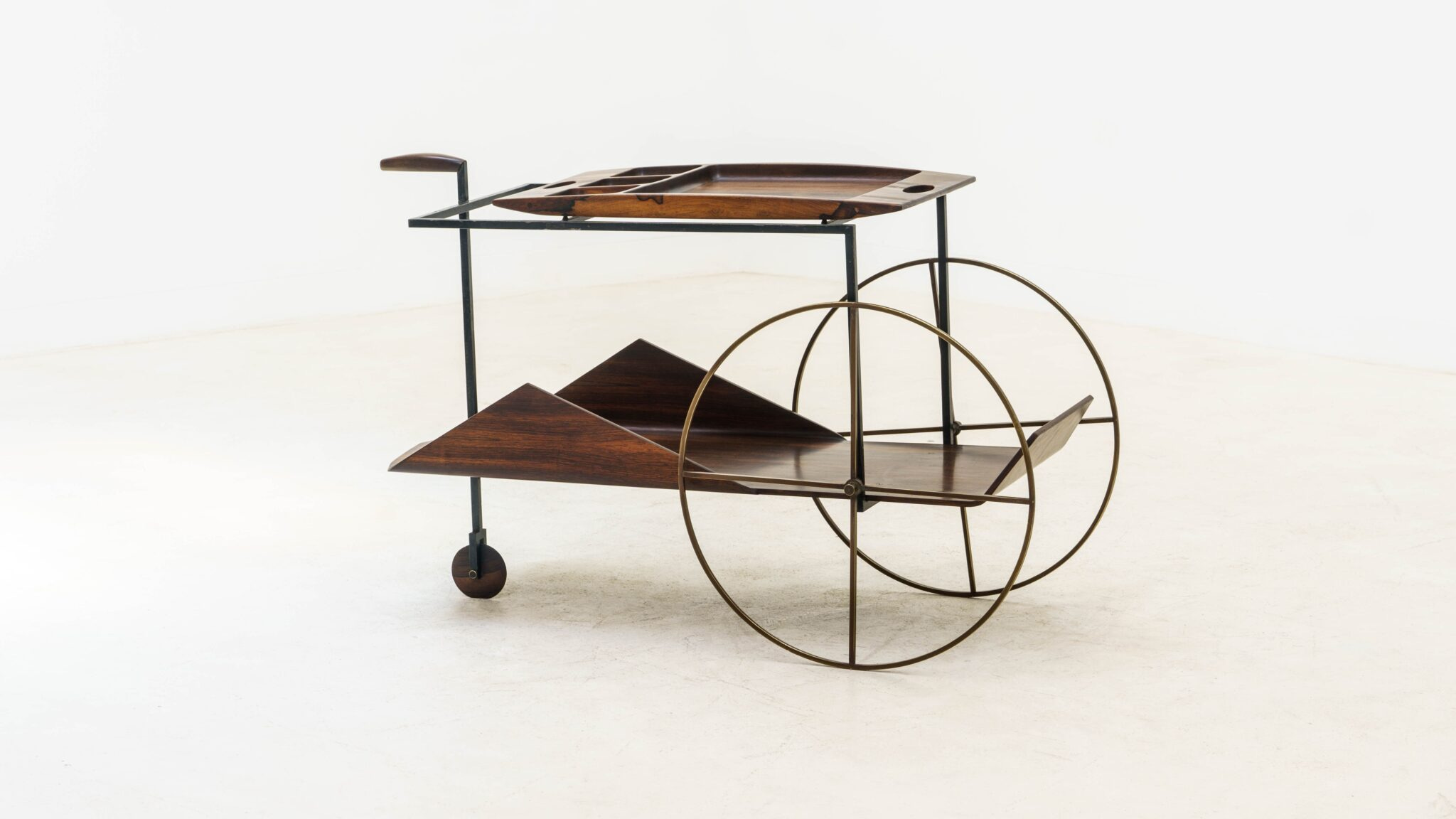
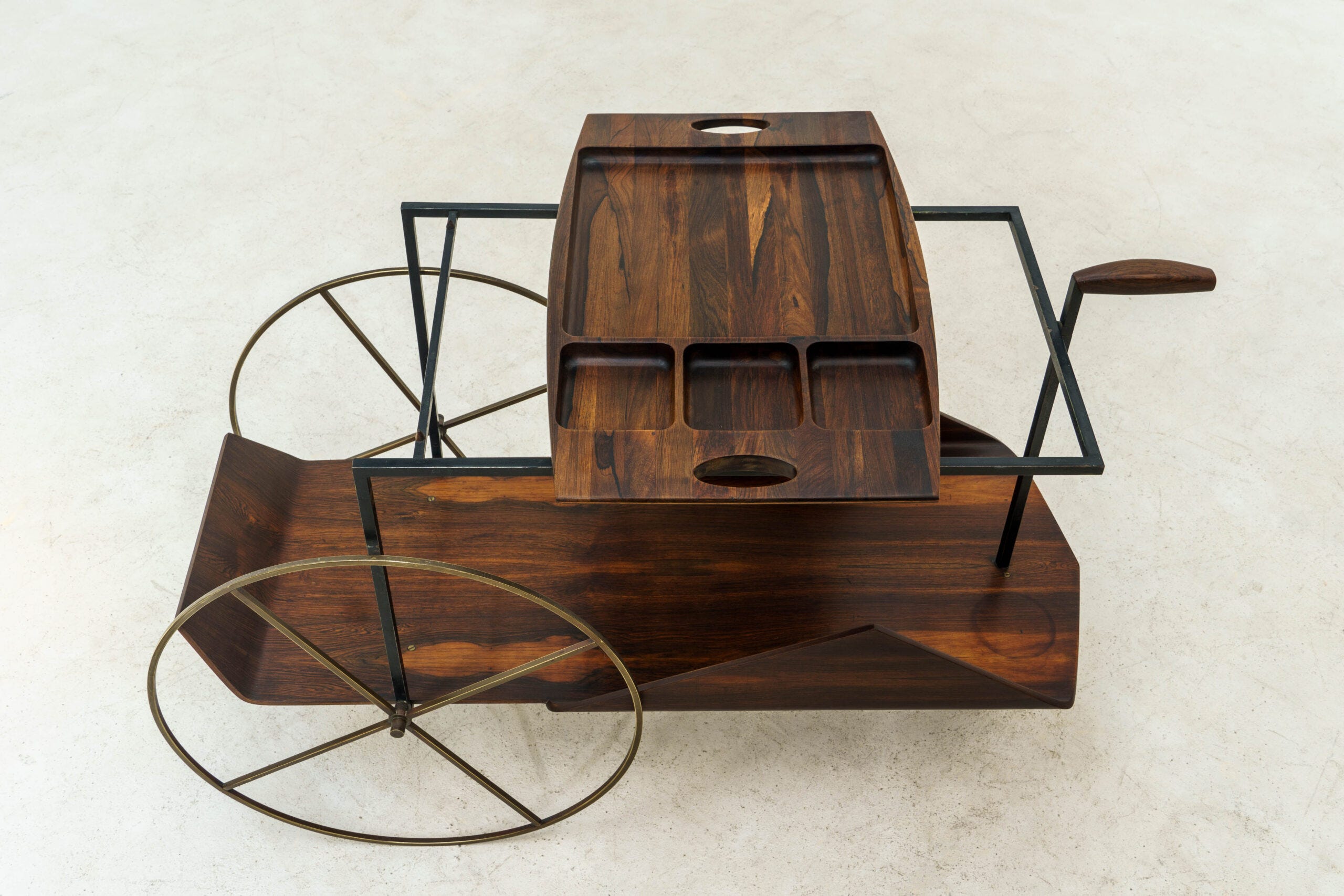
His presentations at Design Miami over the past few years on museum-quality Brazilian vintage furniture have cemented Diletante’s status as one of the leading experts in the field. Lina Bo Bardi’s rare examples of the Bowl Chair, crafted in woven fiber landed from his booth at the permanent collection of the Carnegie Museum of Art; and an original tea cart, which was included in his most recent booths, and which Warsaw-born São Paulo modernist Jorge Zalszupin designed in 1959 in molded wood, is in the collection at the Los Angeles County Museum of Art. My conversation with Santoro focused on the foundations of modern design in Brazil, as expressed in the work of three visionaries whose furniture has become a value-driven acquisition: Joaquim Tenreiro, José Zanine Caldas, and Zalszupin. The three adopted a variety of principles of modern design, pioneered Brazilian modernism, and created highly organic forms and ergonomics.
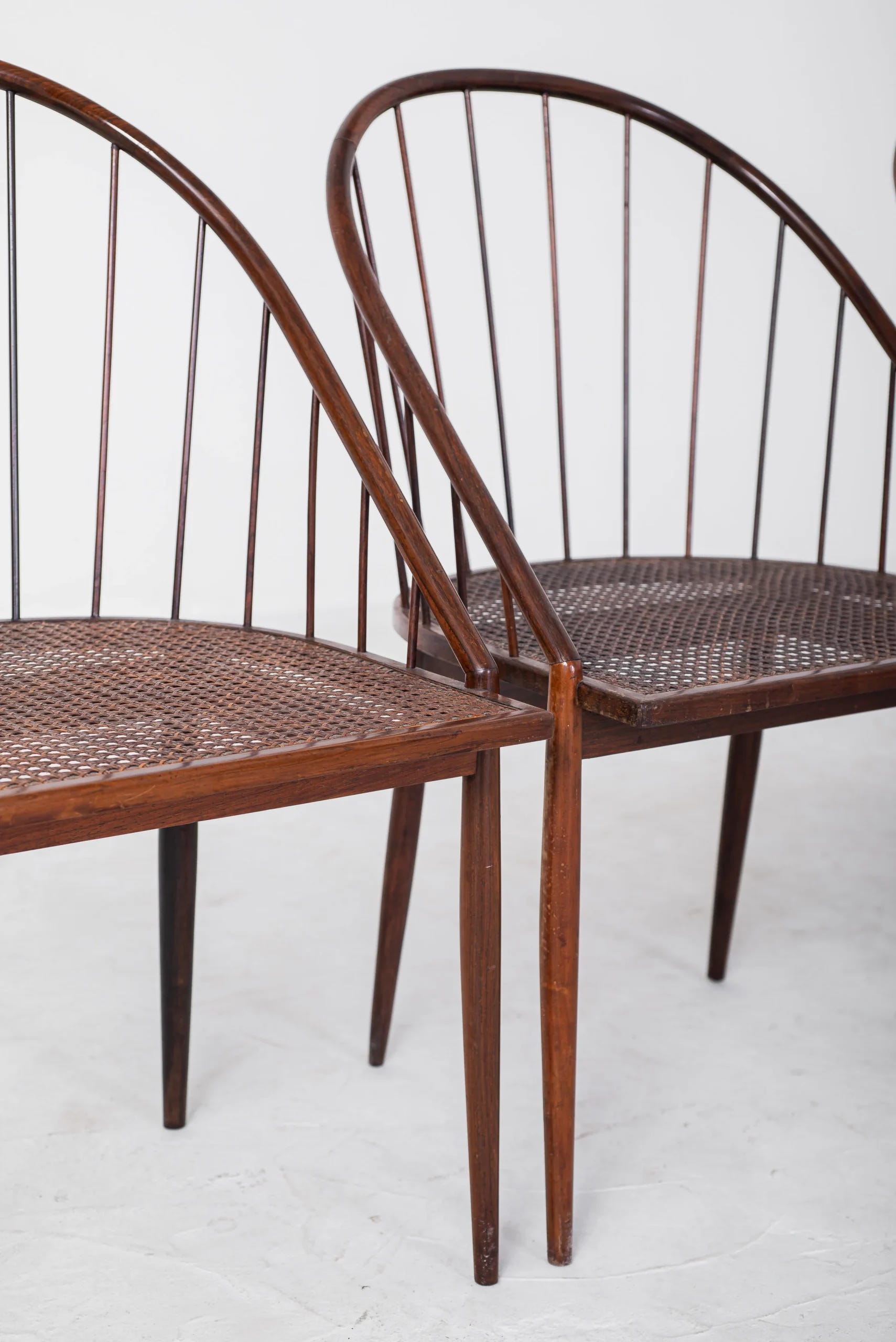
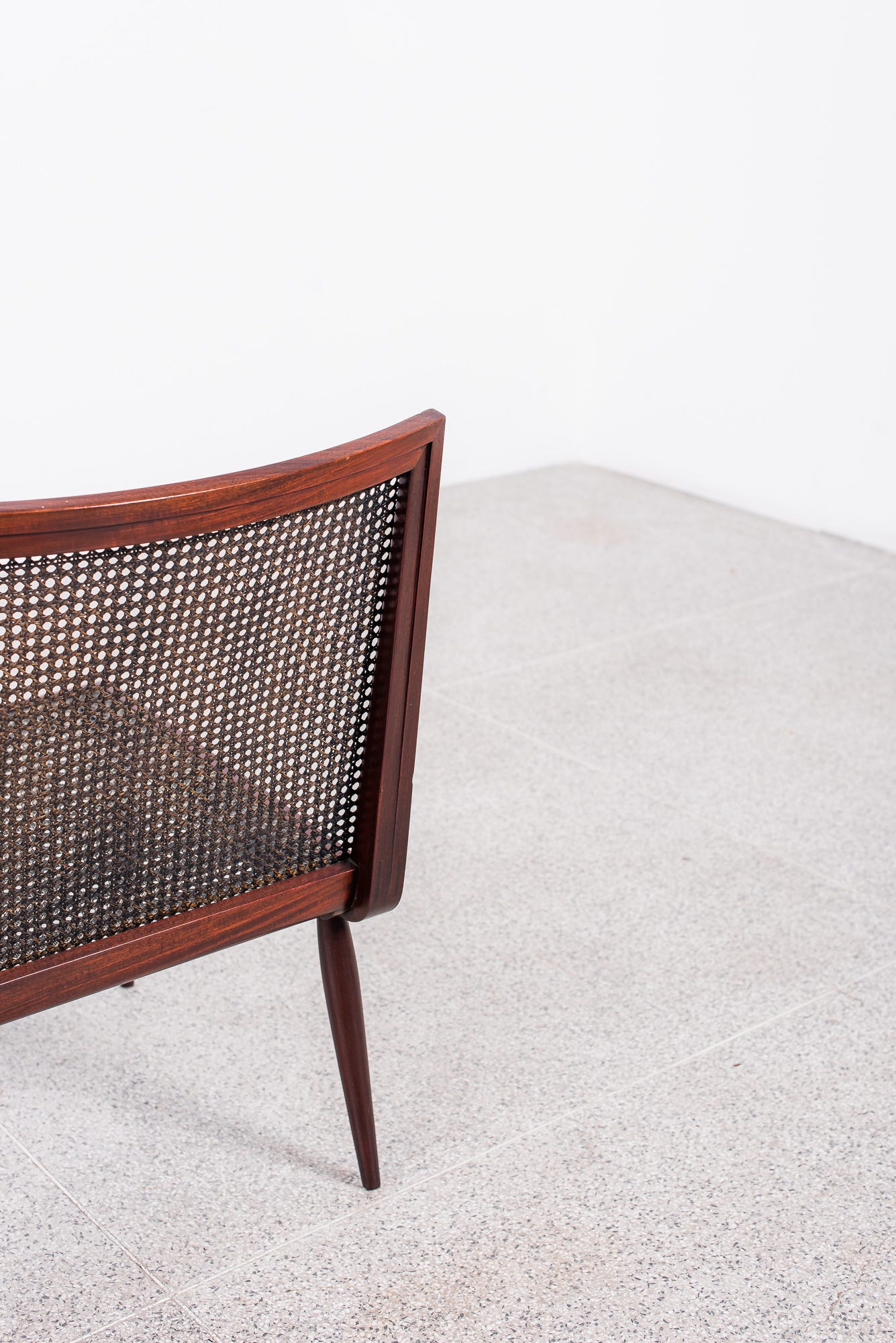
When Brazilian design was first rediscovered and showcased in the US in the early 2000s, the instant star was Joaquim Tenreiro (1906–1992), an immigrant from Portugal who settled in Rio in the late 1920s, and who was a pioneer of modern furniture design in Brazil, which he began creating in the early 1940s. The design quality and craftsmanship of his pieces were both superb. At the time, he supplied furniture to clients with progressive taste, including modernist architect Oscar Niemeyer. A master woodworker, Tenreiro learned his exceptional skills from his father and grandfather—both Portuguese cabinetmakers, but it was his exceptional ability to design the most visionary, elegant, refined forms of lightness, transparency, and minimalism that catapulted him to the pinnacle of the profession, and consequently to the heart of the collecting design market. Santoro calls Tenreiro’s pieces ‘craftsmanship to perfection,’ and the woods the ‘ultimate selections.’ His chairs are particularly beautiful, and he believes his best is the Cadeira Curva Chair, which is slender and airy for mid-19th-century design, but with a strong historical reference. His dining tables are stunning, featuring painted glass tops, crafted in verre églomisé. Tenreiro had been making furniture for 20 years when he closed his business in the late 1960s to focus on fine art. His pieces are not signed, and considering the high percentage of his furniture on the market that is misattributed or forged, it is more important than ever to acquire them from a reliable source.
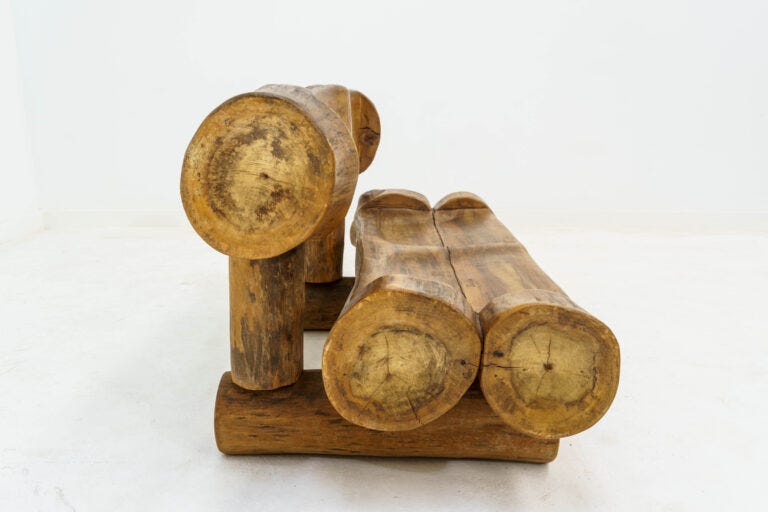
With a growing consciousness of sustainability in design and of a holistic, regenerative approach that minimizes environmental impact by integrating ecological factors, Tenreiro’s title as the superstar of the Brazilian Modern market has been supplanted by architect-artist José Zanine Caldas (1919–2001). The vision, philosophy, and vocabulary of the two as expressed in furniture could not have been more different. While Tenreiro designed for bourgeois homes and sophisticated modernist residences and public buildings, Caldas was a radical environmentalist who created furniture as a political statement. His most valued pieces are powerful, heavy, biomorphic, and crafted of solid tree trunks. In fact, his career falls into two phases. Caldas moved from his hometown in the state of Bahia, and launched his career in Rio, and then cofounding Fábrica Moveis Artísticos Z, a furniture company dedicated to producing moderately priced modernist designs in plywood. In the 1950s, he moved back to Bahia and, driven by a passion for forest preservation and environmental stewardship, began to sculpt charismatic, solid-wood furniture from fallen native trees. He used indigenous craft techniques to honor the natural character of the wood. It is clear that these pieces today lead the market of Brazilian modern furniture.
I concluded the talk with the work of Jorge Zalszupin (1922-2020), a Polish-born Jewish architect who emigrated to Brazil after WWII and settled in São Paulo, where he founded an architecture office and L’Atelier, a furniture design manufacturer. His collaborations with Oscar Niemeyer when producing furniture for the new capital city of Brasilia has brought him to the forefront of Brazilian modernism. His tea cart has become iconic. A staple in Brazilian households during those years, Zalszupin’s sculptural approach and the oversized wheels, inspired by baby strollers which he remembers from his youth in Poland, have become one of the most recognizable pieces of furniture of mid-19th-century Brazil.
While the most substantial modernist monument in postwar Brazil was the capital city of Brasilia, a futuristic city erected in the center of the country, it came to symbolize the end of a military dictatorship and the victory of democratically elected president Juscelino Kubitschek. Designed by Oscar Niemeyer, the architect of the United Nations headquarters in New York City, Brasilia remains a destination. But another true legacy of this golden age lies in its modernist design—pieces shaped by optimism and ingenuity that can still be brought into everyday life.
All images courtesy Diletante. https://diletante.com.br/