


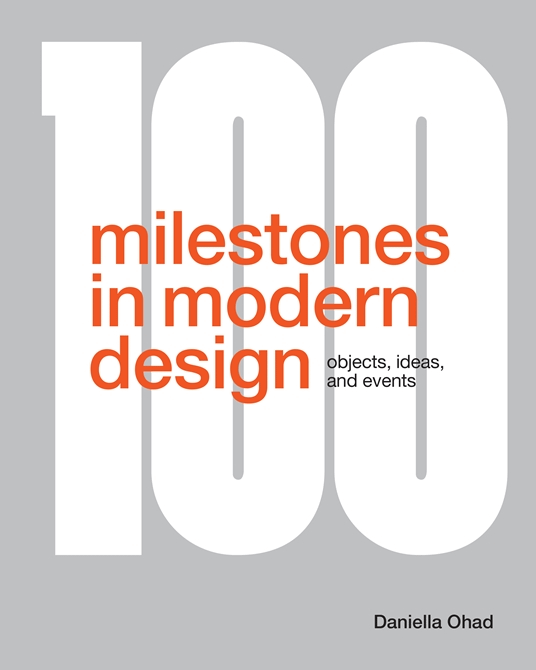
To me, the most exciting event of the fall is the publication of my first book 100 Milestones in Modern Design. I come from a family of distinguished writers and novelists—including Lion Feuchtwanger, Michael Ohad, and Edgar Feuchtwanger—and I have published hundreds of articles, written a PhD dissertation, and spent countless hours speaking publicly. Yet writing a book is an entirely different experience, and one that fills me with tremendous excitement and a profound sense of anticipation.
Through examining the pivotal events that shaped the story of design, we can learn through its evolution. 100 Milestones in Modern Design celebrates the monumental power of historical moments to shape the story of modern design, and vice versa. As much as design is affected by groundbreaking events, it also defines the modern world (and our modern lives). Shifts in technology, politics, culture, and the economy have all been powerful drivers of design’s evolution. The Berlin Olympics—controversial for its political Nazi propaganda—was designed by Albert Speer, architect and Adolf Hitler’s confidant, as a grand celebration of Germany’s roots that also evoked ancient Greek and neoclassicism. The Design Museum in London, founded by Sir Terence Conran in 1989, was the first museum devoted to contemporary industrial design and reflected the growing public awareness and interest in design.
Modern design has always been a reflection of new visions, serving as a vehicle for innovation. Each historical event demonstrates that only daring, risk-taking approaches challenge the status quo and prioritize experimentation over convention. And the constraints of the profession can bring design to new horizons, influence the way we live, and make a difference in the world. My book celebrates design success stories, showcasing the breadth and depth of the most remarkable works in the story of modern design. You will learn how to look at and read modern design not only in terms of its visual appearance but also as cultural symbols. The 100 milestones I’ve proposed reflect my own view of the monumental power of decisive historical events to stimulate the spirit of architecture and design. Radical visions, pivotal decisions, protests. Political and social events, revolutions and wars, technological innovations and discoveries: all changed the course of design history, and shaped our world and our human experience.
Maybe I will come on the 17th, after all. 🙂